
Top 10 Women’s Outdoor Clothing Brands in the World
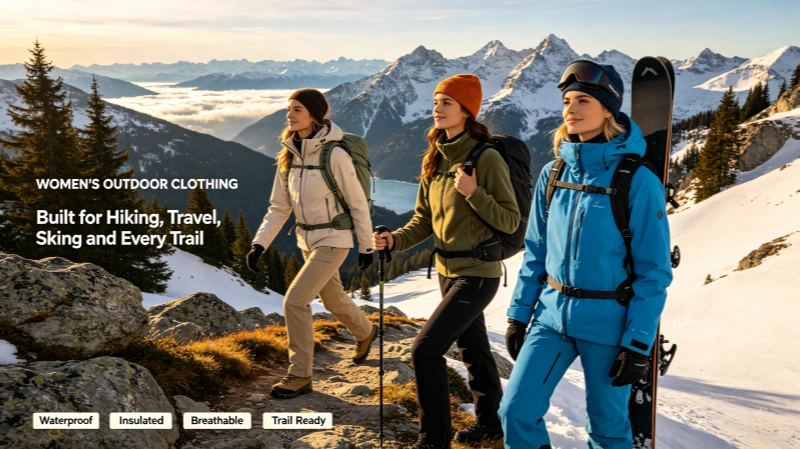
When consumers search for the top women’s outdoor clothing brands worldwide, they usually want more than a simple brand list. They want to know which companies offer the best combination of performance, comfort, durability, design, weather protection, sustainability, and value.
For outdoor apparel buyers, the right brand often depends on the intended activity. A lightweight hiking jacket has different requirements from a waterproof shell, ski jacket, fleece layer, or everyday outdoor coat.
This guide compares 10 influential women’s outdoor clothing brands based on brand recognition, technical performance, product range, outdoor positioning, and suitability for different types of users.
Note: There is no single universal ranking for the “best” women’s outdoor clothing brands. The order below is an editorial comparison based on market visibility, product specialization, brand influence, and available industry data rather than an official sales ranking.
What Makes a Good Women’s Outdoor Clothing Brand?
Before comparing individual brands, it helps to understand what buyers actually look for in outdoor clothing.
The most important factors usually include:
- Waterproof and windproof performance
- Breathability and moisture management
- Thermal insulation
- Fabric durability
- Lightweight construction
- Mobility and ergonomic fit
- Layering compatibility
- Functional pockets and closures
- Protection from UV and harsh weather
- Sustainable or recycled materials
- Women’s-specific sizing and fit
- Versatility between outdoor activities and everyday wear
A good women’s outdoor clothing brand doesn’t need to excel in every category. Some brands specialize in technical mountain equipment, while others focus on hiking, lifestyle, skiing, travel, or everyday outdoor wear.
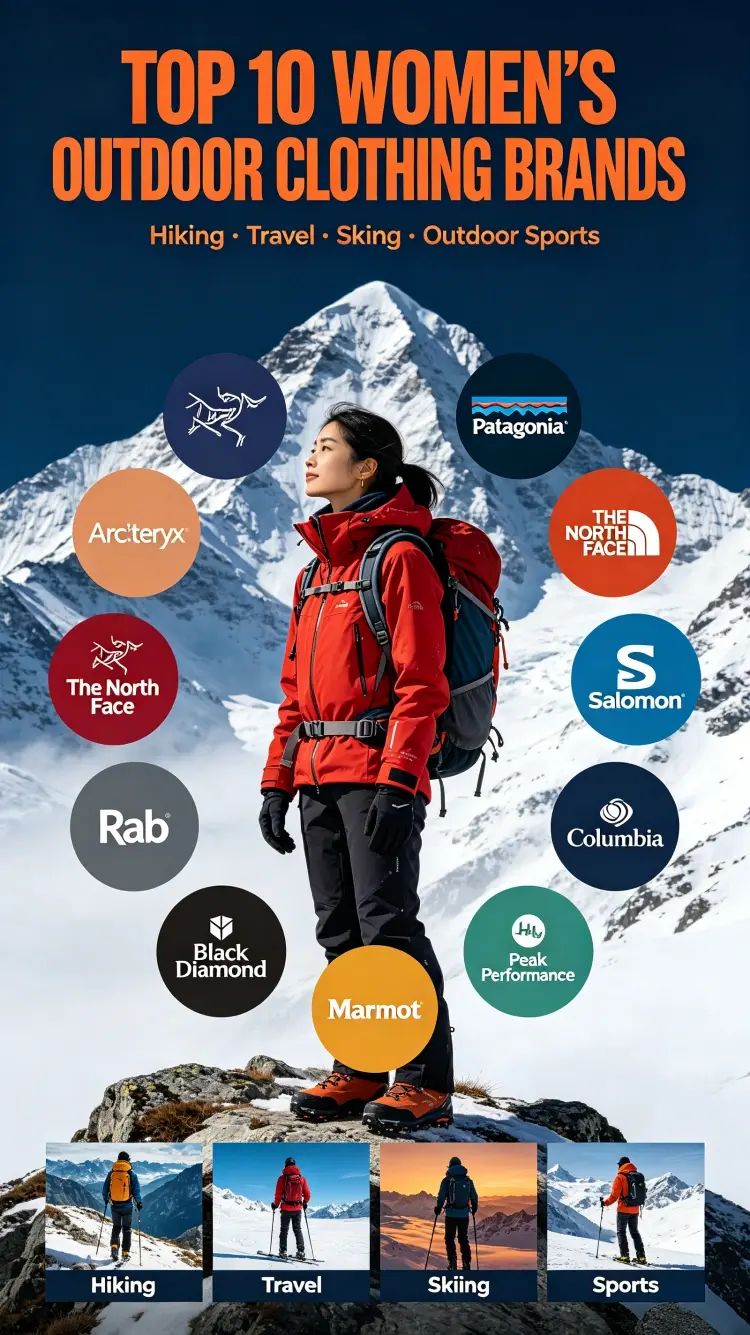
Top 10 Women’s Outdoor Clothing Brands
1. The North Face
The North Face is one of the most recognizable outdoor apparel brands globally and is particularly strong in women’s jackets, fleece, insulated clothing, hiking apparel, and winter products.
The brand offers a broad product range that spans both technical outdoor activities and everyday lifestyle use. This makes it attractive to consumers who want outdoor performance without wearing highly specialized expedition clothing.
Industry research has consistently placed The North Face among the leading women’s outdoor apparel brands. A 2026 L.E.K. Brand Heat Index ranked The North Face first in its women’s outdoor clothing category overall, with a score of 100.
Best for:
- Hiking
- Winter wear
- Fleece jackets
- Insulated jackets
- Everyday outdoor clothing
- Travel
Why it stands out:
Its biggest advantage is the combination of outdoor credibility, strong brand recognition, extensive product selection, and lifestyle appeal.
2. Patagonia
Patagonia is particularly well known for combining outdoor performance with environmental responsibility and durable product design.
Its women’s collection includes jackets and vests, fleece, tops, bottoms, baselayers, dresses, swimwear, workwear, and other outdoor-oriented products. Its current women’s collection also emphasizes waterproofing, wind resistance, quick drying, breathability, moisture management, and packability.
Patagonia is a strong choice for consumers who want clothing that works for hiking, travel, casual wear, and more demanding outdoor activities.
Best for:
- Hiking
- Backpacking
- Fleece layering
- Outdoor lifestyle
- Sustainable-minded consumers
- Everyday adventure wear
Why it stands out:
Patagonia has built a strong identity around durability, environmental responsibility, and multifunctional outdoor clothing.
3. Columbia
Columbia is one of the most accessible major outdoor clothing brands, offering a broad selection of women’s apparel at different performance and price levels.
Its women’s product categories cover activities including hiking, camping, trail running, skiing, fishing, hunting, water activities, and everyday wear.
This broad positioning makes Columbia particularly attractive to consumers who want practical outdoor clothing without necessarily buying highly specialized technical equipment.
Best for:
- Hiking
- Camping
- Travel
- Rainwear
- Fleece
- Everyday outdoor clothing
- Multi-season use
Why it stands out:
Columbia offers a strong balance between functionality, product variety, accessibility, and outdoor performance.
4. Arc’teryx
Arc’teryx occupies a more technical position within the outdoor apparel market. The brand is particularly recognized for mountain clothing, technical shells, insulation, hiking apparel, and high-performance layering systems.
Its women’s collection includes hardshells, windshells, softshells, insulated jackets, fleece, pants, tops, base layers, and activity-specific products. Arc’teryx describes its women’s apparel as being designed around protection, warmth, breathability, fit, and demanding mountain conditions.
Best for:
- Mountaineering
- Alpine activities
- Skiing
- Technical hiking
- Backpacking
- High-performance outdoor use
Why it stands out:
Arc’teryx focuses heavily on technical construction, precise fit, advanced materials, and activity-specific performance.
5. Fjällräven
Swedish brand Fjällräven has developed a strong global reputation around durable outdoor clothing, functional design, and Scandinavian outdoor aesthetics.
Its appeal extends beyond technical hiking. Many consumers choose the brand because its outdoor products can transition naturally into everyday urban environments.
Best for:
- Hiking
- Trekking
- Travel
- Outdoor lifestyle
- Everyday adventure clothing
Why it stands out:
Fjällräven combines practical outdoor functionality with a distinctive Scandinavian design language.
Industry research has also identified Fjällräven as a particularly strong women’s outdoor brand across several consumer generations.
6. Salomon
Salomon is strongly associated with trail running, hiking, trekking, and mountain sports. While the company is especially famous for footwear, its apparel portfolio also targets active outdoor consumers.
For women who prioritize movement and performance, Salomon’s positioning is particularly relevant to fast hiking, trail running, trekking, and other high-mobility activities.
Best for:
- Trail running
- Hiking
- Trekking
- Mountain activities
- Active outdoor sports
Why it stands out:
Salomon brings a sport-performance approach to outdoor apparel, with a strong emphasis on movement and activity-specific functionality.
SGB’s women’s outdoor apparel research listed Salomon among the leading brands in the category.
7. Helly Hansen
Helly Hansen has deep roots in weather-resistant clothing and is particularly well known for products designed for wet, cold, windy, and demanding environments.
Its women’s outdoor apparel is relevant to skiing, sailing, hiking, rainwear, and winter activities.
Best for:
- Skiing
- Sailing
- Rainwear
- Winter sports
- Cold-weather outdoor activities
Why it stands out:
Weather protection is central to the brand’s identity, making it a strong option for consumers operating in challenging climates.
Helly Hansen has also appeared among leading women’s outdoor apparel brands in industry research, particularly among younger and outdoor-oriented consumers.
8. Black Diamond
Black Diamond is particularly influential in climbing, skiing, mountaineering, and technical mountain sports.
Compared with broad lifestyle outdoor brands, Black Diamond has a more specialized performance positioning. Its apparel is designed for consumers who need mobility and functionality during demanding activities.
Best for:
- Climbing
- Ski touring
- Mountaineering
- Alpine activities
- Technical outdoor sports
Why it stands out:
The brand’s close connection to climbing and mountain sports gives it strong credibility among technical outdoor users.
Industry research has included Black Diamond among the leading women’s outdoor apparel brands.
9. Icebreaker
Icebreaker has a distinctive position because of its strong focus on merino wool and natural-fiber-based outdoor layering.
The brand is especially relevant to consumers looking for base layers, thermal clothing, hiking apparel, and comfortable travel clothing.
Best for:
- Base layers
- Hiking
- Travel
- Cold-weather layering
- Outdoor lifestyle
Why it stands out:
Merino wool offers temperature regulation, moisture management, odor resistance, and comfortable next-to-skin performance, making it particularly useful for multi-day outdoor activities.
Icebreaker has also appeared in industry rankings of leading women’s outdoor apparel brands.
10. Mammut
Mammut is a Swiss outdoor brand with a strong heritage in mountaineering, climbing, hiking, and alpine equipment.
Its women’s apparel focuses heavily on technical outdoor applications, including shells, insulated jackets, hiking clothing, climbing apparel, and layering systems.
Best for:
- Mountaineering
- Hiking
- Climbing
- Alpine sports
- Technical outdoor activities
Why it stands out:
Mammut is particularly attractive to consumers who prioritize technical outdoor performance and mountain-specific functionality.
Women’s Outdoor Clothing Brands Comparison
| Brand | Main Strength | Best For | Market Position |
|---|---|---|---|
| The North Face | Versatile outdoor apparel | Hiking, winter, lifestyle | Broad premium |
| Patagonia | Durability & sustainability | Hiking, travel, outdoor lifestyle | Premium |
| Columbia | Value & versatility | Hiking, camping, travel | Mid to premium |
| Arc’teryx | Technical performance | Alpine, hiking, mountaineering | High-end |
| Fjällräven | Durable Scandinavian design | Hiking, travel, lifestyle | Premium |
| Salomon | Active performance | Trail running, hiking | Performance |
| Helly Hansen | Weather protection | Skiing, sailing, winter | Premium |
| Black Diamond | Technical mountain apparel | Climbing, skiing, alpine | Technical |
| Icebreaker | Merino layering | Hiking, travel, base layers | Premium |
| Mammut | Mountain performance | Mountaineering, climbing | Premium/technical |
Which Women’s Outdoor Clothing Brand Is Best?
No single winner fits every consumer.
If you want versatile outdoor clothing, The North Face and Columbia are strong choices.
If sustainability and durable everyday outdoor wear are priorities, Patagonia is worth considering.
For technical mountain performance, Arc’teryx and Mammut are stronger choices.
For Scandinavian outdoor style, Fjällräven is particularly distinctive.
For trail running and active hiking, Salomon is a strong option.
For skiing and harsh-weather protection, Helly Hansen is worth considering.
For technical climbing and alpine sports, Black Diamond offers a more specialized product direction.
For natural-fiber base layers, Icebreaker has a particularly clear market position.
What Should Buyers Look for in Women’s Outdoor Clothing?
The best outdoor clothing depends on the activity, climate, and intended use.
Waterproofing
For hiking and wet-weather use, evaluate waterproof jackets based on fabric construction, seam protection, hood design, closures, and overall garment construction—not simply the word “waterproof.”
Breathability
A waterproof garment that cannot release moisture can become uncomfortable during high-intensity activities. Breathable fabrics and ventilation features are therefore important for hiking, trekking, and trail sports.
Insulation
For winter products, buyers should consider whether the garment uses down, synthetic insulation, fleece, or another thermal system.
Fit
Women’s outdoor clothing needs to balance protection with freedom of movement. Shoulder construction, sleeve length, waist shaping, hip room, and layering space can all affect comfort.
Durability
Outdoor garments typically experience more abrasion and environmental exposure than ordinary fashion clothing. Fabric strength, stitching, reinforcement, zippers, and seam construction therefore matter.
Weight and Packability
For hiking and backpacking, lightweight, packable clothing can reduce the space and weight you carry.
What Can B2B Buyers Learn From These Top Outdoor Brands?
For apparel wholesalers, retailers, private-label clothing businesses, and fashion brands, these companies also provide useful product-development references.
Successful women’s outdoor clothing collections usually do not rely on appearance alone. They combine functional materials, practical construction, appropriate fit, recognizable design language, and clear use cases.
For a private-label brand developing women’s outdoor wear, common product categories include:
- Waterproof hiking jackets
- Lightweight outdoor jackets
- Women’s fleece jackets
- Softshell jackets
- Insulated jackets
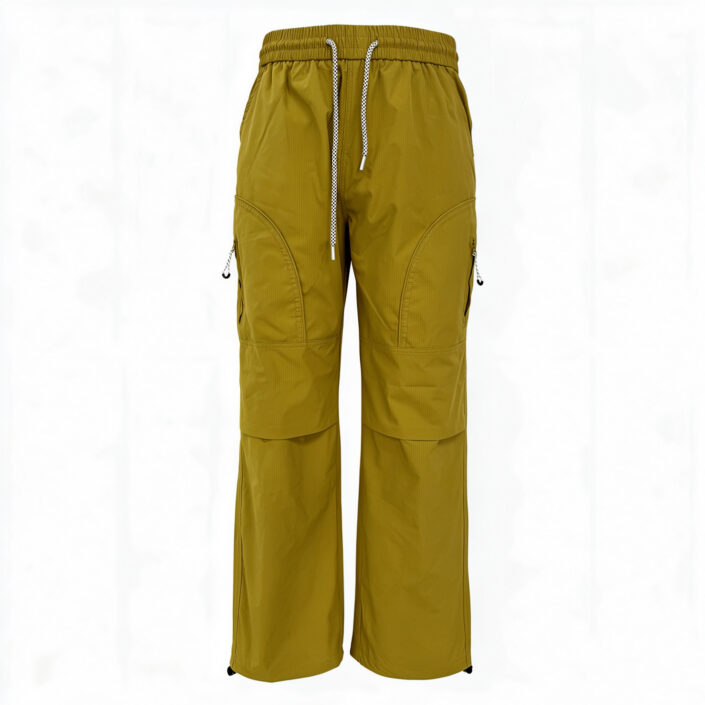
- Hiking pants
- Waterproof hiking pants
- Outdoor tops
- Base layers
- Outdoor vests
- Lightweight windbreakers
- Women’s outdoor shirts
- Travel jackets
- Multi-season outdoor clothing
This creates opportunities for manufacturers that can provide flexible OEM and ODM development rather than simply supplying standard products.
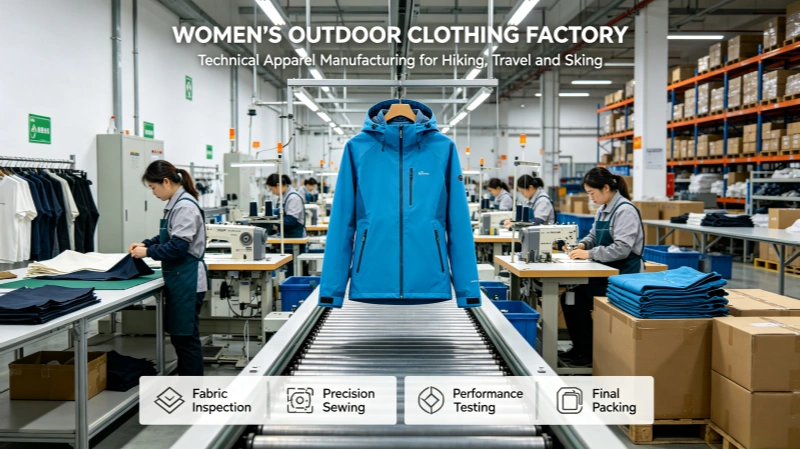
OEM & ODM Women’s Outdoor Clothing Manufacturing
For brands that want to develop their own women’s outdoor clothing collection, working with an OEM/ODM manufacturer can provide more control over product specifications and branding.
A professional clothing manufacturer can support customization of:
- Fabric composition
- Fabric weight
- Waterproof or water-resistant materials
- Colors
- Prints
- Sizes
- Fit
- Hood construction
- Pockets
- Zippers
- Buttons
- Cuffs
- Waistbands
- Labels
- Embroidery
- Logos
- Packaging
The development process can start from a sketch, technical pack, measurement chart, reference garment, or product concept.
For smaller brands, flexible production quantities matter because launching a new outdoor clothing line doesn’t always justify a very large first order.
Why Work With a Custom Women’s Outdoor Clothing Manufacturer?
Established outdoor brands demonstrate that consumers value more than basic clothing. They want products designed around specific activities and weather conditions.
For B2B buyers, therefore, choosing a manufacturer should involve more than comparing the lowest unit price.
Important questions include:
- Can the factory develop samples?
- Can it follow a technical specification?
- Can it handle small trial orders?
- Can it customize fabrics and construction?
- Can it provide private-label services?
- Can it maintain consistency during bulk production?
- Can it support future repeat orders?
- Can it manage different sizes and colorways?
- Can it customize packaging?
- Can it communicate effectively with overseas buyers?
For companies developing women’s outdoor collections, these factors can directly affect product quality, launch schedules, and customer satisfaction.
Final Thoughts
The top women’s outdoor clothing brands in the world represent different approaches to outdoor apparel. The North Face and Columbia emphasize broad market accessibility and versatility, Patagonia combines outdoor performance with sustainability, while Arc’teryx and Mammut focus more heavily on technical mountain applications.
Fjällräven brings Scandinavian outdoor design, Salomon focuses on active performance, Helly Hansen specializes in weather protection, Black Diamond serves technical mountain sports, and Icebreaker has established a strong position in merino-based layering.
For consumers, the best brand depends on the activity and environment. For B2B buyers, these leading brands can also serve as useful references when developing private-label women’s outdoor clothing.
A successful collection should ultimately combine function, fit, fabric performance, durability, design, and commercial positioning rather than simply copying the appearance of an established brand.

I am a supplier with 10 years of experience in the apparel industry. As a professional clothing manufacturer, we provide you with a one-stop solution.

Leave a Reply
Want to join the discussion?Feel free to contribute!