
How to keep pets cool in summer
Summer is great for pets—more walks, more outdoor time, more trips to the park. But once the temperature starts climbing, your pet may need a completely different routine.
Dogs and cats don’t cool themselves the same way people do. A dog may start panting heavily after a short walk, while a cat may disappear under the bed or find the coolest floor in the house.
So, how do you keep pets cool in summer?
The answer is not one expensive cooling product. It is a combination of water, shade, timing, ventilation, appropriate exercise, grooming, and knowing when your pet is getting too hot.
This guide explains what you can actually do at home, outside, and during travel.
Why Summer Heat Can Be Dangerous for Pets
Pets can become dehydrated quickly in hot or humid weather. Heat exposure can also lead to heatstroke, which can become a medical emergency.
The ASPCA lists excessive panting, difficulty breathing, drooling, weakness, stupor,r and collapse as warning signs of overheating. A body temperature above 104°F (40°C) can also occur with serious heat-related illness.
Some pets need extra attention, including:
- Puppies and kittens
- Senior pets
- Overweight pets
- Flat-faced breeds such as Pugs and Bulldogs
- Persian and other flat-faced cats
- Pets with heart or lung conditions
- Pets with thick or heavy coats
This does not mean you should panic every time your dog pants.
The practical approach is to reduce unnecessary heat exposure and watch your pet’s behavior.
1. Always Start With Fresh Water
This is probably the simplest summer habit—and one of the easiest to forget.
Keep fresh drinking water available throughout the day. If your pet spends time both indoors and outdoors, consider putting water bowls in both areas.
For example:
At home:
- Keep one bowl in the main living area.
- Put another near the pet’s sleeping area.
- Add an outdoor bowl if your pet uses the yard.
- Check and refill the bowls regularly.
The ASPCA specifically recommends constant access to fresh, clean water during hot weather.
A practical trick
Some dogs enjoy ice cubes in their water. Others prefer drinking normally.
You can also freeze pet-safe treats or part of your pet’s normal food inside a toy. This turns drinking and licking into a small cooling activity.
Don’t force your pet to eat ice or drink extremely cold water if they dislike it. The goal is simply to encourage normal hydration.
2. Create a Cool Zone at Home
Your pet should have somewhere to escape the heat without needing to ask you.
A good summer pet cooling area can include:
- Shade
- Good airflow
- Fresh water
- A cool floor
- A cooling mat or pet bed
- A fan positioned safely nearby
- Curtains or blinds blocking direct sunlight
If your home has air conditioning, the coolest room can become the pet’s summer retreat.
If you don’t have air conditioning, focus on reducing direct sunlight and improving airflow.
For example, close curtains on windows receiving strong afternoon sun and open windows when the outside air is cooler.
What about cats?
Cats are often better at finding cool places on their own. You may find yours sleeping on:
- Bathroom tiles
- Hardwood floors
- A shaded balcony
- Under furniture
- Near an air-conditioning vent
Don’t assume your cat is comfortable simply because it has moved to a cool floor. Keep water available and monitor its behavior.
3. Change Your Walking Schedule
One of the biggest mistakes owners make is keeping the same walking schedule all year.
A 12 p.m. summer walk is very different from a 7 a.m. walk.
During hot weather, move longer walks to early morning or later evening when conditions are cooler. RSPCA guidance also recommends avoiding strenuous exercise during hot weather.
A simple summer routine might look like:
| Time | Activity |
|---|---|
| 6:30–8:00 a.m. | Main walk |
| Midday | Short toilet break |
| Afternoon | Indoor play/rest |
| 7:00–9:00 p.m. | Short walk or relaxed outdoor time |
The exact times depend on your local temperature, humidity and your pet.
Don’t focus only on the air temperature
The pavement can become much hotter than the surrounding air.
RSPCA recommends a simple pavement check: place your hand on the surface for five seconds. If it is too hot for your hand, it is too hot for your dog’s paws.
This is one of those simple tests that takes five seconds and can prevent a painful paw injury.
4. Use a Cooling Mat or Damp Towel Correctly
Cooling mats can be useful because they give pets a cooler surface to lie on.
But don’t assume every dog or cat will love one right away.
Some pets prefer:
- Tile floors
- A damp towel
- A raised mesh bed
- A shaded outdoor area
- A cooling mat
Try different options and let your pet choose.
If you use a damp towel, place it underneath or beside the pet rather than wrapping it tightly around the animal.
RSPCA specifically recommends damp towels or wrapped ice packs as cooling options and warns against placing a damp towel directly over a dog because it can trap heat.
My practical approach
Put a cooling mat in the pet’s normal resting area rather than forcing the pet onto it.
If your dog ignores it, don’t worry.
Move it to the location where your dog naturally sleeps.
Sometimes the problem isn’t the product. It’s the location.
5. Don’t Shave Your Dog Just Because It’s Summer
This is a surprisingly common mistake.
It may seem logical:
“My dog has a thick coat, so shaving it must make the dog cooler.”
But the ASPCA advises against shaving dogs down to the skin. A dog’s coat protects against overheating and sun exposure.
Instead:
- Brush regularly.
- Remove loose and dead hair.
- Prevent mats and knots.
- Trim long hair appropriately when needed.
- Ask a professional groomer about breed-specific grooming.
Cats may also benefit from more frequent brushing during hot weather, particularly if they have long hair.
The goal is healthy coat management, not simply removing as much hair as possible.
6. Make Indoor Play More Interesting
When it’s too hot outside, your dog still needs mental stimulation.
Instead of a long midday walk, try:
- Frozen treat toys
- Food puzzles
- Snuffle mats
- Short obedience sessions
- Hide-and-seek games
- Indoor fetch
- Basic scent games
A 10-minute scent game can be surprisingly tiring for a dog.
For example, hide several pieces of your dog’s normal food around one safe room and let the dog find them.
This gives your pet something to do without adding unnecessary physical heat.
7. Give Dogs Safe Water Activities
Some dogs absolutely love water.
If yours does, a shallow paddling pool can become a great summer activity.
You can also use:
- A sprinkler
- A garden hose
- Frozen toys
- A shallow water tray
But don’t assume every dog enjoys swimming.
The RSPCA recommends using water-based activities based on the individual dog’s comfort level, and not forcing a dog that doesn’t like water.
If you’re using a swimming pool, lake or beach, supervise your pet continuously and provide fresh drinking water rather than allowing the animal to drink pool, lake or seawater.
8. Be Extra Careful With Flat-Faced Pets
Pugs, French Bulldogs, Bulldogs and other flat-faced dogs can have more difficulty cooling themselves effectively.
Persian cats and other flat-faced cats also require additional attention.
For these pets, don’t wait until they look exhausted.
Instead:
- Keep them in a cool environment.
- Avoid strenuous exercise in hot weather.
- Keep fresh water available.
- Monitor panting and breathing.
- Reduce outdoor time during peak heat.
- Contact a veterinarian if you notice abnormal symptoms.
The ASPCA specifically identifies flat-faced pets as being more susceptible to heatstroke.
9. Never Leave Your Pet in a Parked Car
This deserves its own section because there is really no safe shortcut here.
Do not leave a pet alone in a parked car.
Not for 5 minutes.
Not with the windows slightly open.
Not while you “quickly run into the store.”
The RSPCA notes that when the outside temperature is 22°C (about 72°F), the temperature inside a car, conservatory or similar enclosed space can rise to around 47°C (117°F) within minutes.
If your destination doesn’t allow pets, leave the pet at home or arrange appropriate care.
This is a summer rule with zero exceptions.
A Real-Life Example: What Worked for a Labrador in a Hot Summer
Here is a practical example based on a common situation seen among dog owners.
A Labrador owner noticed that her dog was still energetic in the morning but became extremely tired after the usual afternoon walk.
Instead of trying to make the dog “tough it out,” she changed three things.
Change 1: Move the main walk
The long walk moved from approximately 2 p.m. to around 7 a.m.
Change 2: Replace the afternoon walk
Instead of another 30–40 minute outdoor walk, the dog stayed indoors and played with a frozen food toy.
Change 3: Create a dedicated cooling area
We placed a cooling mat on the tile floor in the room with the best airflow, with fresh water nearby.
The dog quickly started choosing that area during the hottest part of the day.
The important lesson
The solution wasn’t one “magic” cooling product.
It was the combination of:
less midday exercise + more water + better airflow + a cool resting surface.
That’s the approach I would recommend to most pet owners: change the routine first, then add cooling products where they actually help.
Another Practical Example: Keeping a Cat Cool Indoors
Cats can be a little different.
One indoor cat might completely ignore a cooling mat but spend half the afternoon lying on a bathroom floor.
Instead of forcing the cat to use a specific product, the owner can make the bathroom or another naturally cool area safer and more comfortable.
For example:
- Keep the room ventilated.
- Keep fresh water nearby.
- Block strong direct sunlight.
- Remove anything the cat could knock over.
- Leave the door open so the cat can leave whenever it wants.
The lesson is simple:
Watch where your pet chooses to cool down. Then improve that environment.
Your pet often tells you what works.
10. Watch for Signs of Heatstroke
Knowing what normal panting looks like matters—but knowing when panting becomes abnormal matters even more.
Potential warning signs include:
- Heavy or excessive panting
- Difficulty breathing
- Excessive drooling
- Weakness
- Unusual drowsiness
- Poor coordination
- Vomiting
- Collapse
- Seizures
The ASPCA and RSPCA both advise contacting a veterinarian immediately when signs of heatstroke appear.
If you think your pet is suffering from heatstroke, don’t wait to see whether it gets better on its own. Move the animal to a cooler environment and seek urgent veterinary assistance.
What Kind of Clothing Keeps Pets Cool? 7 Types of Cooling Pet Clothing
When summer temperatures rise, many pet owners wonder: what kind of clothing keeps pets cool?
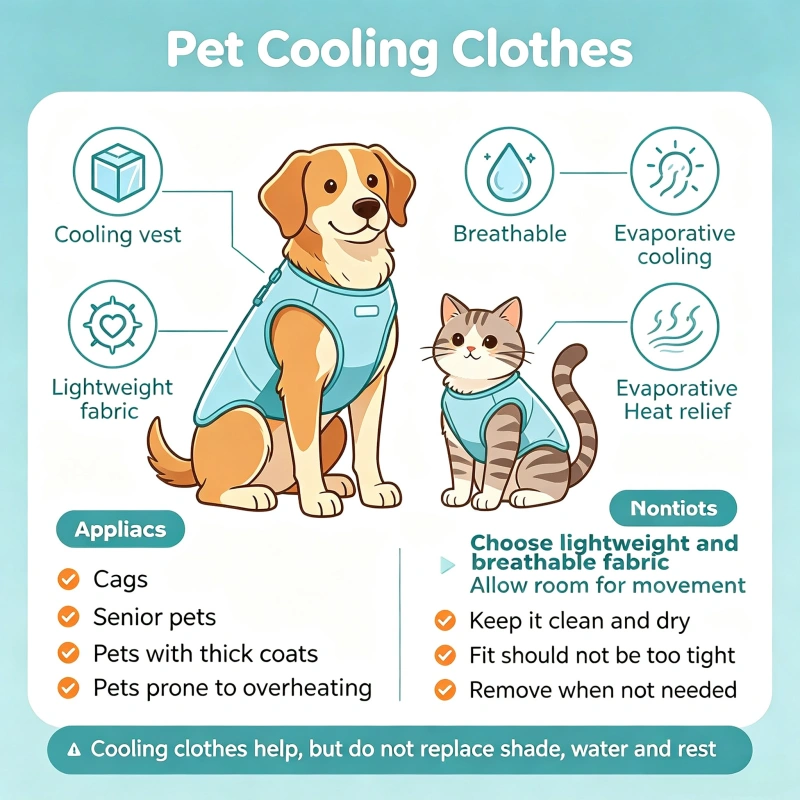
The answer is not simply “less clothing.” The right summer pet clothing can help reduce direct sun exposure, improve comfort outdoors and provide evaporative or reflective cooling. However, clothing should never replace shade, fresh water or proper heat management.
Here are the most useful types of cooling clothing for dogs and other pets.
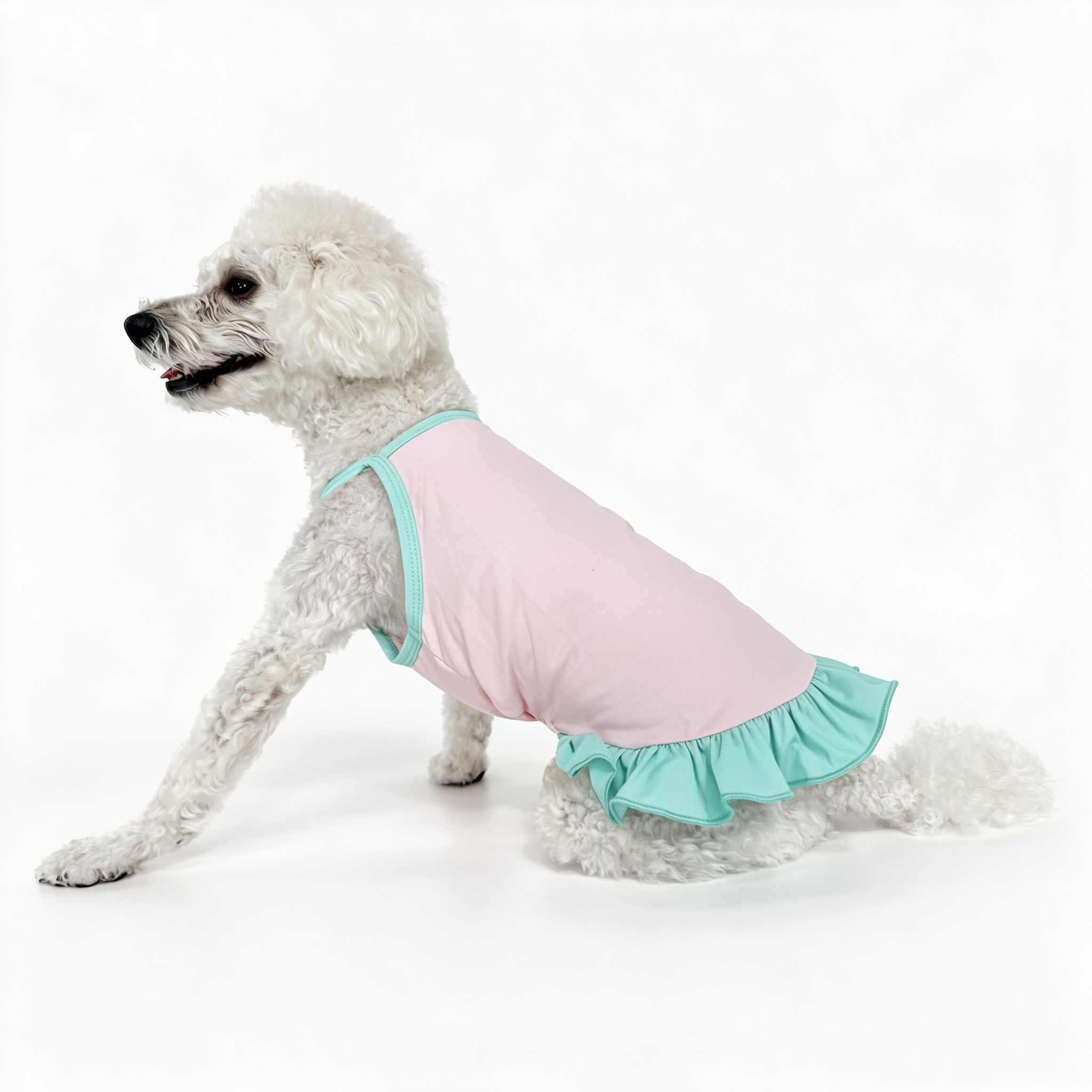
1. Cooling Vests
Dog cooling vests are one of the most practical choices for dogs that spend time outdoors.
Many are designed to hold water and provide evaporative cooling as the moisture gradually evaporates. Others use specialized cooling materials or inserts.
They work particularly well for:
- Walking
- Hiking
- Outdoor travel
- Camping
- Summer activities
For hot-weather activities, choose a vest that fits snugly without restricting movement.
{“ARInfo”:{“IsUseAR”:false},”Version”:”1.0.0″,”MakeupInfo”:{“IsUseMakeup”:false},”FaceliftInfo”:{“IsChangeEyeLift”:false,”IsChangeFacelift”:false,”IsChangePostureLift”:false,”IsChangeNose”:false,”IsChangeFaceChin”:false,”IsChangeMouth”:false,”IsChangeThinFace”:false},”BeautyInfo”:{“SwitchMedicatedAcne”:false,”IsAIBeauty”:false,”IsBrightEyes”:false,”IsSharpen”:false,”IsOldBeauty”:false,”IsReduceBlackEyes”:false},”HandlerInfo”:{“AppName”:2},”FilterInfo”:{“IsUseFilter”:false}}
2. Lightweight UV Protection Shirts
A UV protection pet shirt is designed mainly to reduce direct sunlight reaching the skin and coat.
This can be useful for pets that spend time outside, especially those with short or light-colored coats.
Look for lightweight, breathable fabrics rather than thick materials. A good summer shirt should allow the pet to move, breathe and release body heat normally.
3. Evaporative Cooling Shirts
Evaporative cooling shirts work similarly to cooling vests.
You wet the garment, gently remove excess water, and put it on the pet. As the water evaporates, it can create a cooling effect.
They can be useful during outdoor walks, travel and warm-weather activities.
One practical tip: don’t keep the garment soaking wet for too long in a humid environment, because high humidity reduces evaporation.
4. Breathable Mesh Shirts
Sometimes the simplest solution is the best one.
A lightweight mesh pet shirt can provide coverage while allowing air to circulate around the body.
Mesh clothing is particularly useful when the goal is protection and comfort rather than active cooling.
Look for:
- Open-knit or mesh construction
- Lightweight fabric
- Soft seams
- Flexible arm openings
- Loose but secure fit
5. Lightweight Cooling Pajamas
For indoor pets, lightweight cooling pajamas can be useful when the main purpose is comfort.
These garments are usually made from thin cotton, modal, bamboo-derived or other breathable fabrics.
They are especially suitable for pets that need a little extra skin coverage but do not require a heavy cooling vest.
6. Sun-Protective Dog Shirts
A sun-protective dog shirt combines clothing coverage with UV protection.
This type can be useful for pets with exposed skin or those that spend extended periods outdoors.
However, clothing should not be treated as complete protection from heat. Your pet still needs shade, water and breaks from direct sunlight.
7. Cooling Bandanas
A cooling bandana is a simple option for dogs that dislike full-body clothing.
It covers only a small area around the neck and is easy to put on and remove.
For short walks or outdoor trips, a cooling bandana can be more acceptable to a pet that refuses a vest or shirt.
How to Choose the Right Cooling Pet Clothing
Think about what problem you are trying to solve.
| Pet Clothing | Best For |
|---|---|
| Cooling vest | Outdoor exercise and hiking |
| Evaporative shirt | Active summer use |
| UV shirt | Sun protection |
| Breathable mesh shirt | Airflow and light coverage |
| Lightweight pajamas | Indoor comfort |
| Sun-protective shirt | Extended outdoor exposure |
| Cooling bandana | Short walks and easy cooling |
The most important thing is fit.
A cooling garment should not be so tight that it restricts breathing or movement. It should also not be so loose that your pet can easily remove it or become tangled.
A Practical Summer Experience
One simple approach that works well for many dogs is to use different clothing for different situations.
For a morning walk, a lightweight UV shirt may be enough. For a longer outdoor activity, an evaporative cooling vest may make more sense. Back at home, remove the clothing and let the dog rest somewhere cool with fresh water.
In other words, don’t look for one “magic” cooling garment.
Choose the clothing according to the weather, activity and your pet’s tolerance.
And if your pet shows heavy panting, weakness, difficulty breathing, vomiting or collapse, remove it from the heat and seek veterinary assistance immediately. Clothing cannot prevent or treat heatstroke.
Summer Pet Cooling Checklist
Before the temperature rises, I recommend checking these items:
| Check | What to do |
|---|---|
| Water | Fresh water available all day |
| Shade | Create a shaded resting area |
| Indoor temperature | Keep the coolest room available |
| Exercise | Move walks to cooler hours |
| Pavement | Test the ground before walking |
| Cooling | Offer a mat, cool floor or damp towel |
| Grooming | Brush and remove mats |
| Outdoor play | Avoid intense exercise during peak heat |
| Car travel | Never leave pets unattended in a parked car |
| Health | Watch closely for heatstroke symptoms |
You don’t need to buy every cooling product on the market.
A good summer setup can be surprisingly simple.
Common Mistakes Pet Owners Make in Summer
Mistake 1: Walking at the Same Time Every Day
Your dog’s body doesn’t care what time your calendar says.
If the pavement is hot at noon, change the schedule.
Mistake 2: Assuming Water Is Enough
Water is essential, but it doesn’t make a pet safe from excessive heat.
Shade, exercise management and a cool environment matter too.
Mistake 3: Shaving the Coat Completely
Removing the coat to the skin is not a universal solution and can increase sun exposure.
Mistake 4: Letting the Dog Run Because “It Still Has Energy”
Some dogs will happily keep playing even when they are becoming overheated.
The owner must decide when to stop.
Mistake 5: Waiting for Collapse
Heatstroke can become serious before a pet collapses.
Heavy panting, drooling, weakness or unusual behavior should already get your attention.
How to Keep Pets Cool in Summer: The Simple Formula
If you only remember one thing from this article, remember this:
Water + shade + timing + airflow + sensible exercise + observation.
For most pets, those six things matter more than buying a cupboard full of cooling products.
In the morning, exercise when it’s cooler.
During the hottest part of the day, keep outdoor activity low.
Make fresh water available.
Give your pet a cool place to rest.
And most importantly, learn what your own pet looks like when it is uncomfortable.
Every dog and cat is different.
Your Labrador may happily lie on a cooling mat.
Your cat may prefer the bathroom floor.
Another dog may want to play with a sprinkler.
The best summer routine is the one that keeps your individual pet hydrated, comfortable, calm and out of dangerous heat.
And if you see signs of heatstroke, treat it as an emergency and contact a veterinarian immediately.
FAQ
How can I cool my dog down in summer?
Provide fresh water, shade and a cool indoor area. Move walks to early morning or evening, avoid hot pavement and offer a cooling mat, cool floor or damp towel. Monitor for excessive panting, drooling, weakness or other signs of overheating.
How can I keep my cat cool without air conditioning?
Keep your cat indoors in the coolest part of the home, block direct sunlight, provide fresh water and improve airflow. Allow the cat to choose cool surfaces such as tile floors.
Should I put ice in my pet’s water?
Ice cubes can be used in water for many pets, and both ASPCA and RSPCA mention ice as one option for helping pets stay cool. If your pet doesn’t like ice, plain fresh water is perfectly fine.
Is a cooling mat worth buying for a dog?
A cooling mat can be useful, especially when placed where the dog already likes to rest. However, it should be considered one part of a broader cooling routine rather than a replacement for water, shade and exercise management.
Can I shave my dog in summer?
Do not automatically shave your dog down to the skin. The ASPCA advises against this because the coat can provide protection against overheating and sunburn. Regular brushing and appropriate grooming are generally better approaches.
What temperature is too hot for dogs?
No single temperature is safe or unsafe for every dog. Humidity, direct sunlight, pavement temperature, breed, age, body condition and health all matter. Flat-faced dogs and dogs with certain health conditions can be at greater risk.
What are the first signs of heatstroke in pets?
Heavy panting, difficulty breathing, excessive drooling, weakness, unusual drowsiness, poor coordination, vomiting and collapse can be warning signs. Heatstroke can become life-threatening, so seek veterinary help immediately if you suspect it.
Can pets stay outside during summer?
They can spend time outside under appropriate conditions, but they need constant access to shade and fresh water. In extreme heat, move pets indoors to a cooler environment.
Final Takeaway
Keeping pets cool in summer doesn’t have to be complicated.
Start with the basics: fresh water, shade, cooler exercise times and a comfortable indoor space. Then add cooling mats, frozen treats, water play or other solutions according to what your pet actually enjoys.
The biggest improvement often comes from changing the daily routine—not buying more products.
Watch your pet, learn its normal behavior, and take unusual panting, weakness or breathing problems seriously. A few small changes can make a very hot summer much safer and more comfortable for your four-legged family member.

I am a supplier with 10 years of experience in the apparel industry. As a professional clothing manufacturer, we provide you with a one-stop solution.


Leave a Reply
Want to join the discussion?Feel free to contribute!