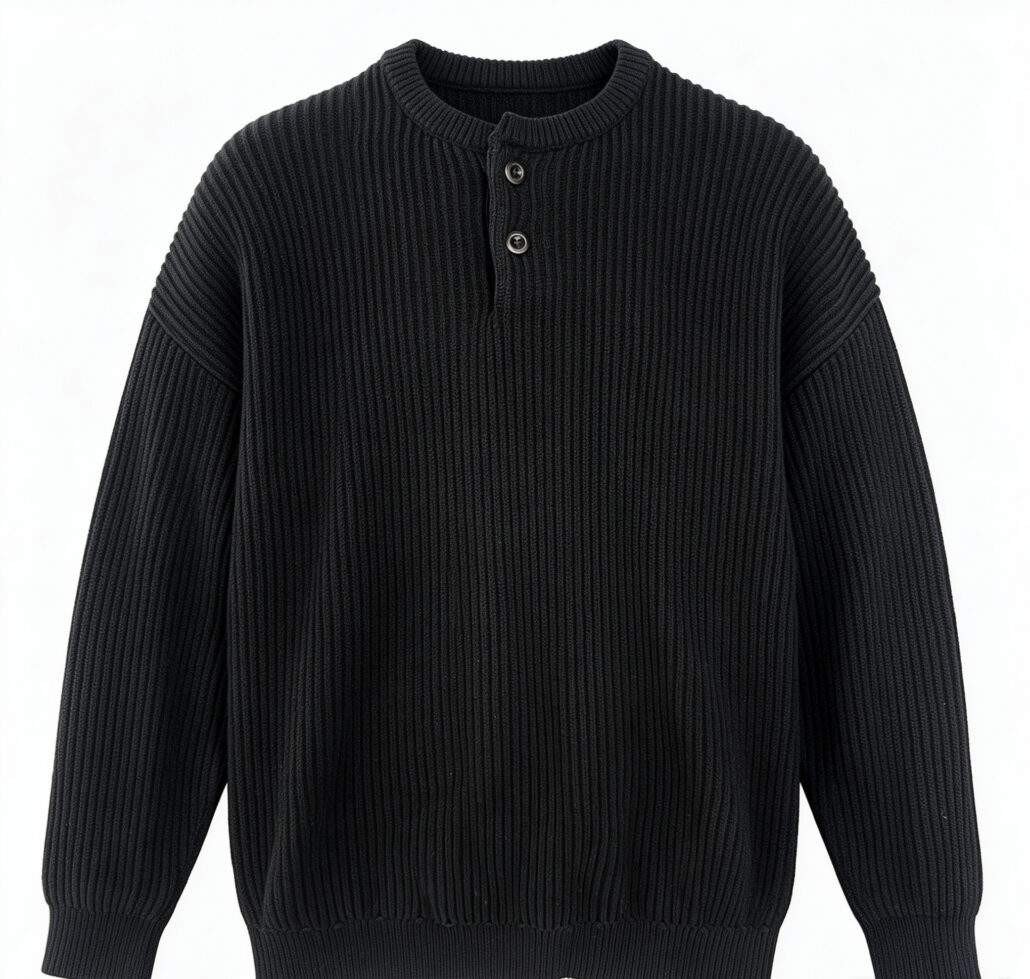
Men’s Crew Neck Knit Sweater
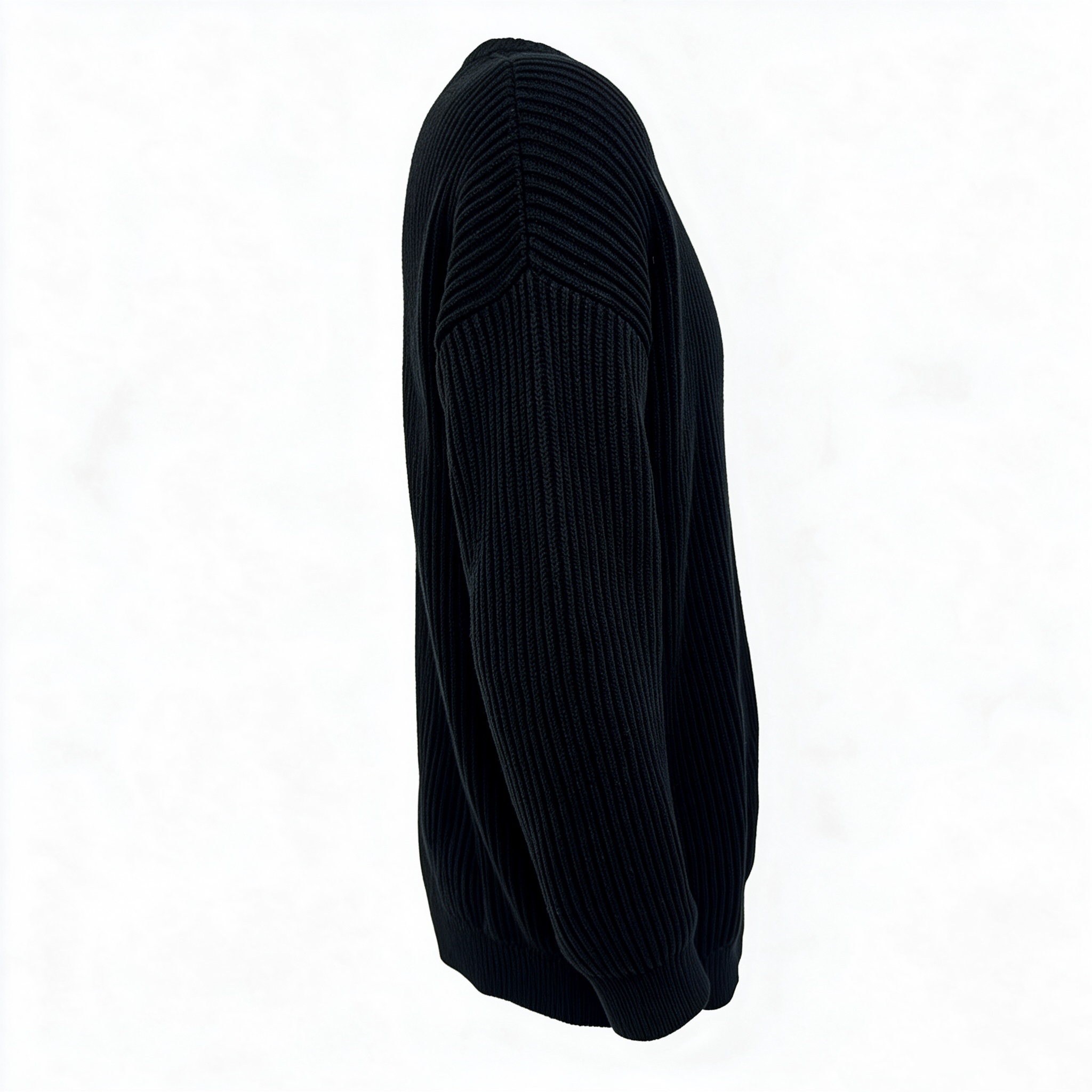
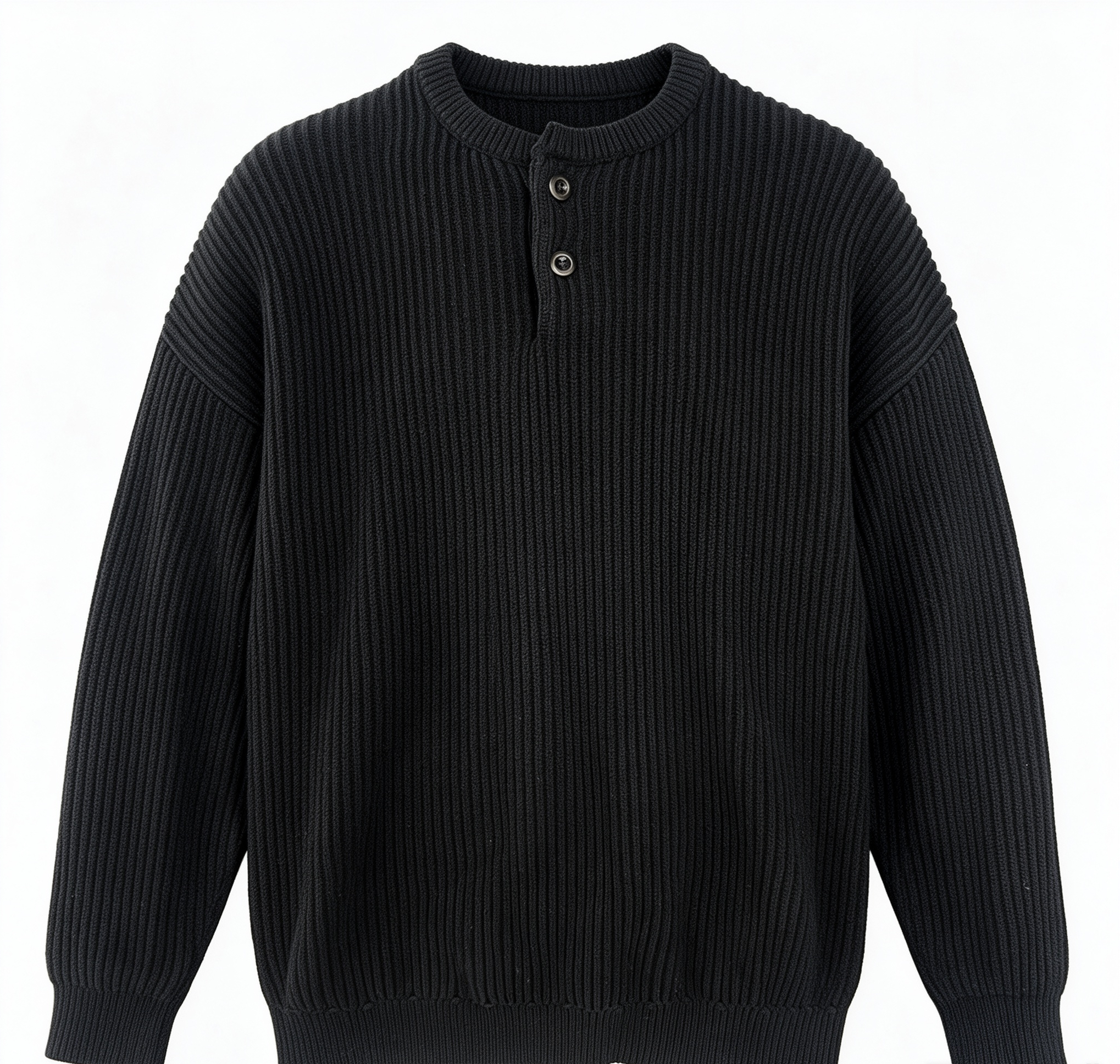
Men’s knit sweater with two buttons at the neckline: buttoned up it reads as a clean crew neck, and opened it gives the neck a little room and a more casual look. It is made for winter and works two ways — worn on its own over a T-shirt or shirt, and worn as a base layer under a coat or a heavier knit. The knit is warm without bulk, and the ribbed neckline, cuffs and hem hold their shape instead of stretching out. The placket is knitted to match the body, and each button is lock-stitched and pull-tested with reinforced buttonholes. Colours are matched to Pantone; the sample is grey, charcoal and dark navy. Sizes S–XXL. MOQ 100 pieces, sampling 7–10 working days, bulk 25–40 days.
Men’s Two-Button Crew Neck Knit Sweater
Wholesale and private label
Overview
This is a men’s knit sweater with two buttons at the neckline. Buttoned up, the neckline reads as a clean crew neck and the sweater is worn like a pullover; opened, the placket gives the neck a little room and the sweater becomes a lighter, more casual layer. It is made for winter, and it is designed to work two ways: worn on its own over a T-shirt or a shirt, and worn as a base layer under a coat, a jacket or a heavier knit. The knit is warm without being bulky, so it layers without adding weight at the shoulder, and the ribbed neckline, cuffs and hem hold the shape of the garment instead of stretching out. Sizes run [S–XXL], and can be graded to your own size chart. MOQ is 100 pieces per colourway.
Product specification
Fabric: soft knit, warm for winter.
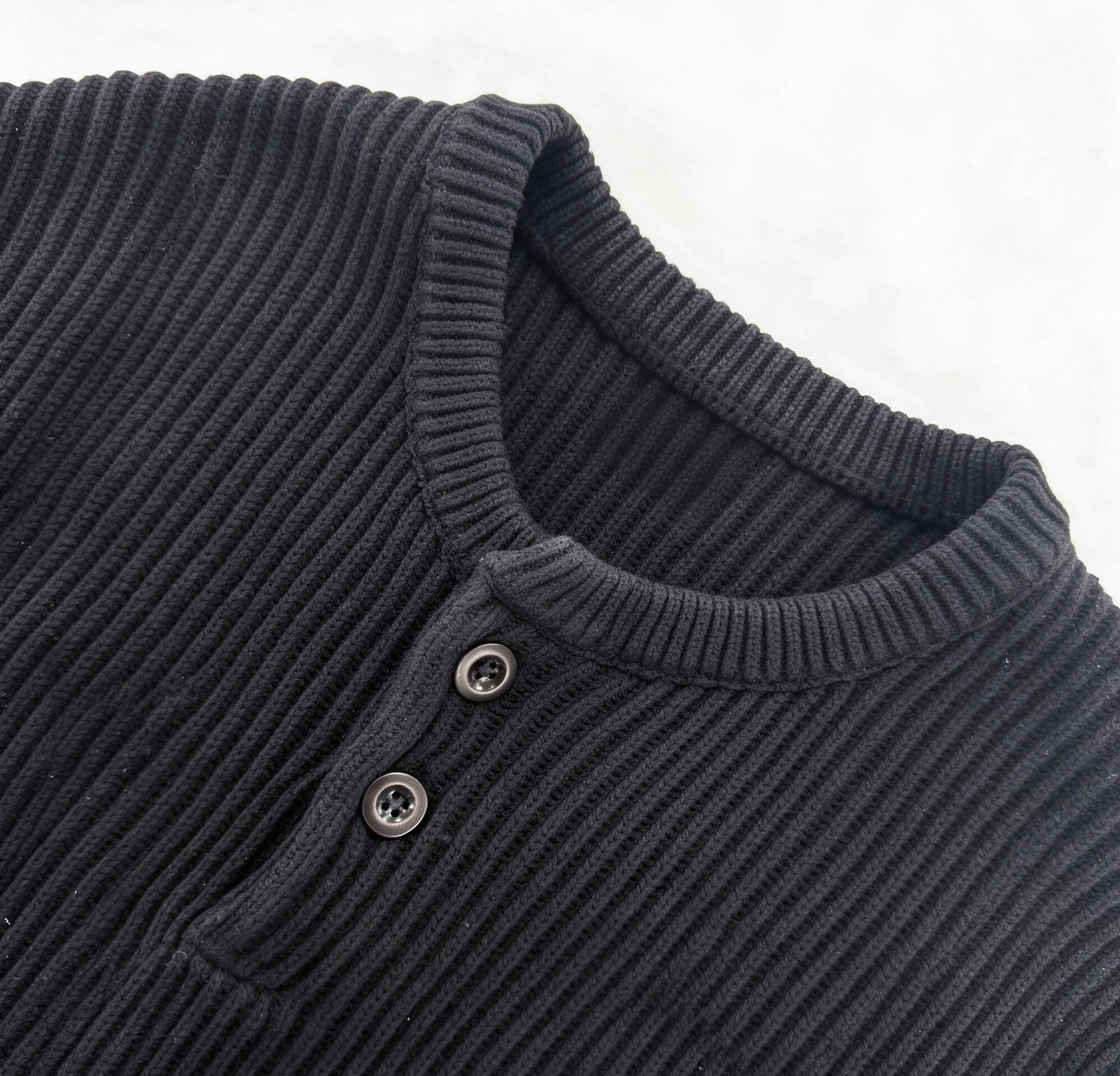
Neckline: two-button placket; buttoned, it reads as a crew neck.
Fit: [regular], with room for a shirt underneath.
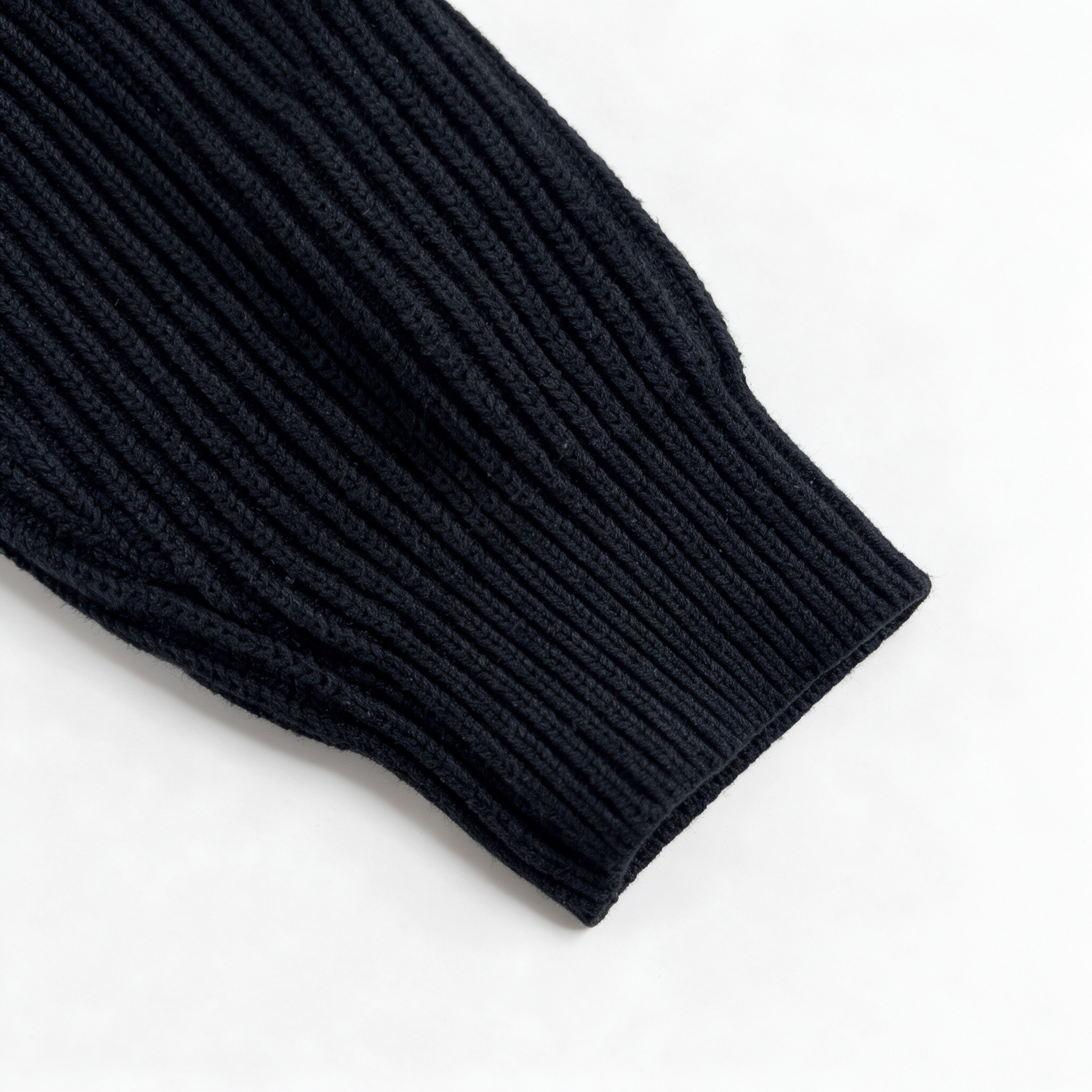
Cuffs and hem: ribbed, elastic and shape-recovering.
Colour: grey, charcoal and dark navy as photographed, or matched to your reference.
Sizes: [S–XXL], graded to your size chart.
MOQ: 100 pieces per colourway, mixed sizes accepted.
Sample: 7–10 working days per round.
Bulk lead time: 25–40 days after sample approval and deposit.
Care: wash inside out, dry flat, do not bleach.
Quality control: inline and final inspection, button pull test, placket alignment check, needle detection.
Why buyers choose this style
A two-button sweater is one of the most flexible pieces in a men’s winter range, because it sits between a crew neck and a cardigan. Buttoned, it is a plain sweater that can be worn to the office with a shirt or casually with jeans. Opened, it is a little more relaxed, which is how most customers wear it at the weekend. That range of use means the same garment sells to different customers and works in more than one section of a shop.
The winter layering position is the second reason it sells. A sweater that is thin enough to wear under a coat but warm enough to wear on its own covers both the indoor and outdoor parts of a winter day, so customers buy it as a base layer and then keep wearing it on its own when the weather eases.
For the buyer, the numbers are straightforward: 100-piece MOQ, 7–10 day sampling and 25–40 day bulk lead time, with mixed sizes in one order. The sweater can be sold as a plain stock item or as a private-label piece with your own label, hangtag and packaging.
Two buttons: a crew neck when closed
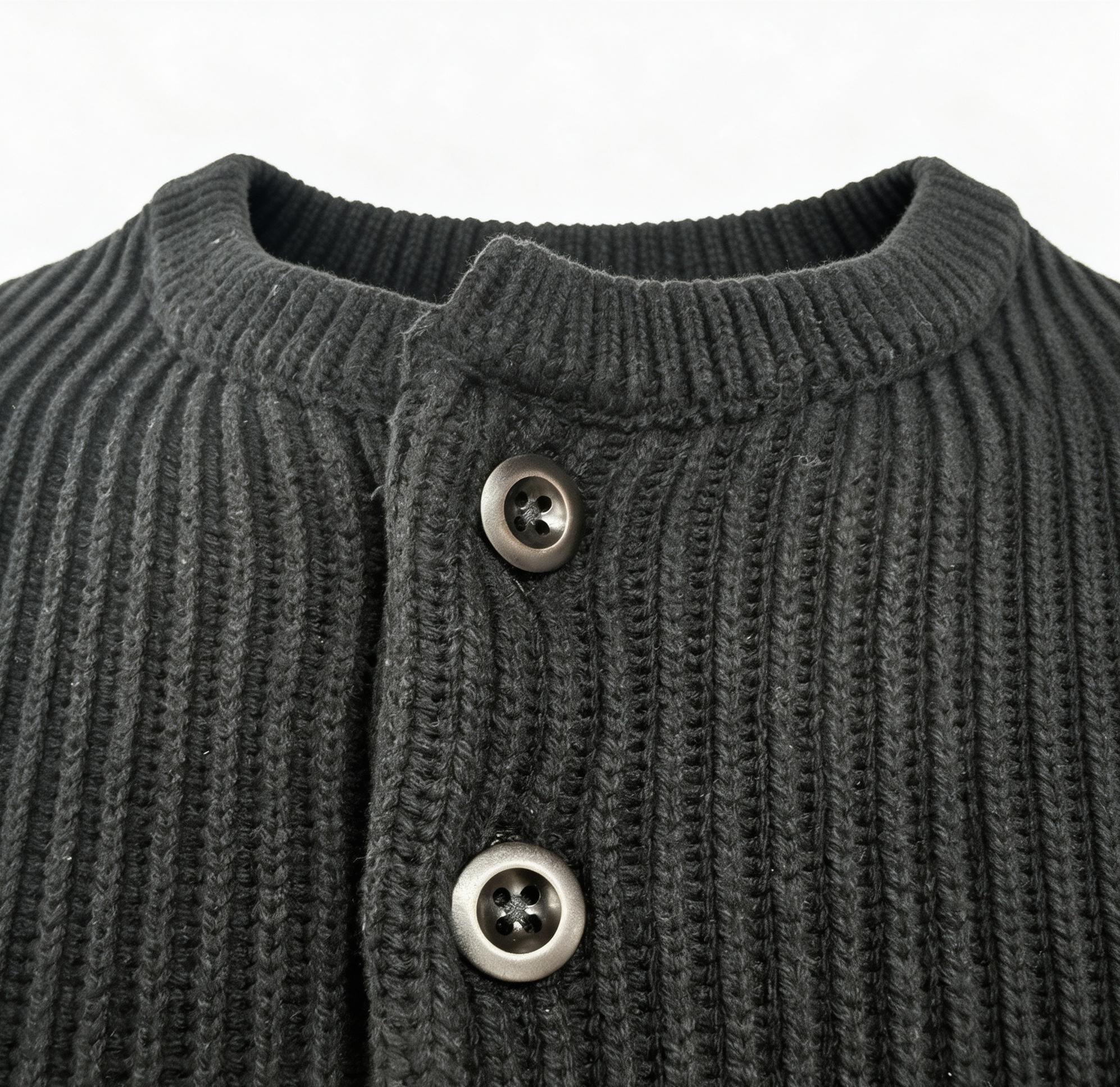
The neckline is built with a short placket and two buttons. When both buttons are fastened, the placket closes and the neckline sits like a crew neck: clean, close to the neck, and formal enough to wear with a collared shirt underneath. When the buttons are open, the neck opening relaxes slightly, which gives the sweater a more casual look and lets the wearer adjust for warmth or airflow.
Two buttons are enough for a sweater. A longer placket turns the garment into a cardigan and changes the whole look; two buttons give the wearer the choice without breaking the line of the neckline. The buttons are set on a placket that is knitted to match the body, so the front edge stays flat instead of curling, and the buttonholes are worked with a reinforced edge so they do not stretch with daily use.
Each button is attached with a lock stitch and pull-tested, because a button that comes off is the fastest way for a knit to look cheap. The neckline itself is finished with rib, which holds the shape of the opening and stops it stretching out when the sweater is pulled over the head — with a two-button placket, the neck is the part of the garment that is handled every time it is worn.
Wearing it alone or as a winter base layer
The sweater is designed to be worn as an outer layer indoors and as a base layer outdoors. On its own, the knit is warm enough for a cold room and smart enough for work: buttoned with a shirt, or opened over a T-shirt. Under a coat or a jacket, the sweater is thin enough that it does not add bulk at the shoulder or the sleeve, which is what makes it comfortable to wear for a full day.
That combination is what customers actually need in winter, because the temperature changes between the street, the car, the office and home. A sweater that is warm but thin can stay on all day; a heavy sweater has to be taken off indoors and carried. The ribbed cuffs grip the wrist and stop cold air entering, and the ribbed hem keeps the sweater in place when it is worn as a base layer.
Knit fabric and construction
The sweater is knitted to shape rather than cut from a flat panel of fabric wherever the design allows it. Fully fashioned panels are knitted to the correct shape and joined with linked seams, which keeps the shoulder and the side seams flat and thin and stops them sitting proud under a coat. Where cut-and-sew panels are used, the seams are overlocked and pressed flat so the inside of the sweater is comfortable against the skin.
The yarn is chosen for warmth, hand feel and shape retention. A mid-weight yarn is the best compromise for a sweater that is worn both alone and as a base layer: heavy enough to be warm, light enough to layer. The hand feel and the warmth are confirmed on the sample, and the same pattern can be produced with a lighter or a warmer yarn so a buyer can offer two price points.
Two quality points are controlled before bulk. Pilling: knitwear pills at friction points such as under the arms, at the cuffs and along the placket edge, so the yarn is selected and tested for pilling. Shrinkage: the knit is pre-shrunk or washed before finishing, so the sweater does not come back from the first wash one size smaller. Colour is dyed on the yarn, which gives an even shade through the knit and keeps repeat orders consistent.
Fit and sizing
The sweater is cut with a comfortable body and enough room in the shoulder and the sleeve to wear a shirt underneath. Grading, body length, sleeve length, neckband depth, placket length and rib depth are developed to your own size chart. Reference sizes [S–XXL], confirmed on the order.
Chest width, body length and sleeve length are measured flat, without stretching, and the measurements are printed in both centimetres and inches on the size guide. Because the rib at the cuffs and hem recovers after stretching, the fit should be judged on the flat measurement rather than on the stretched garment.

Colour and finishing
The photographed sample is a dark neutral palette — grey, charcoal and dark navy — which is the easiest group of colours to sell in menswear because it works with denim, navy, olive and grey trousers. Colour is matched to your Pantone reference and checked under D65 light before knitting, so the body, the sleeves and the trims do not differ in shade under shop lighting.
The finishing is where a knit sweater is judged in the hand. The placket is pressed flat, the rib at the neck, cuffs and hem is knitted in the same yarn as the body so the colour matches exactly, and the rib is worked to recover after stretching. Loose ends are trimmed and secured, and the inside of the sweater is clean enough to wear without a shirt.
Customization
Colours: grey, charcoal and dark navy as shown, or matched to your Pantone reference.
Yarn: soft knit, confirmed on the sample.
Buttons: material, size and colour, with a branded button option.
Placket: placket length, button spacing and neckband depth.
Branding: woven labels, printed labels, hangtags, patches and custom packaging.
Sizes: [S–XXL], or graded to your own chart.
Sampling and production timeline
- Inquiry. Send a photo, a sketch or a tech pack.
- Yarn. Confirm the yarn, the colour and the hand feel, 3–7 days.
- Pattern. Fit, neckline, placket and button spacing, 2–3 days.
- Sample. First sample with the two-button neckline, 7–10 working days per round.
- Approval. Your sign-off on fit, colour, neckline, buttons and trims.
- Bulk. Production, 25–40 days after approval and deposit.
- Shipment. Final inspection and packing, then sea, air or express.
Most knitwear styles are approved in two rounds: the first sample confirms the fit, the neckline and the placket, and the second confirms the yarn, the colour and the buttons.
Quality control, stage by stage
- Yarn checked before knitting, including shade and hand feel.
- Panels measured during knitting.
- Neckline, placket and button spacing checked during sewing.
- Button pull test on every size.
- Buttonholes checked for stretch and finish.
- Neckline, cuffs and hem checked for rib recovery.
- Pilling, shrinkage and colourfastness tested on the finished sweater.
- Measurement, colour and label verification, then needle detection and final inspection.
Minimum order quantity
The MOQ is 100 pieces per colourway, and mixed sizes within one colour are accepted, so a 100-piece order can cover a full size run. Custom dyed yarn, branded buttons or special trims may require a higher quantity, confirmed at quotation stage.
What we need from you
- A clear photo, a sketch, a sample from another market or a full tech pack.
- Any yarn reference or hand-feel sample you have, if available.
- Your size range and grading, or we can develop one for approval.
- Neckline style and the placket length.
- Colour references, with Pantone numbers.
- Button specification, plus label, hangtag and packaging requirements.

FAQ
What is the MOQ? 100 pieces per colourway, mixed sizes accepted.
How long does sampling take? 7–10 working days per round.
How long is bulk production? 25–40 days after sample approval and deposit.
Is it a crew neck? Buttoned up, the neckline reads as a crew neck. Opened, it gives a little more room at the neck.
How many buttons does it have? Two, on a short placket.
Can it be worn as a base layer? Yes. It is thin enough to wear under a coat or a jacket and warm enough to wear on its own.
Are the buttons secure? Yes. Each button is lock-stitched and pull-tested, and the buttonholes are reinforced.
Have a tech pack or a photo? Send it over.
We will come back with a sample plan, the MOQ and a quotation for your market. For repeat orders we keep your yarn, colour and button specification on record, so the next order starts from the approved sample.


Leave a Reply
Want to join the discussion?Feel free to contribute!