
Women’s Striped Sweater
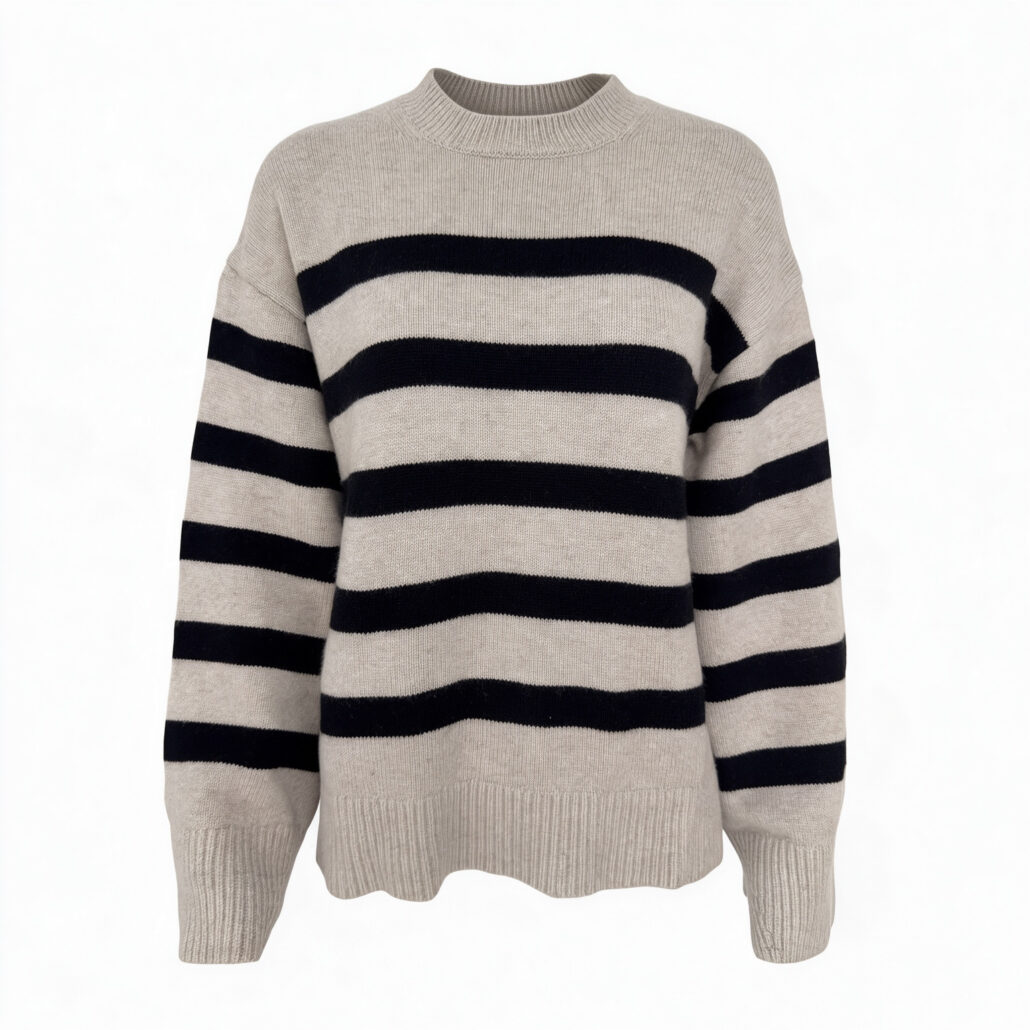
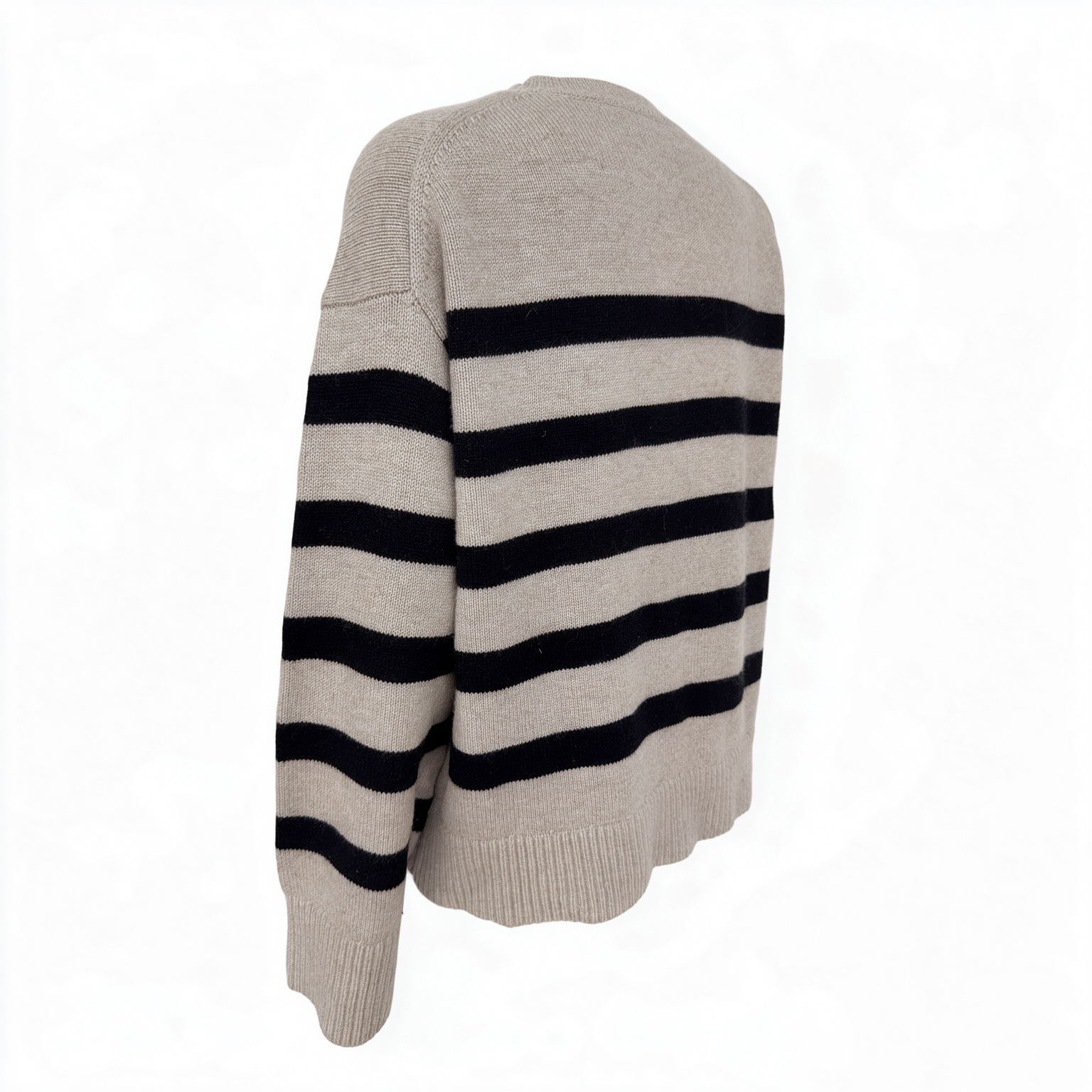
Women’s oversized striped knit sweater in a coarse-gauge plain knit, with a crew neck, dropped shoulders and wide black bands on an oatmeal ground. The yarn is a nylon and wool blend, so the surface is soft with a slight fuzzy hand rather than prickly, and it resists pilling better than pure acrylic while holding its shape. The fabric has a relaxed drape, so the sweater feels warm without looking stiff, and the black stripe is dyed to a colourfastness standard and washed with the oatmeal ground before bulk to confirm it does not bleed. Wide ribbed trims at the neck, cuffs and hem hold their shape and recover after stretching. Colours are matched to Pantone. Sizes S–XXL. MOQ 100 pieces, sampling 7–10 working days, bulk 25–40 days.
Women’s Oversized Striped Knit Sweater
Wholesale and private label
Overview
This is a women’s striped knit sweater in a coarse-gauge plain knit, cut in a relaxed oversized shape with a crew neck and dropped shoulders. The yarn is a nylon and wool blend, which is what gives the sweater its soft, slightly fuzzy hand and its resistance to pilling, and the fabric has a relaxed drape rather than the stiff, board-like feel of a cheap acrylic knit. The stripes are a classic contrast combination: an oatmeal ground with wide black bands, a pairing that reads as retro and relaxed and that photographs strongly without needing styling. Ribbed trims at the neck, cuffs and hem are knitted wide and thick so they hold their shape and do not curl, and the rib recovers after stretching so the sweater does not go slack after a season of wear. It is worn on its own in autumn and as a layer under a coat or a blazer in winter, and it works with jeans, skirts and casual trousers. The sweater is produced as a stock item and as a private-label piece, so the yarn, the stripe colours, the trims and the packaging can all be set to your specification. Sizes run [S–XXL], and can be graded to your own size chart. MOQ is 100 pieces per colourway.
Product specification
Yarn: nylon and wool blend, soft with a slight fuzzy hand, [composition to be confirmed].
Knit: coarse-gauge plain knit with a relaxed drape.
Stripe: oatmeal ground with wide black contrast bands.
Neckline: crew neck with a wide ribbed collar.
Shoulder: dropped shoulder, oversized fit.
Trims: wide ribbed cuffs and hem, thickened to hold their shape.
Colour: oatmeal and black as photographed, or matched to your reference.
Sizes: [S–XXL], graded to your size chart.
MOQ: 100 pieces per colourway, mixed sizes accepted.
Sample: 7–10 working days per round.
Bulk lead time: 25–40 days after sample approval and deposit.
Care: wash inside out, wash with similar colours, dry flat, do not bleach.
Quality control: inline and final inspection, colour-bleed and pilling test, rib recovery check, needle detection.
Why buyers choose this style
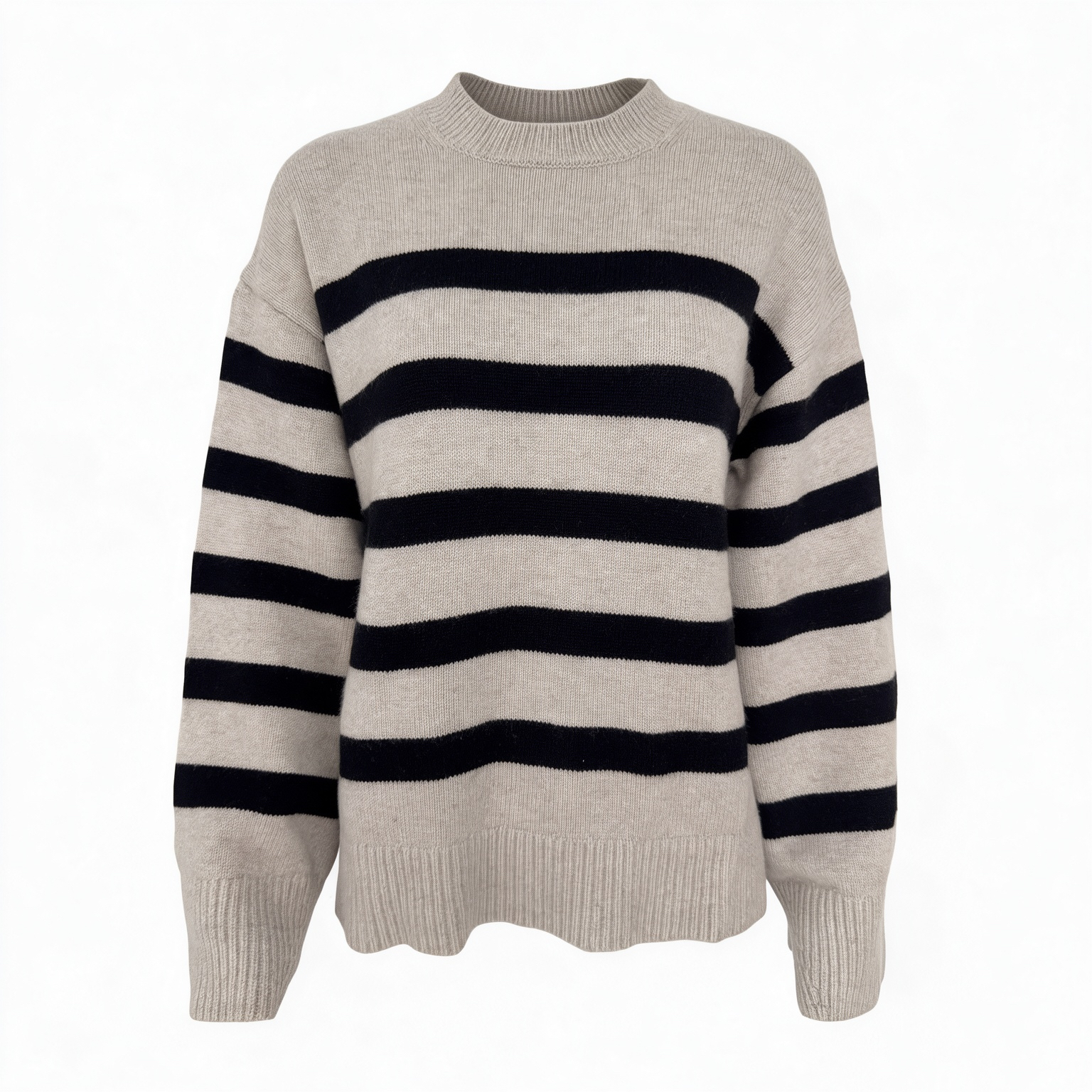
A striped knit in oatmeal and black is one of the most reliable items in a women’s autumn and winter range, because the colour combination is easy to wear and does not date. It is bought by customers who want a warm layer that looks considered without being formal, and it is bought in more than one colourway by customers who already own it, which is what creates repeat orders rather than single sales.
The blend is the second reason. Nylon and wool give the sweater a better hand and better performance than a pure acrylic knit: it resists pilling, it holds its shape, and it has moderate stretch, so it does not stretch out at the elbow or the hem. That difference is what makes the sweater last more than one season, which is what customers mention in reviews.
The third reason is the fit. A crew neck with dropped shoulders and an oversized body is the shape that suits the widest range of customers: the dropped shoulder softens the shoulder line, the loose body skims rather than clings, and the wide ribbed hem keeps the sweater from looking shapeless. For the buyer, the numbers are straightforward: 100-piece MOQ, 7–10 day sampling and 25–40 day bulk lead time, with mixed sizes in one order.
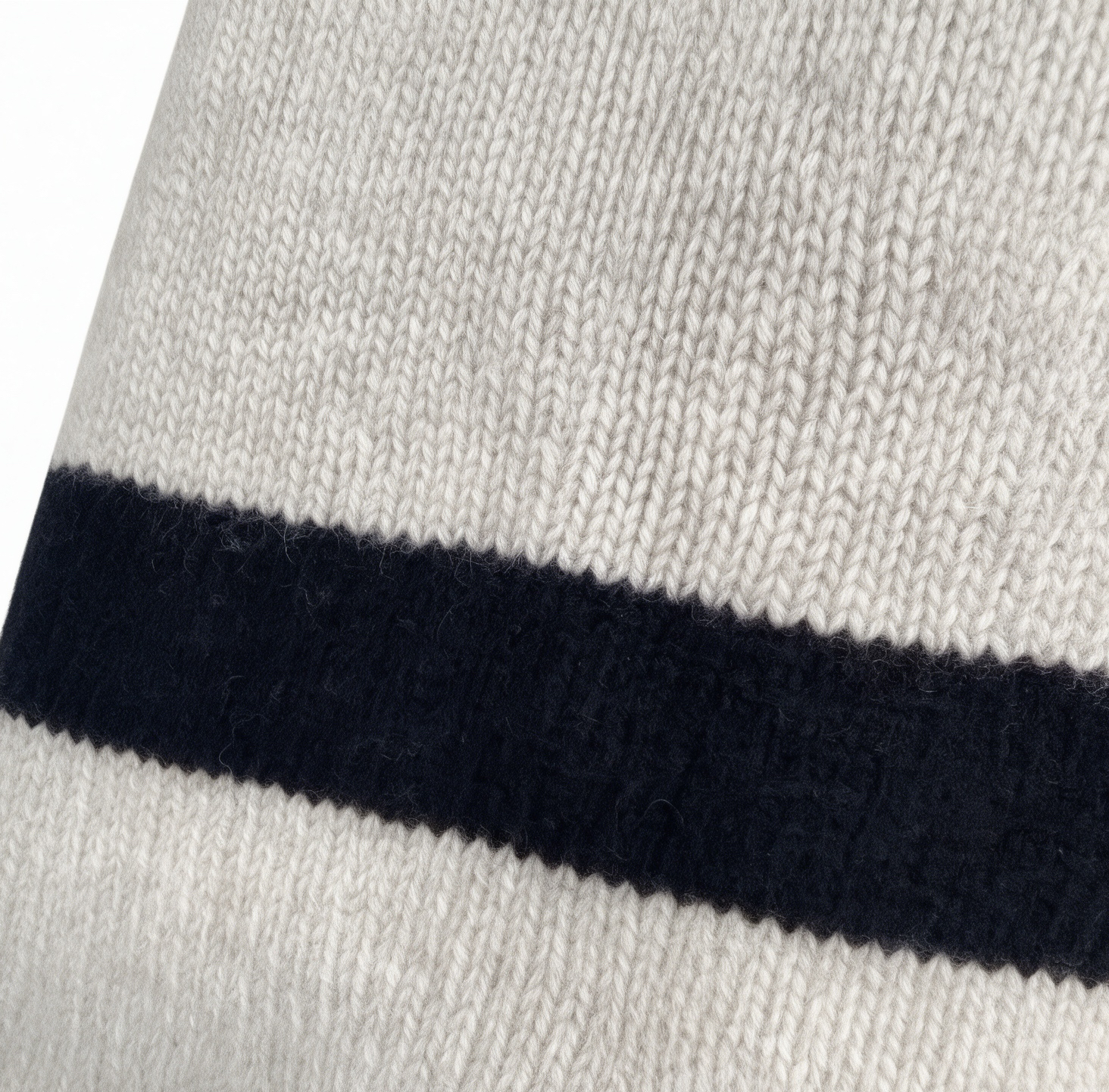
Coarse-gauge plain knit: soft, warm, not itchy
The sweater is knitted in a coarse gauge, which means the stitches are larger and the yarn is thicker. That structure is what gives the fabric its soft, slightly fuzzy surface and its relaxed drape: the knit has air in it, so the sweater feels warm without being heavy, and it does not sit stiffly against the body.
The hand feel matters because a sweater in this weight is worn directly against the skin. The yarn is chosen so the surface is soft rather than prickly, and the wool content is kept at a level that adds warmth and resilience without making the fabric scratchy. The finished garment is checked against the skin on a fit model, particularly at the neck and the inner arm, because those are the two places where a coarse knit can feel uncomfortable.
The fuzzy surface also works in the design: it softens the line between the oatmeal ground and the black stripes, so the contrast reads as warm and vintage rather than graphic and hard.
Nylon and wool: why the blend resists pilling
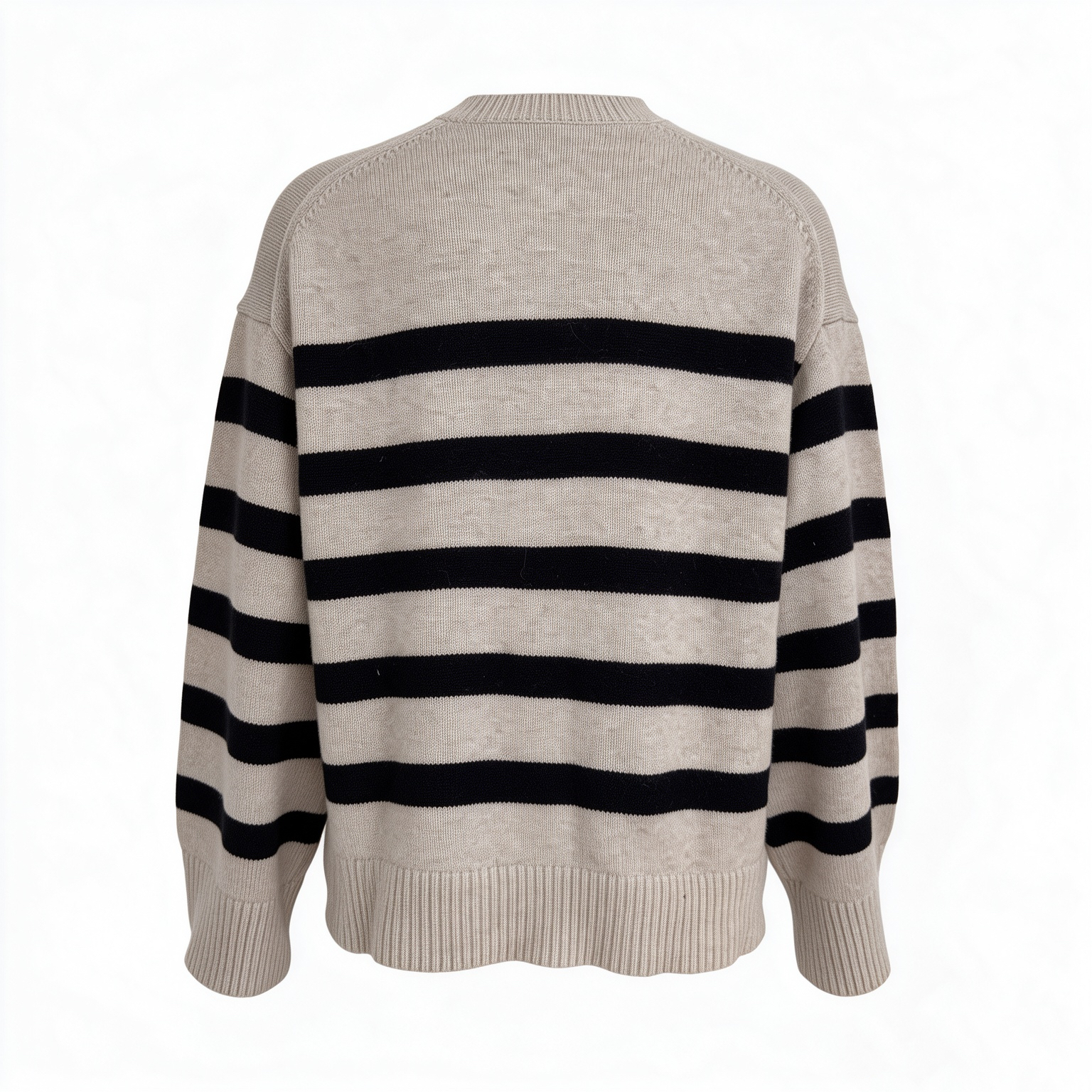
Pilling is the most common complaint about knitwear, and the fibre blend is what decides how well a sweater resists it. Pure acrylic pills readily, because the fibres are smooth and slide out of the yarn to form pills on the surface. Adding nylon increases the strength and the abrasion resistance of the yarn, so the fibres are held in the structure for longer, and adding wool improves the resilience of the yarn so the knit springs back instead of flattening.
The result is a sweater that resists pilling better than a pure acrylic knit, with moderate stretch and better shape retention. Pilling is still tested before bulk, because the friction points — under the arms, at the cuffs and where a bag strap rubs — are where any knit will show wear first. A pilling test is run on the finished garment, and the result is used to confirm the yarn for the order.
Oatmeal and black stripes: stable colour, no bleeding
The stripe design is a classic contrast: an oatmeal ground with wide black bands. It reads as retro and relaxed, it suits both casual and smart-casual styling, and it photographs well because the contrast is strong but not loud.
Colour stability is the technical point that matters most in a two-colour knit. Black is the colour most likely to bleed in the wash, so the yarn is dyed to a colourfastness standard that is checked before production, and the finished garment is washed at the customer’s wash temperature with the two colours together to confirm that the oatmeal ground does not pick up grey and the black does not fade. The yarn for one order is dyed in one lot, so the stripe colours are consistent through the knit and repeat orders match.
Two further details are confirmed on the sample. First, the stripe width and repeat are planned across the size range, so every size carries the same number of complete stripes across the chest rather than a stripe being cut off at the side seam. Second, the stripes are matched at the side seams and the sleeve joins, so the garment reads as one piece rather than two panels that happen to be striped.
Oversized fit with dropped shoulders
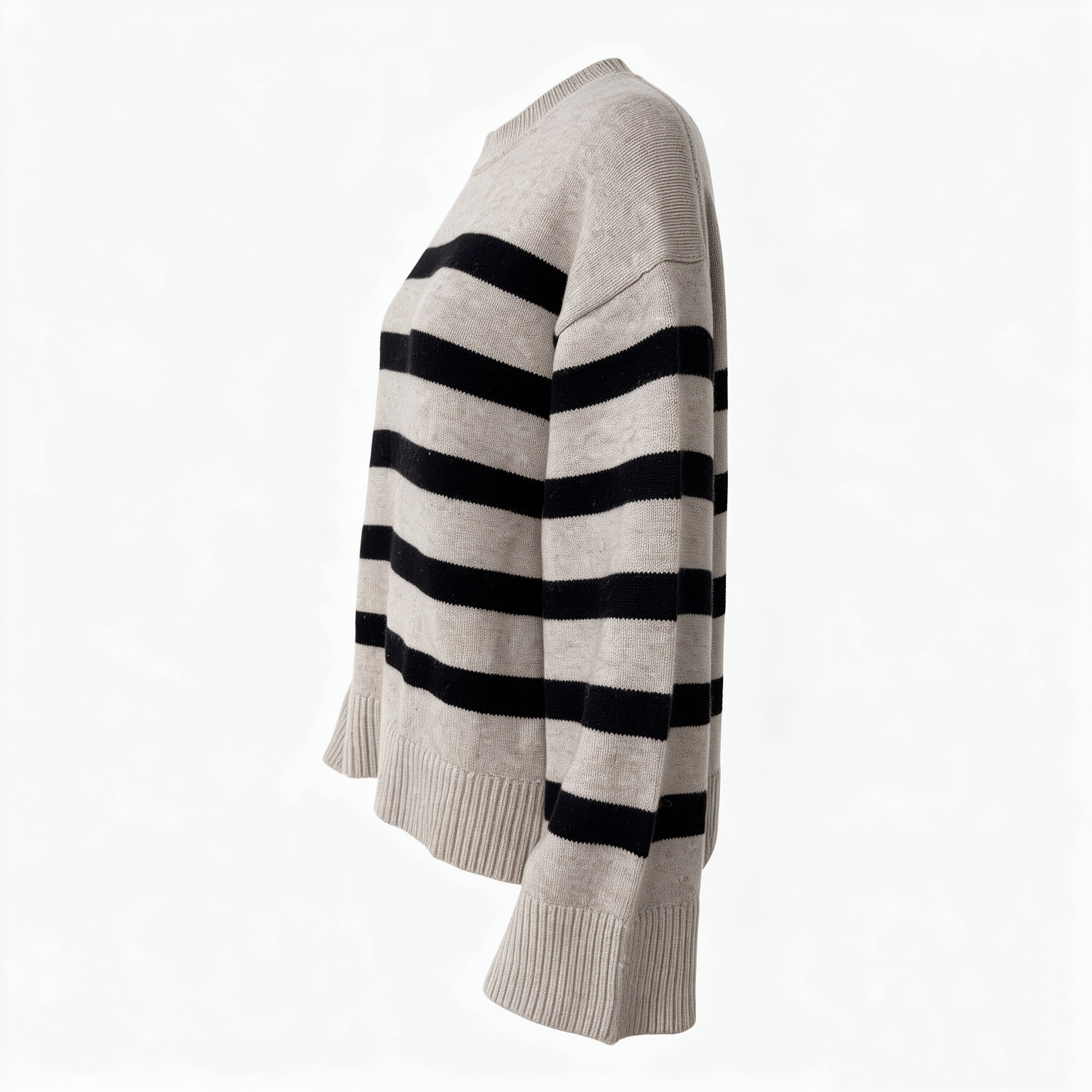
The sweater is cut with an oversized body and a dropped shoulder. The shoulder seam sits below the natural shoulder line, which softens the width of the shoulders, and the body is wide enough to skim the waist and the hips without clinging. The sleeve is cut long enough to reach the wrist without bunching, and the armhole is deep enough that the fabric does not pull when the wearer reaches forward.
The length finishes at the hip, which is the length that works both with jeans and with a skirt, and the wide ribbed hem holds the shape of the body so the sweater keeps a defined line at the bottom instead of flaring. The cut is confirmed on a fit model in the base size and checked again on the largest size, because an oversized garment has to look intentional at both ends of the range.
Wide ribbed trims
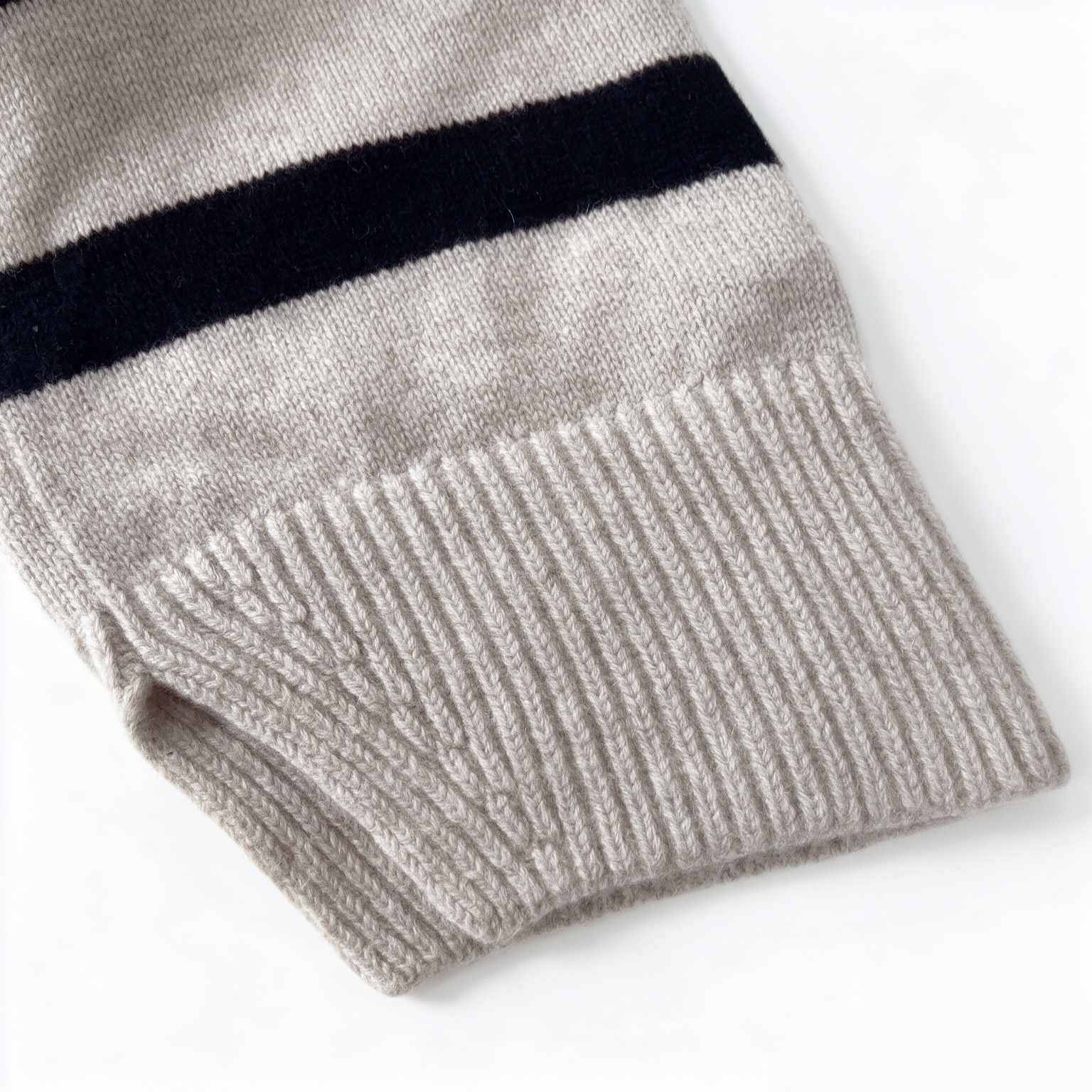
The neck, cuffs and hem are finished with wide ribbing that is knitted thicker than the body. The extra depth is what stops the edges curling and what keeps the sweater looking structured: the neckline holds its shape when the sweater is pulled over the head, the cuffs grip the wrist without marking it, and the hem stays flat against the body rather than rolling up.
The rib is tested for recovery after repeated stretching, because the cuffs are pulled twice a day in normal wear and the neckline is stretched every time the sweater goes on. The rib is knitted in the same yarn as the body so the colour matches exactly, and on a striped sweater the rib colour is confirmed against the stripe sequence so the cuffs and the hem sit correctly at the end of the design.
Fit and sizing
Sizing is based on chest width, body length, shoulder drop, sleeve length and hem width, measured flat without stretching. Grading is developed to your own size chart, and the size guide shows both centimetres and inches. Reference sizes [S–XXL], confirmed on the order. Because the fit is oversized, the chest measurement should not be sized up further by the customer, and the body length is the measurement that decides how the sweater reads.
Colour and finishing
The photographed sample is the oatmeal and black stripe, which is the easiest colourway to sell because it works with denim, black, cream and camel. Colour is matched to your Pantone reference and checked under D65 light before knitting, so the body and the trims do not differ in shade under shop lighting.
Where a range needs variety, the same stripe pattern can be produced in a second colourway — for example cream with brown bands, or grey with navy — without changing the fit or the stripe layout. The finishing is where a knit is judged: the neckline is pressed flat, the seams are linked or overlocked and pressed, the ribbing is even, and loose ends are trimmed and secured.
Customization
Colours: oatmeal and black as shown, or matched to your Pantone reference.
Stripe design: stripe width, sequence and direction confirmed on the sample.
Yarn: nylon and wool blend as standard, with a cotton or acrylic option for other markets.
Fit: body length, sleeve length, shoulder drop and rib depth adjusted to your measurements.
Branding: woven labels, printed labels, hangtags, patches and custom packaging.
Sizes: [S–XXL], or graded to your own chart.
Sampling and production timeline
- Inquiry. Send a photo, a sketch or a tech pack.
- Yarn. Confirm the yarn, the stripe colours and the hand feel, 3–7 days.
- Pattern. Fit, shoulder drop, neckline and stripe repeat, 2–3 days.
- Sample. First sample with the stripes and ribbing, 7–10 working days per round.
- Approval. Your sign-off on fit, colours, stripes and trims.
- Bulk. Production, 25–40 days after approval and deposit.
- Shipment. Final inspection and packing, then sea, air or express.
Most knitwear styles are approved in two rounds: the first sample confirms the fit, the shoulder drop and the ribbing, and the second confirms the yarn, the stripe colours and the trims.
Quality control, stage by stage
- Yarn checked before knitting, including count, shade and hand feel.
- Stripe sequence and width measured during knitting.
- Neckline, cuffs and hem checked for rib recovery.
- Stripe matching checked at the side seams and sleeve joins.
- Colour-bleed test after washing, with the two colours washed together.
- Pilling, shrinkage and colourfastness tested on the finished sweater.
- Measurement, colour and label verification, then needle detection and final inspection.
Minimum order quantity
The MOQ is 100 pieces per colourway, and mixed sizes within one colour are accepted, so a 100-piece order can cover a full size run. Custom dyeing, a new stripe layout or a special yarn may require a higher quantity, confirmed at quotation stage.
What we need from you
- A clear photo, a sketch, a sample from another market or a full tech pack.
- The stripe reference: width, sequence and colours.
- Pantone references for the ground colour and the stripe.
- The yarn blend and weight you want.
- Your size range and grading, or we can develop one for approval.
- Trims and packaging requirements, plus barcode details.
FAQ
What is the MOQ? 100 pieces per colourway, mixed sizes accepted.
How long does sampling take? 7–10 working days per round.
How long is bulk production? 25–40 days after sample approval and deposit.
Does the black bleed in the wash? The yarn is dyed to a colourfastness standard and the finished garment is washed with both colours together before bulk.
Is it itchy? The yarn is selected so the surface is soft rather than prickly, and the neck and inner arm are checked on a fit model.
Does it pill? The nylon and wool blend resists pilling better than pure acrylic, and pilling is tested on the finished sweater.
Is the fit oversized? Yes. It is cut with an oversized body and dropped shoulders, and the ribbed hem keeps a defined line at the bottom.


Leave a Reply
Want to join the discussion?Feel free to contribute!