
Girls’ Knit Skort Pants
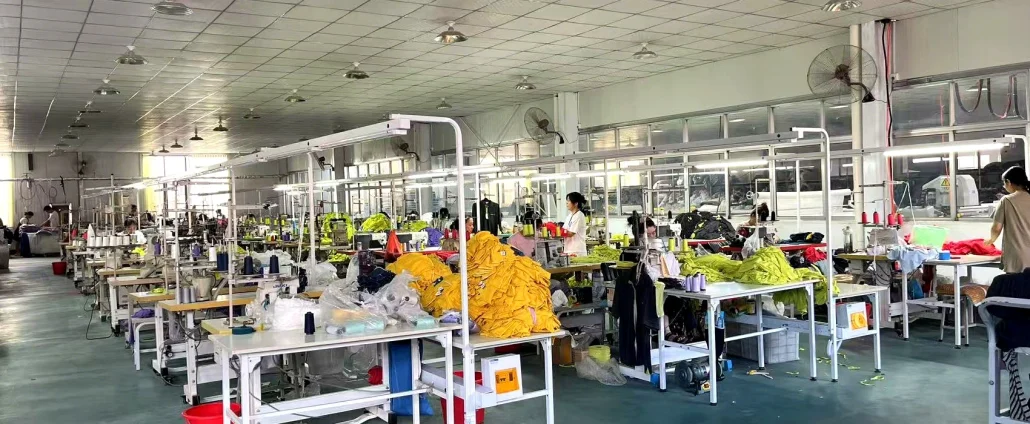
Girls’ knit skort with a skirt on the outside and built-in leggings underneath, so a child can run, climb and sit cross-legged without the skirt riding up. The fabric is a cotton/spandex jersey or cotton-rich ponte at 200–260 gsm, stretched and tested for recovery so it does not bag at the knee or waist. A wide elasticated waistband pulls on in one movement and does not twist in the wash; sizes up to 7 years use elastic only, in line with EN 14682. The inner layer is finished with a gusset and flat seams, and it stays in place during play. Print and colour can be customized. Sizes 2T–12Y. MOQ 100 pieces per colourway, sampling 7–10 working days, bulk 25–40 days.
Kids’ Knit Skort
Wholesale and private label
Overview
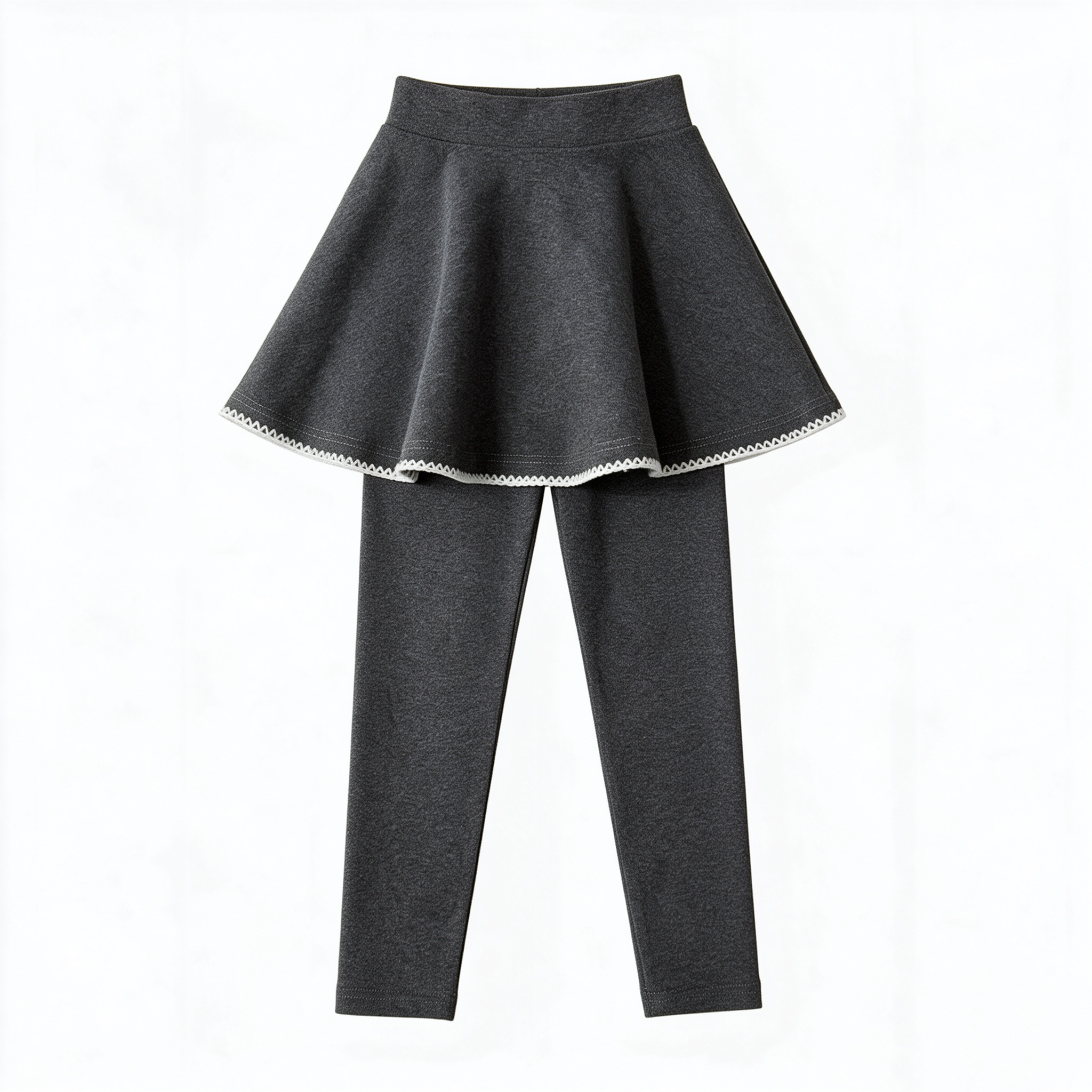
This is a kids’ knit skort: a skirt on the outside with built-in leggings underneath. It gives girls the look they ask for and the freedom they actually need, so a child can run, climb, hang upside down on the monkey bars and sit cross-legged at story time without the skirt riding up or exposing anything. The knit fabric stretches with the body, the waist pulls on in one movement, and the built-in layer means there are no separate shorts to lose, forget or put on backwards. It is designed for school, PE, playwear and the weekend, and it works with a T-shirt in summer or tights and a jumper in winter. Sizes run 2T–12Y, or 90–160 cm, and can be graded to your own size chart. MOQ is 100 pieces per colourway.
Product specification
Fabric: cotton/spandex jersey or cotton-rich ponte, 200–260 gsm.
Construction: skirt overlay with built-in leggings or shorts, sewn as one garment.
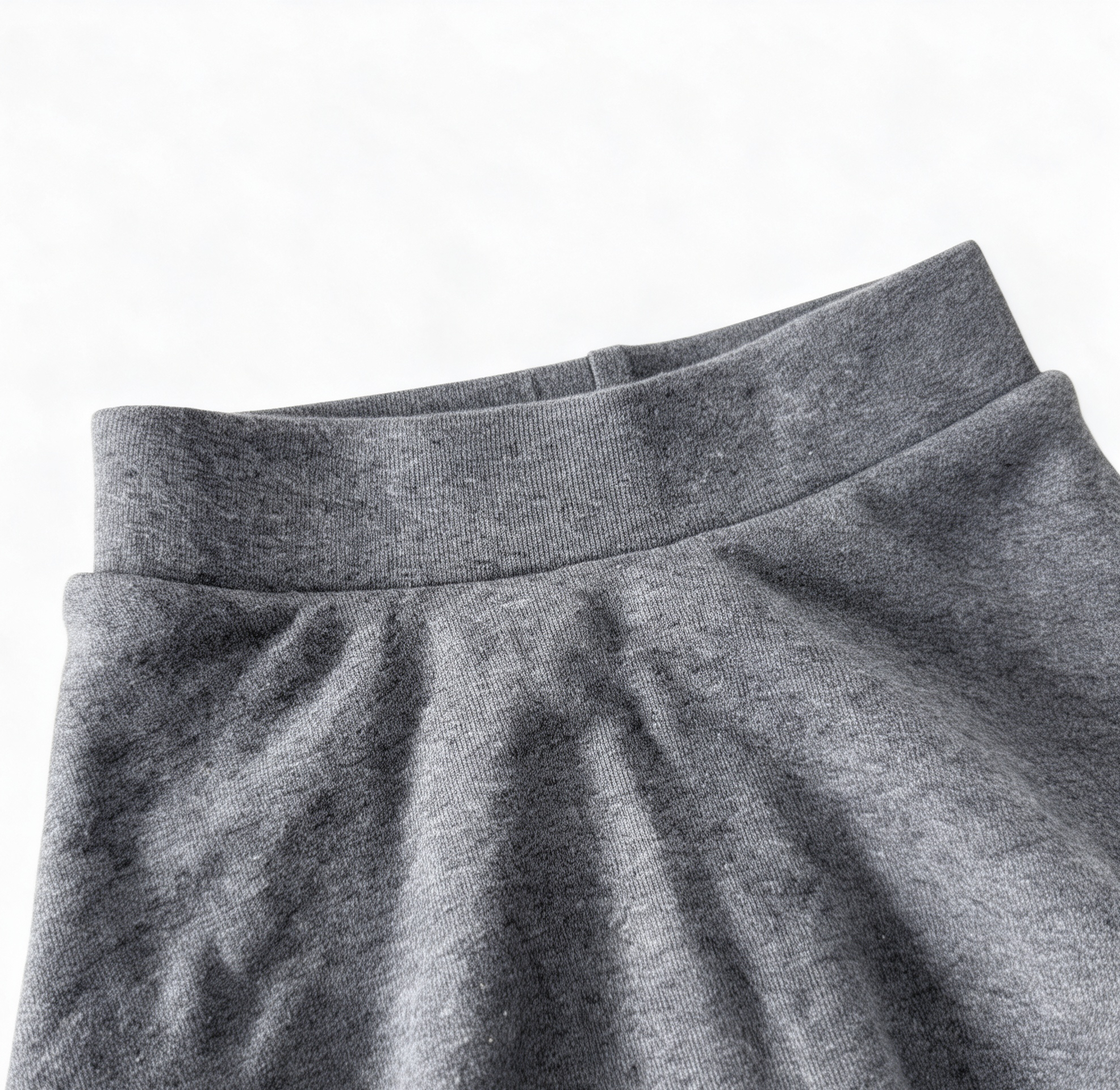
Waist: wide elasticated waistband, fully enclosed; no drawcord.
Length: skirt to mid-thigh or just above the knee; leggings to mid-calf or ankle.
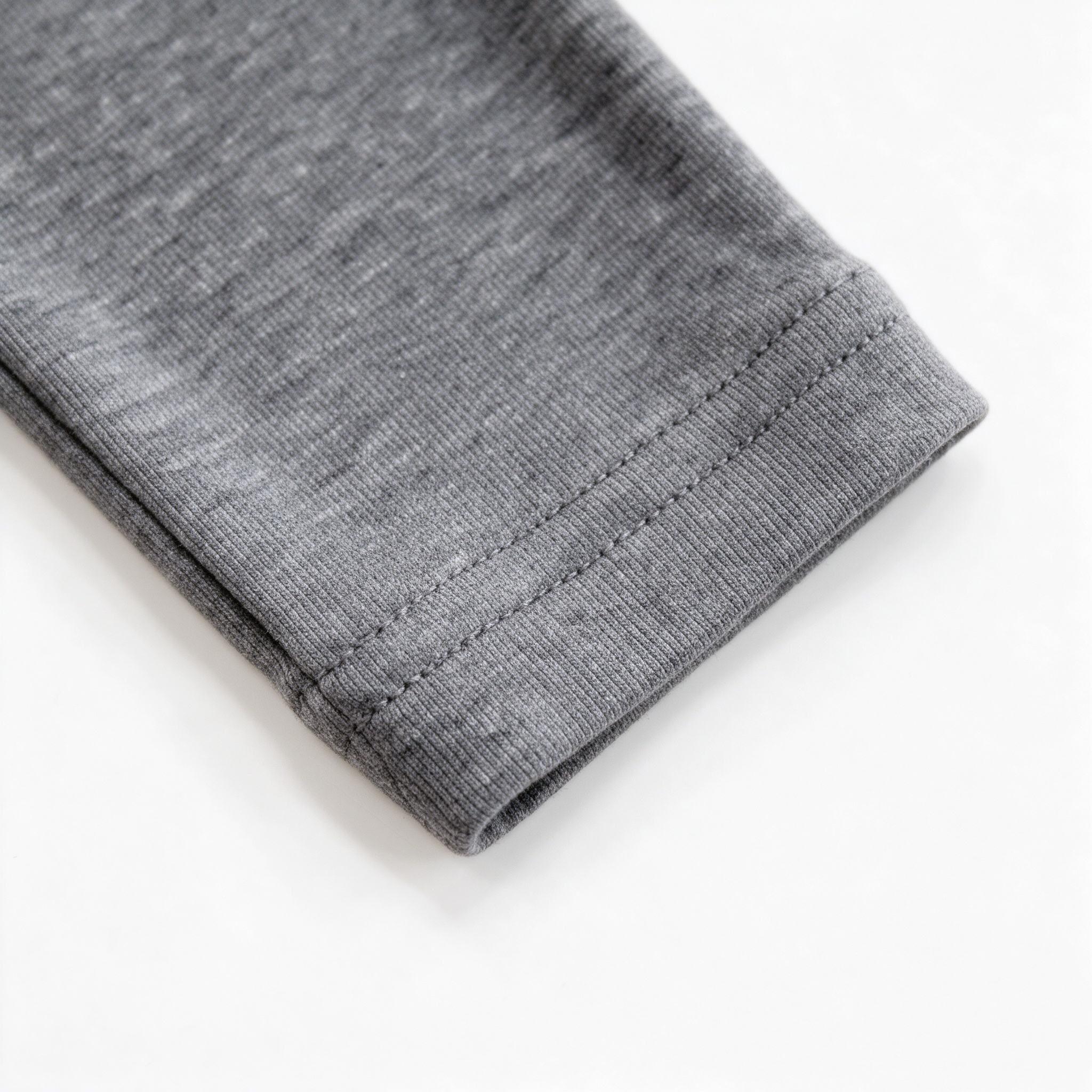
Seams: flat-lock or cover-stitched, with a gusset in the leggings.
Sizes: 2T–12Y, 90–160 cm, graded to your size chart.
MOQ: 100 pieces per colourway, mixed sizes accepted.
Sample: 7–10 working days per round.
Bulk lead time: 25–40 days after sample approval and deposit.
Quality control: inline and final inspection, needle detection, stretch recovery check.
Why buyers choose this style
A skort solves the single most common argument between a child and a parent: the child wants a skirt, and the parent wants something the child can actually play in. That is why the style has such reliable sell-through in girlswear. It is bought for school, for PE, for parties and for holidays, and it replaces both a skirt and a pair of shorts in the wardrobe.
For the buyer, the style is easy to merchandise and easy to repeat. It can be sold as an everyday basic in solid colours, or as a seasonal piece in print, and the same pattern serves both. The fit and the layer lengths are fixed on an approved sample, so a repeat order matches the first. With a 100-piece MOQ, a 7–10 day sample and a 25–40 day bulk lead time, it is a low-risk style to test in a new market.
Skirt on the outside, leggings underneath
The built-in layer is the whole point of the garment, and it has to be designed properly rather than added as an afterthought. The leggings are cut from the same knit as the skirt, with the same stretch and recovery, so the two layers move together instead of fighting each other when the child runs or squats. If the inner layer is a cheaper, stiffer knit, it pulls against the skirt and the hem goes out of shape — this is the most common failure in low-quality skorts, and it is the first thing we check on the sample.
The skirt is attached at the waistband and hangs free at the hem. The inner layer is attached at the waist and at the side seams, so it cannot ride up or twist inside the skirt. The top of the inner leg is covered by the skirt when the child is standing, and the legging extends well below the skirt hem, so nothing shows when the skirt lifts during play.
The inner layer can be a short (mid-thigh) or a full legging (mid-calf or ankle), depending on your market. Shorts are cooler and are the usual choice for summer and for markets that sell skorts as playwear; full leggings are warmer and sell in autumn and winter, and they are the version that works under a dress code in colder countries.
Both layers are cut with a gusset at the crotch. A gusset removes the tight point where seams meet, which is what causes splitting and discomfort when a child sits cross-legged or climbs. It also makes the leggings comfortable enough to wear for a full day, not just for a photo.

Knit fabric: stretch, recovery and coverage
The fabric is a cotton/spandex jersey or a cotton-rich ponte in the 200–260 gsm range. Cotton keeps the garment breathable and comfortable against the skin, and the elastane, usually 4–8%, gives the stretch that lets a child move without the fabric pulling. Ponte is heavier and holds a cleaner shape, so it is the better choice when the skirt needs to look structured; jersey is softer and lighter, and it is the better choice for summer and for playwear.
Recovery matters more than stretch in this style. A knit that stretches but does not recover ends up baggy at the knee, the seat and the waistband. We test the fabric by stretching it and measuring how much it returns, and we check the same behaviour on the finished garment, because the way a fabric behaves on a roll is not always the way it behaves after sewing.
Coverage is tested on the body rather than on the table. A knit can look opaque when it is flat and then read differently when it is stretched over a knee or a hip. The legging layer is tested at the position where the stretch is highest, in daylight, and the fabric weight or the yarn is adjusted if the layer is too transparent for the market.
Pilling is the other long-term issue. It appears first at the inner thigh, the seat and the knee, where the fabric rubs against itself. We control it with a higher-twist yarn, by testing pilling on a Martindale machine before bulk, and by offering an anti-pilling finish for higher price points.
Comfort details
The waistband is wide and fully elasticated, with the elastic enclosed so it cannot twist or dig into the waist. It is stitched in place at the side seams, so it does not migrate inside the channel after washing — a twisted waistband is one of the most common complaints on kids’ bottoms, and it is entirely avoidable.
No drawcord is used on sizes up to 7 years, in line with EN 14682 and similar children’s clothing safety standards. The waist is adjusted by the elastic alone, so there is nothing to catch on play equipment or to be pulled by another child.
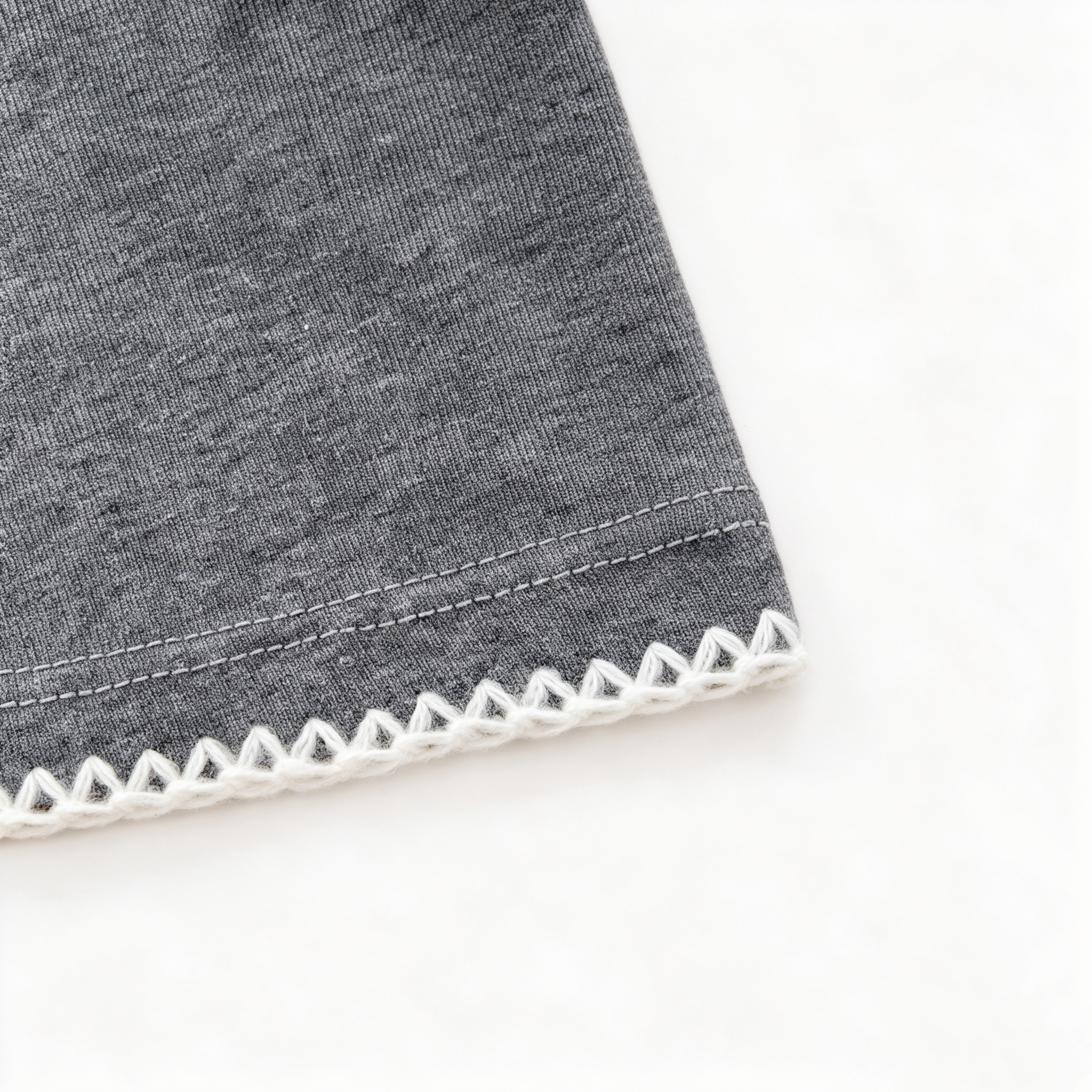
Seams through the seat, the inner leg and the gusset are flat-locked or cover-stitched, so there is no ridge rubbing against the skin. Waist and side seams are joined with a soft stitch rather than a heavy overlock, and the inside of the waistband is finished so it does not scratch.
The garment is pulled on in one movement, which matters for younger children who dress themselves. There are no zips, buttons or hooks on the inner layer, so there is nothing to fasten and nothing to sit on.
Print, colour and decoration
Solid colours are matched to Pantone, and the skirt and the inner layer are cut from the same fabric lot, so the two layers do not differ in shade under shop lighting. Panels, waistbands and hems can be developed in contrast colours for a sportier look.
Prints are developed with stretch in mind. A print on a knit has to move with the fabric, so the ink and the print method are chosen for stretch and wash resistance rather than for the sharpest possible line. The printed fabric is stretched and washed before bulk to confirm that the pattern does not crack or fade.
Embroidery, patches and reflective piping can be added where the market wants them. Placement is confirmed on the sample, with the same stitch density and backing checks used on any knit garment, so the decoration does not pucker or stiffen the fabric.
Easy care and long wear
The fabric is pre-shrunk or garment washed before cutting, with shrinkage controlled to about 3%, so the garment does not come back from a wash one size smaller. Colour is dyed on the fabric rather than on the finished garment, which gives an even shade and avoids the streaky look that can appear when a blended knit is piece-dyed.
Care is deliberately simple: machine wash at 30°C inside out, do not tumble dry, dry flat, and iron on the reverse if needed. Print and decoration are checked after the same wash cycle the parents will use, so the garment survives normal family laundering.
Fit and sizes
The skort is cut close to the body without being tight, with enough room in the seat and the thigh for movement. Grading, skirt length, legging length, rise and waist relaxed and stretched are all developed to your own size chart. Reference sizes 2T–12Y, or 90–160 cm, confirmed on the order.
Customization
Colours: Pantone matching, solid dyeing, garment dyeing and colour blocking on the skirt, waistband and inner layer.
Layers: built-in shorts or full leggings; skirt length and legging length set to your market.
Decoration: screen print, digital print, embroidery, patches and reflective piping.
Waistband: elastic width, waist height and topstitch details.
Labels and packaging: woven labels, care labels, hangtags, barcodes and patches, plus poly bags, header cards or retail boxes with carton markings.
Sampling and production timeline
- Inquiry. Send a photo, a sketch or a tech pack.
- Fabric. Confirm the knit, its weight, hand feel and shade, 3–7 days.
- Pattern. Skirt and layer lengths, fit and grading, 2–3 days.
- Sample. First sample, 7–10 working days per round.
- Approval. Your sign-off on fit, layer lengths, colours and trims.
- Bulk. Production, 25–40 days after approval and deposit.
- Shipment. Final inspection and packing, then sea, air or express.
Most skort styles are approved in two rounds: the first sample confirms the fit and the length of both layers, the second confirms the colours, decoration and trims. A pre-production sample is approved before the bulk fabric is cut.
Quality control, stage by stage
- Fabric checked on arrival, including shade, stretch and hand feel.
- Layer balance and seam alignment checked during sewing.
- Measurement, colour and label verification.
- Waist elasticity, leg opening and gusset strength checked.
- Needle detection on every garment.
- Third-party inspection arranged at your request.
The final inspection includes a stretch and recovery check on the waistband and the legging layer, and any garment where the inner layer twists or rides up is rejected before packing.
Minimum order quantity
The MOQ is 100 pieces per colourway, and mixed sizes within one colour are accepted, so a 100-piece order can cover a full size run. This applies across our whole range, which lets buyers test the fit and the sell-through before placing a larger order. Custom dyeing, custom prints or special trims may require a higher quantity, confirmed at quotation stage.
What we need from you
- A clear photo, a sketch, a sample from another market or a full tech pack.
- Your size range and grading, or we can develop one and send it for approval.
- Inner layer choice: shorts or full leggings, and the lengths you want.
- Pantone references for the body, the panels and the waistband.
- Label, hangtag and packaging requirements, plus barcode details.
- Destination country and any testing standard your market requires.
If you prefer to work with your own knit fabric, ship it to us and we will confirm the hand feel, shade and shrinkage before cutting.
FAQ
What is the MOQ? 100 pieces per colourway, mixed sizes accepted.
How long does sampling take? 7–10 working days per round.
How long is bulk production? 25–40 days after sample approval and deposit.
Can the inner layer be shorts instead of leggings? Yes, both versions are available, and the length is confirmed on the sample.
Is there a drawcord? No. Sizes up to 7 years use elastic only, in line with EN 14682.
Do you handle shipping? We ship by sea, air or express to your port or forwarder.


Leave a Reply
Want to join the discussion?Feel free to contribute!