
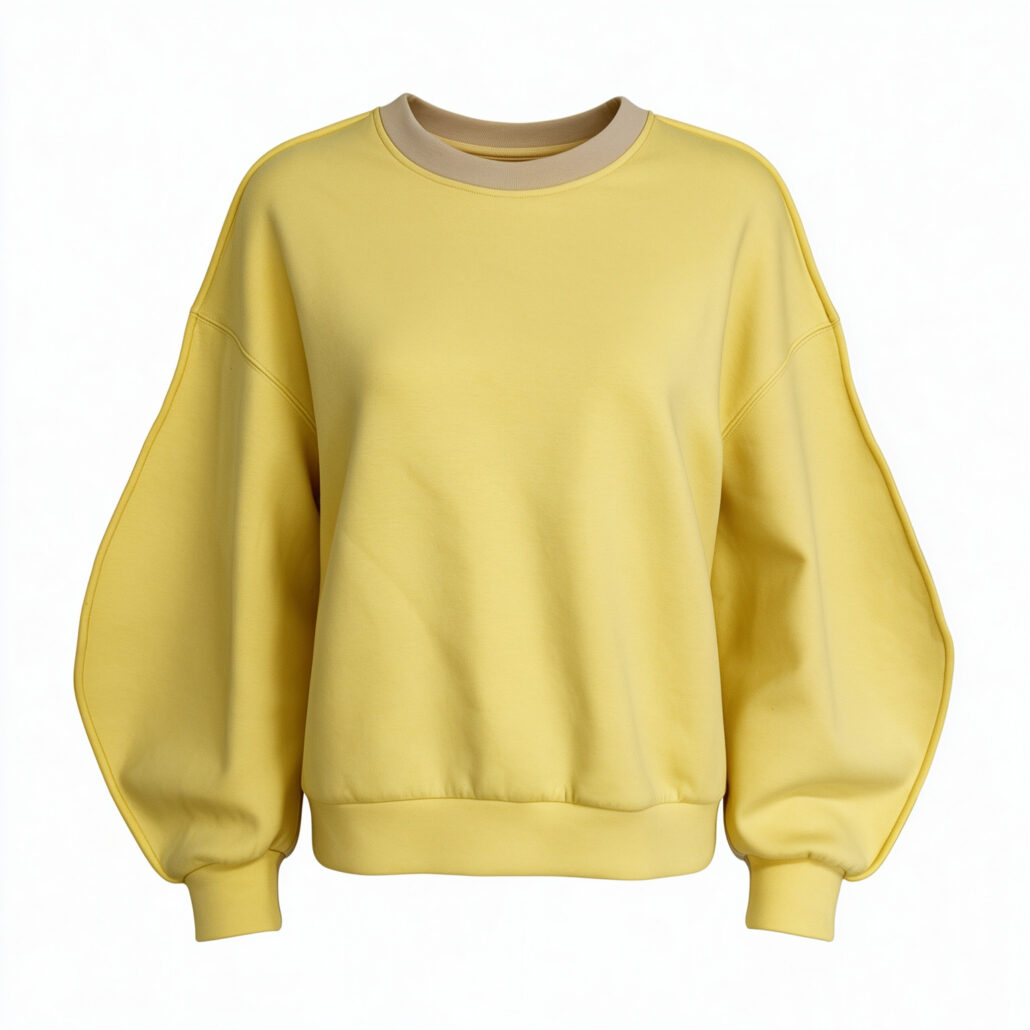
Women’s Scuba Sweatshirt
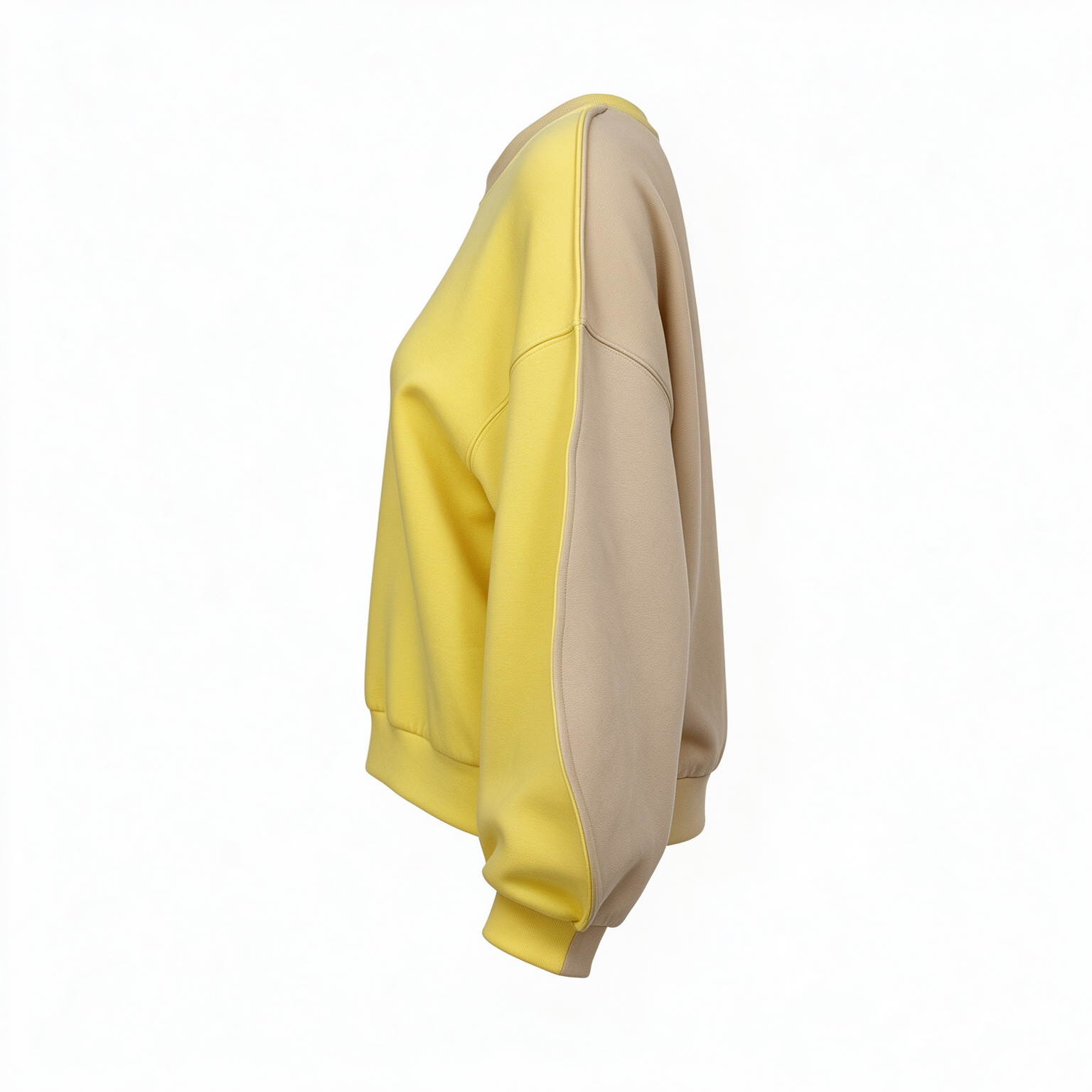
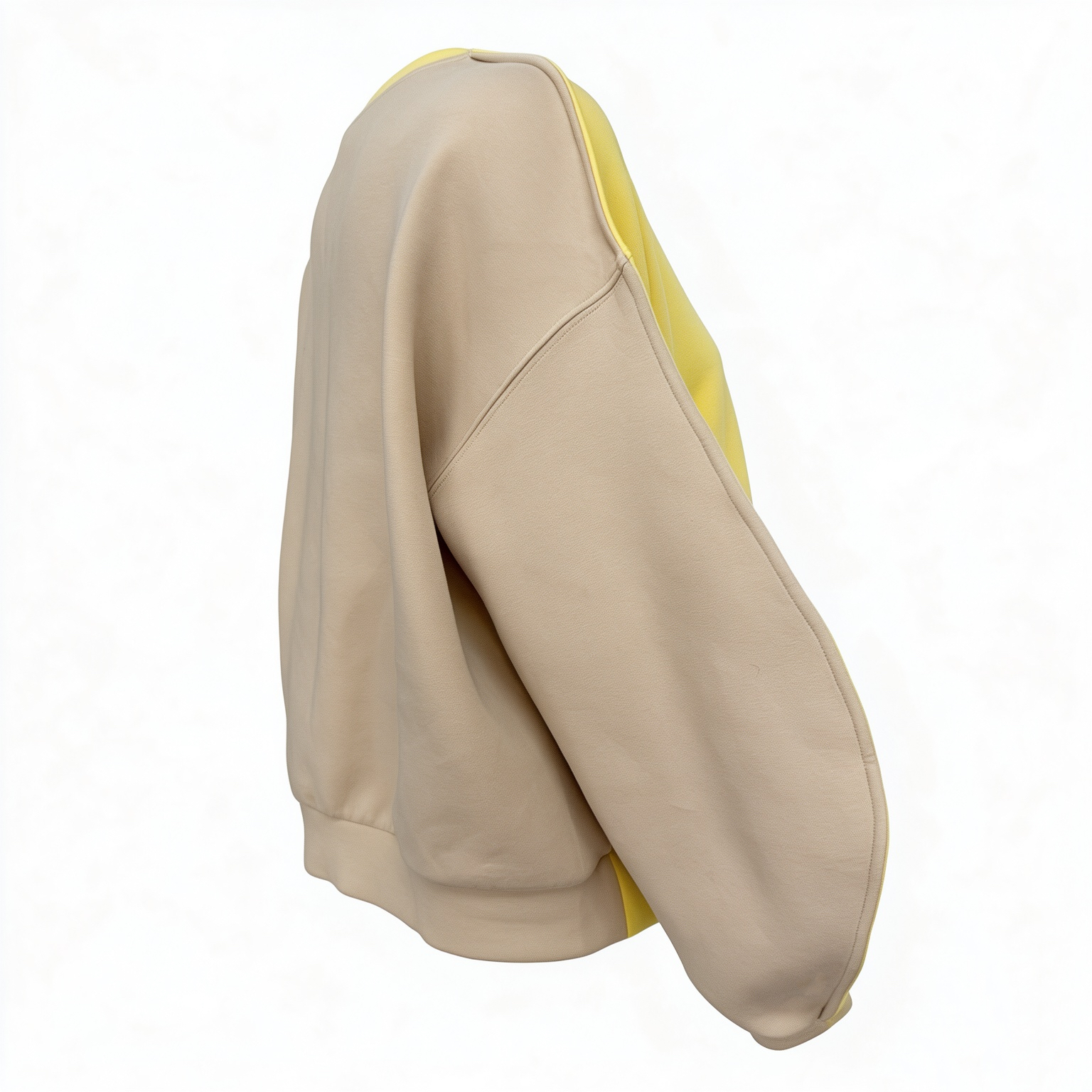
Women’s colorblock sweatshirt in 320 gsm air-layer scuba fabric — a three-layer bonded knit with a smooth face, an air-filled middle layer and a fine back. The structure gives the garment a three-dimensional look and makes it crease-resistant, so it photographs well without pressing. The fabric is high-stretch with good drape and recovery, breathable for spring and autumn, and warm enough to layer in early winter. The design blocks bright yellow on the front with khaki on the back and outer sleeves, finished with a contrast ribbed crew neck. Balloon dropped-shoulder sleeves hide the upper arm, and the short body with a ribbed hem balances the volume. A small chest embroidery adds a signature detail. Sizes S–XXL. MOQ 100 pieces, sampling 7–10 working days, bulk 25–40 days.
Women’s 320 gsm Air-Layer Sweatshirt with Colour Blocking and Balloon Sleeves
Wholesale and private label
Overview
This is a 320 gsm air-layer sweatshirt with a three-layer bonded construction, colour-blocked in bright yellow and khaki, with balloon dropped-shoulder sleeves and a small embroidered motif on the chest. The air-layer fabric is the reason the style works: the smooth face holds a clean shape, the middle layer traps air for warmth without weight, and the fine back sits softly against the skin. That structure gives the garment a natural three-dimensional look and makes it resistant to creasing, which is why it photographs well straight out of the bag and does not need pressing before a shoot. The colour blocking — bright yellow on the front, khaki on the back and the outer sleeve, with a contrast ribbed crew neck — gives the sweatshirt visible depth from every angle, and the short, loose body with a ribbed hem is cut to flatter the proportions. It is worn on its own in spring and autumn and layered in early winter, and the crew neck with no hood means it sits easily under a jacket. The sweatshirt is produced as a stock item and as a private-label piece, so the fabric, the colours, the embroidery and the packaging can all be set to your specification. Sizes run [S–XXL], and can be graded to your own size chart. MOQ is 100 pieces per colourway.
Product specification
Fabric: air-layer (scuba) knit, 320 gsm, three-layer bonded construction.
Surface: smooth face, air middle layer, fine back.
Stretch: high stretch with good drape and recovery.
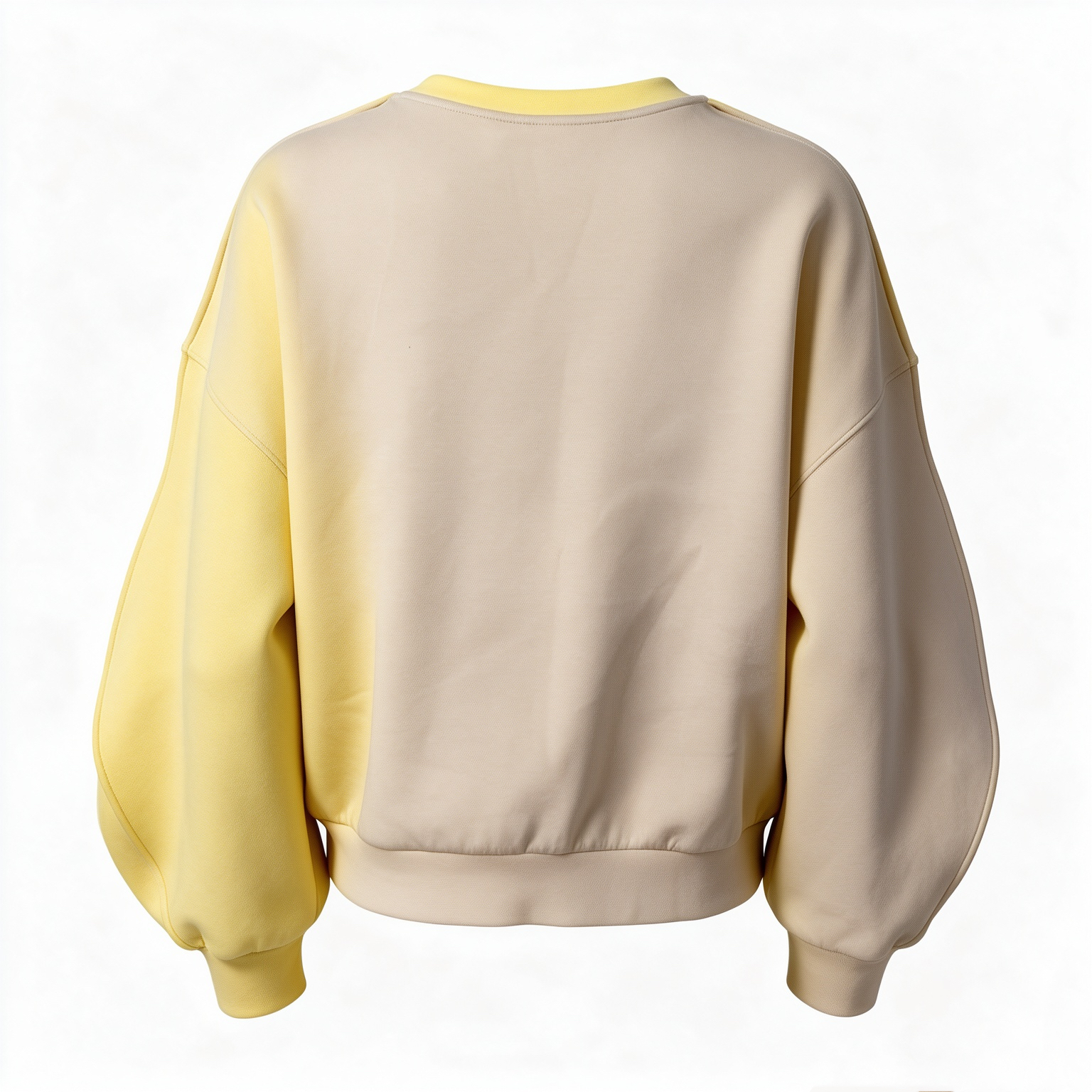
Design: colour-blocked body — yellow front, khaki back and outer sleeves.
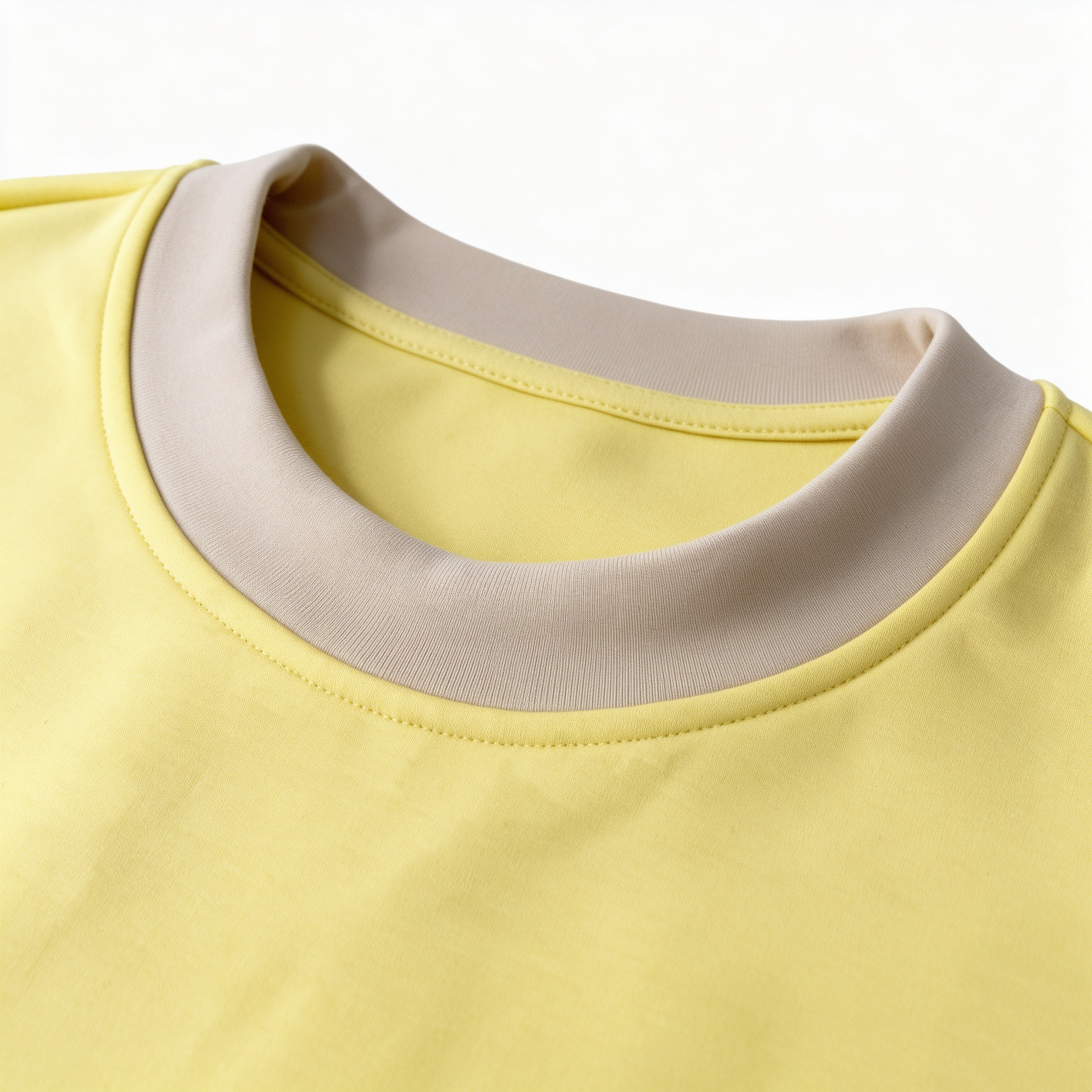
Neckline: contrast ribbed crew neck, no hood.
Sleeves: balloon dropped-shoulder sleeves with ribbed cuffs.
Length: short and loose, with a ribbed hem.
Embroidery: small motif on the chest.
Colour: bright yellow and khaki as photographed, or matched to your reference.
Sizes: [S–XXL], graded to your size chart.
MOQ: 100 pieces per colourway, mixed sizes accepted.
Sample: 7–10 working days per round.
Bulk lead time: 25–40 days after sample approval and deposit.
Care: machine wash cold on a gentle cycle, do not bleach, tumble dry low or dry flat, iron on the reverse at low temperature.
Quality control: inline and final inspection, colour-block shade check, stitch and embroidery check, needle detection.
Why buyers choose this style
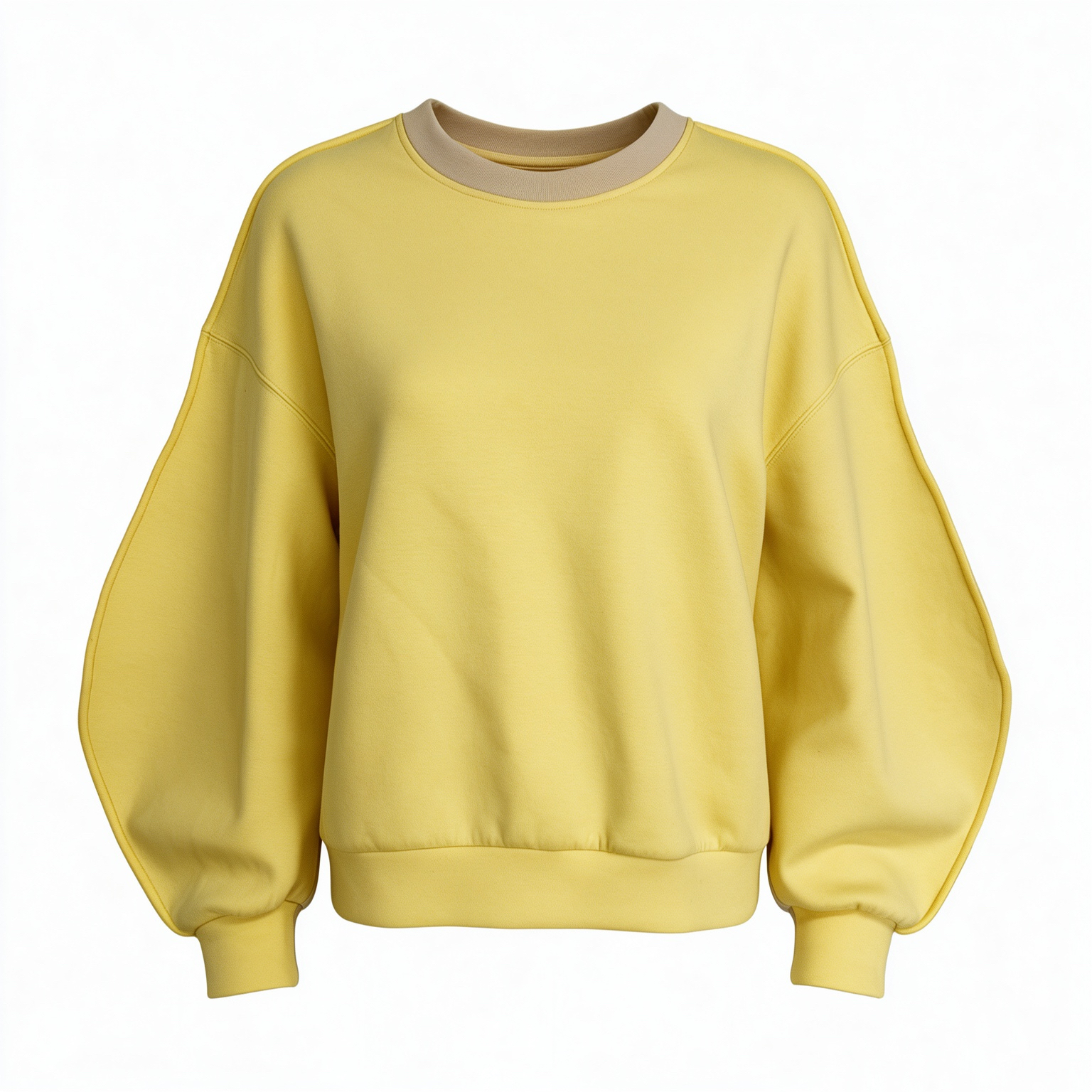
An air-layer sweatshirt is one of the easiest ways to sell a designed garment without a designer price, because the fabric and the colour blocking do the work. The three-layer structure gives the sweatshirt a solid, sculpted look that a plain jersey sweatshirt cannot match, so it photographs as a statement piece while being simple to produce. For a buyer building a spring or autumn range, it is a style that sells on the rail and in a catalogue thumbnail.
The colour blocking is the second commercial advantage. Yellow and khaki is a combination that reads as modern and easy to style: the yellow front draws the eye, and the khaki back and sleeves keep the garment wearable with denim, cream or olive. Because the fabric dyes evenly and the panels are cut from the same roll, the two colours stay consistent under shop lighting, which is the detail that decides whether a two-colour garment looks expensive or cheap.
The third reason is the fit story. Balloon dropped-shoulder sleeves and a short, loose body are the shapes that sell to a wide age range: they hide the upper arm, they balance a heavier lower body, and they do not need to be worn with anything specific underneath. For the buyer, the numbers are straightforward: 100-piece MOQ, 7–10 day sampling and 25–40 day bulk lead time, with mixed sizes in one order.
The air-layer fabric: three layers, 320 gsm
The fabric is an air-layer (scuba) knit at 320 gsm, bonded from three layers: a smooth face, an air-filled middle layer, and a fine back. That construction is what produces the fabric’s character. The smooth face gives the sweatshirt its clean, flat look, the middle layer holds air and provides warmth without weight, and the fine back feels soft against the skin.
Three practical benefits follow from the structure. First, shape: the fabric holds a three-dimensional form, so the balloon sleeve and the short body keep their lines rather than collapsing on the hanger, and the garment looks the same in a photograph as it does on the body. Second, crease resistance: because the middle layer supports the surface, the fabric resists creasing, so the sweatshirt can be packed, shipped and unpacked without looking tired — a genuine advantage for e-commerce, where a garment that needs pressing before every shoot costs time and money. Third, stretch and recovery: the knit has high stretch and good drape, so it moves with the wearer and springs back, which means it does not stretch out at the cuff, the hem or the elbow after washing, and it does not shrink.
The fabric is also breathable for its weight. An air-layer knit is warmer than a jersey of the same weight, but it is not a sealed fabric: air moves through the structure, so the sweatshirt can be worn indoors in spring and autumn without overheating, and layered in early winter without becoming clammy.
Colour blocking in yellow and khaki
The colour blocking is designed across the garment rather than applied as a panel for decoration. The front is bright yellow, which gives the sweatshirt its focus and makes it photograph strongly against a neutral background; the back and the outer sleeves are khaki, which keeps the volume colour calm and makes the garment easy to wear with denim, cream, olive and brown. The crew neck is finished with a contrast rib, so the neckline reads as part of the design rather than an afterthought.
Colour consistency is the detail that makes or breaks a two-colour garment. The yellow and the khaki are matched to your reference and checked under D65 light before cutting; the panels of each colour are cut from the same fabric lot, so the left and right sleeves match; and the bonded panels are pressed and checked so the join between the two colours is a clean line rather than a ridge. The fabric’s smooth surface also dyes evenly, which is why the yellow stays bright and uniform instead of going patchy.
Balloon dropped-shoulder sleeves
The sleeves are the signature detail of the style. A balloon sleeve is cut with a large curved volume that narrows to a ribbed cuff, and combined with a dropped shoulder it gives the sweatshirt a soft, rounded silhouette that hides the upper arm and adds movement. The volume is set in the pattern rather than created by gathering, so the sleeve hangs cleanly and keeps its shape.
Two things are confirmed on the sample. The first is the cuff: the rib cuff is tight enough to hold the balloon shape but not so tight that it marks the wrist, and it is knitted so it recovers after stretching. The second is the armhole and the drop: the shoulder seam sits below the natural shoulder line by the amount specified by the buyer, and the armhole is cut so the sleeve does not pull when the wearer reaches forward.
Short length and ribbed hem
The body is cut short and loose, finishing at the high hip rather than the low hip. That length is what balances the volume in the sleeves: it keeps the silhouette from looking heavy and it improves the proportions with high-waisted trousers, skirts and jeans. The hem is finished with rib, which holds the shape of the body, stops the fabric from flaring and gives the sweatshirt a clean finish at the waist.
Small chest embroidery
A small embroidered motif sits on the chest. It is deliberately restrained: on a garment that already carries a strong colour story and large sleeve volume, a small logo reads as a signature rather than a competing graphic. The embroidery is developed from the buyer’s artwork, with the thread colour chosen to work against the yellow ground, and it is stitched over a stabiliser so the smooth face of the fabric does not pucker. A stitch-out is approved before bulk, and the embroidered panel is washed and pressed from the reverse so the motif does not flatten.
Fit and sizing
Sizing is based on chest width, body length, shoulder drop, sleeve length and hem width, measured flat without stretching. Grading is developed to your own size chart, and the size guide shows both centimetres and inches, with the sleeve volume and the drop measured on the sample. Reference sizes [S–XXL], confirmed on the order. Because the fit is loose and the sleeves are voluminous, the chest measurement should not be sized up further; customers should choose on the chest width and the body length rather than on the sleeve.
Customization
Colours: bright yellow and khaki as shown, or matched to your Pantone reference with a different colour-block combination.
Fabric: 320 gsm air-layer, or a lighter weight for spring.
Panels: front, back, sleeve and neck rib colour combinations confirmed on the sample.
Sleeves: balloon volume and drop depth adjusted to your fit.
Length: short or regular body length, with a ribbed hem.
Embroidery: your own motif or logo on the chest.
Labels and packaging: woven labels, care labels, hangtags, barcodes and patches, plus poly bags, header cards or retail boxes with carton markings.
Sizes: [S–XXL], or graded to your own chart.
Sampling and production timeline
- Inquiry. Send a photo, a sketch or a tech pack.
- Fabric. Confirm the air-layer fabric, the weight and the colours, 3–7 days.
- Pattern. Fit, sleeve volume, drop, length and panel layout, 2–3 days.
- Sample. First sample with the colour blocking and sleeves, 7–10 working days per round.
- Approval. Your sign-off on fit, colours, sleeves and embroidery.
- Bulk. Production, 25–40 days after approval and deposit.
- Shipment. Final inspection and packing, then sea, air or express.
Most sweatshirt styles are approved in two rounds: the first sample confirms the fit, the sleeve volume and the length, and the second confirms the fabric, the colour blocking and the embroidery.
Quality control, stage by stage
- Air-layer fabric checked on arrival, including weight, hand feel and shade.
- Panel colours checked against the approved standard under D65 light.
- Sleeve volume, drop and cuff depth measured on the sample and in bulk.
- Bonded panel joins and seam construction checked.
- Embroidery checked for density, placement and finish.
- Stretch recovery, crease resistance and colourfastness tested on the finished garment.
- Measurement, colour and label verification, then needle detection and final inspection.
Minimum order quantity
The MOQ is 100 pieces per colourway, and mixed sizes within one colour are accepted, so a 100-piece order can cover a full size run. Custom dyeing, a new colour-block combination or a special fabric weight may require a higher quantity, confirmed at quotation stage.
What we need from you
- A clear photo, a sketch, a sample from another market or a full tech pack.
- The colour-block layout and Pantone references for each panel.
- The air-layer weight you want.
- Your size range and grading, or we can develop one for approval.
- Sleeve volume, shoulder drop and body length specification.
- Embroidery artwork, plus label and packaging requirements.
FAQ
What is the MOQ? 100 pieces per colourway, mixed sizes accepted.
How long does sampling take? 7–10 working days per round.
How long is bulk production? 25–40 days after sample approval and deposit.
What is air-layer fabric? It is a three-layer bonded knit with a smooth face, an air-filled middle layer and a fine back, at 320 gsm.
Does it crease? The fabric resists creasing, so it can be packed and photographed without pressing.
Does it stretch and recover? Yes. It has high stretch with good drape and recovery, and it does not shrink or distort after washing.
Is it warm? It is warm for its weight and breathable for spring and autumn, and it layers in early winter under a jacket.
Can the colours be changed? Yes. Each panel is matched to your Pantone reference and confirmed on the sample.


Leave a Reply
Want to join the discussion?Feel free to contribute!