
{{{cp11}}}
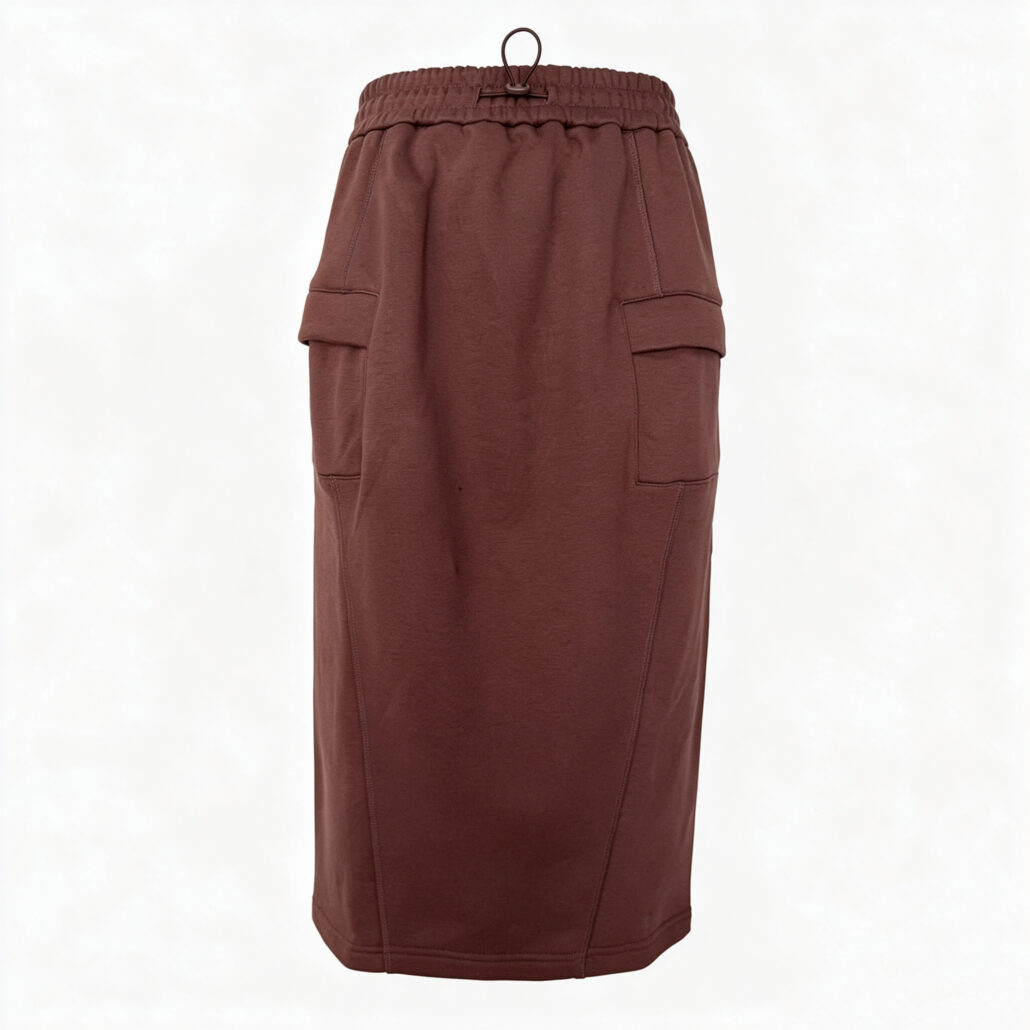
Women’s Slit Knit Skirt
Women’s knit midi skirt with a drawstring waist, two side pockets and a diagonal slit at the back. The fit is regular — it follows the body without gripping it — and the midi length works with boots and loafers. The waistband is elasticated with a drawstring, and the elastic is anchored at the side seams so it does not twist in the wash. The pockets are deep enough for a phone, cards or keys, and the back slit is reinforced at the top. Embroidery, all-over print or a placed print can be added. Colours are matched to Pantone; the sample is deep burgundy and black. Sizes XS–XXXL. MOQ 100 pieces, sampling 7–10 working days, bulk 25–40 days.
Women’s Knit Midi Skirt with Drawstring Waist, Side Pockets and Back Slit
Wholesale and private label
Overview
This is a women’s knit midi skirt with a drawstring waist, two side pockets and a diagonal slit at the back. The fit is deliberately in the middle: it follows the body without gripping it and it does not hang loose, so the skirt looks tidy with a fitted knit on top and with a loose sweater. The knit falls to a midi length and the diagonal back slit adds movement, so the skirt does not restrict the stride and it reads as a designed piece rather than a plain tube. The waist is adjustable with a drawstring, the two side pockets are deep enough to be used rather than just decorative, and the surface is open to customization — embroidery or print can be added to the body or the hem without changing the pattern. Sizes run XS–XXXL, and can be graded to your own size chart. MOQ is 100 pieces per colourway.
Product specification
Fabric: knit with good drape and recovery, [composition to be confirmed].
Fit: regular, neither bodycon nor oversized.
Waist: elasticated with a drawstring, adjustable.
Pockets: two side seam pockets.
Slit: diagonal slit at the back.
Length: midi.
Customization: embroidery or print on the body, the side or the hem.
Colour: deep burgundy and black as photographed, or matched to your reference.
Sizes: XS–XXXL, graded to your size chart.
MOQ: 100 pieces per colourway, mixed sizes accepted.
Sample: 7–10 working days per round.
Bulk lead time: 25–40 days after sample approval and deposit.
Care: wash inside out, secure the drawstring before washing, dry flat, do not bleach.
Quality control: inline and final inspection, slit and pocket strength check, drawstring and elastic test, needle detection.
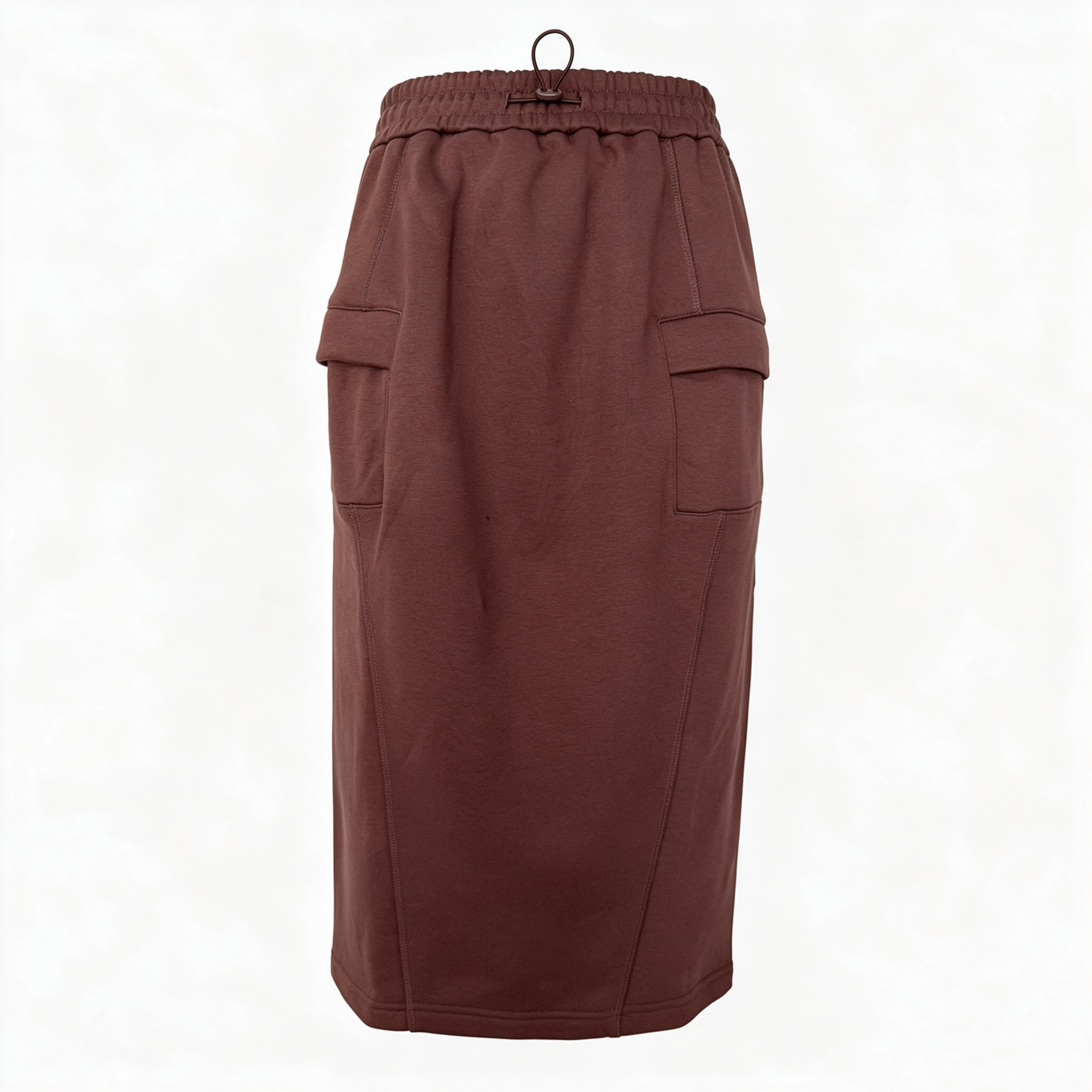
Why buyers choose this style
A knit midi skirt is one of the easiest autumn and winter items to sell, because it solves the problem of looking dressed without wearing something restrictive. Customers wear it with a knit top and boots, with a shirt and a blazer, or with a sweater and sneakers, and it works for the office, for the weekend and for travel. That range of use means it sells across the whole season rather than in a single fashion window.
The regular fit is the commercial decision behind the style. A bodycon knit skirt only suits some customers and shows every line; an oversized knit skirt looks shapeless. A regular fit that follows the body without gripping it suits the widest range of customers, which reduces returns and makes the skirt easy to sell online without a fitting room.
The details are what make it feel designed: the adjustable drawstring waist, the two usable pockets and the diagonal back slit. Each of them is a reason for the customer to choose this skirt over a plain knit tube, and each of them is confirmed on a sample before bulk.
Regular fit: neither tight nor oversized
The skirt is cut to sit close to the body at the waist and the hip and to fall straight from the hip to the hem, rather than clinging to the thigh or flaring out. That balance is achieved in the pattern rather than by adding stretch: the waist is fitted, the hip has a small amount of ease, and the body of the skirt is cut with enough width that the knit hangs instead of pulling.
The length is a true midi, so it covers the knee and finishes on the lower calf. This is the length that works with boots and with loafers, and it is the length that customers wear most in autumn and winter. The hem is finished so that it hangs evenly around the body rather than curling at the side seams.
The drawstring waist
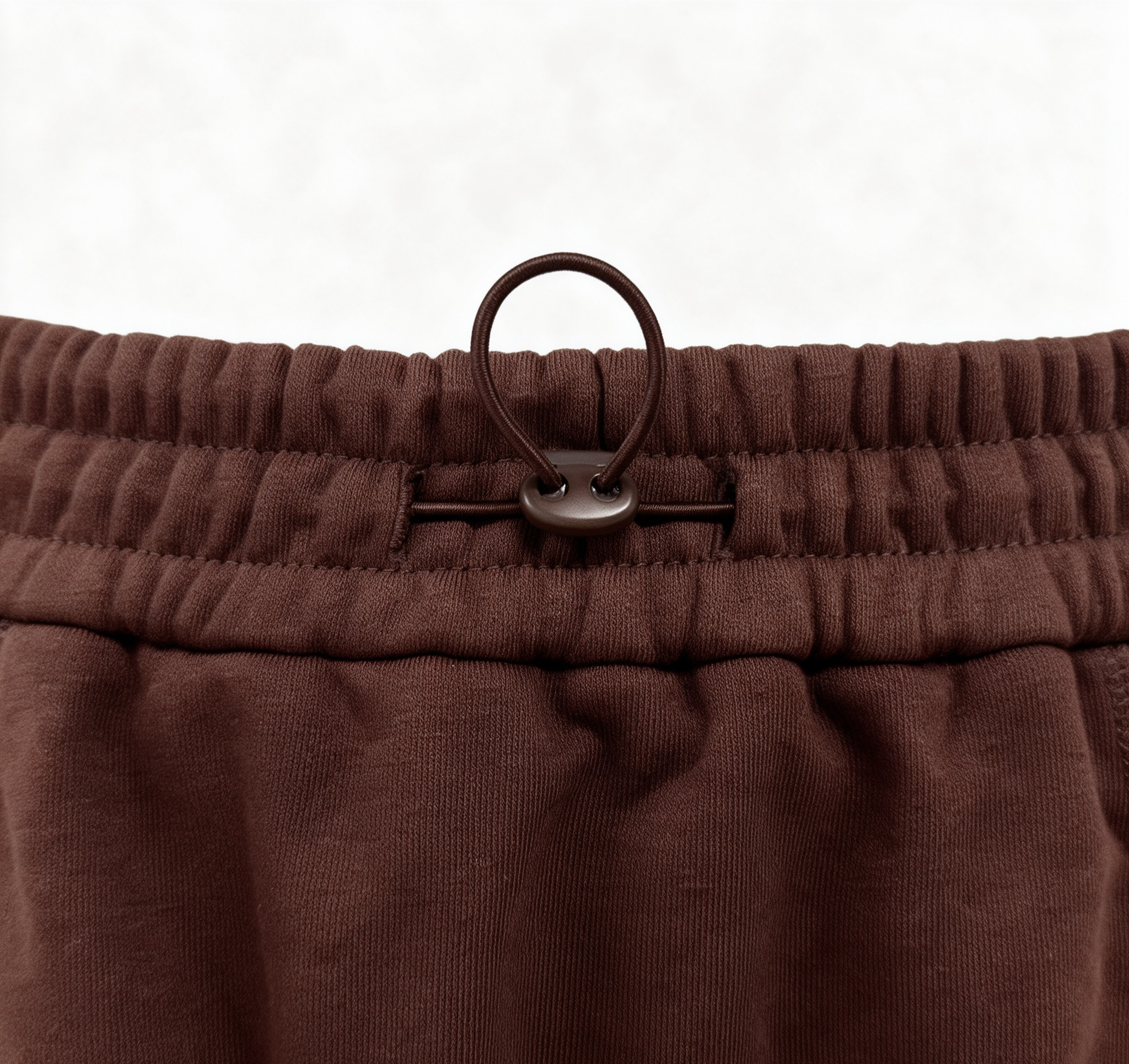
The waistband is elasticated and closed with a drawstring, so the fit can be adjusted in seconds. The elastic is set inside the waistband channel and anchored at the side seams, so it does not roll or twist inside the channel after washing — the most common complaint about drawstring knitwear, and one that is solved in construction rather than in price.
The drawstring is matched to the fabric in tone, exits at the centre front, and the ends are finished with heat-sealed tips or small cord locks, depending on the look you want. The cord is kept to a practical length: long enough to adjust comfortably and short enough that it does not trail. Where the market requires it, the drawstring can be replaced with a fully enclosed elastic or a short decorative cord, which is the safer option for some markets.
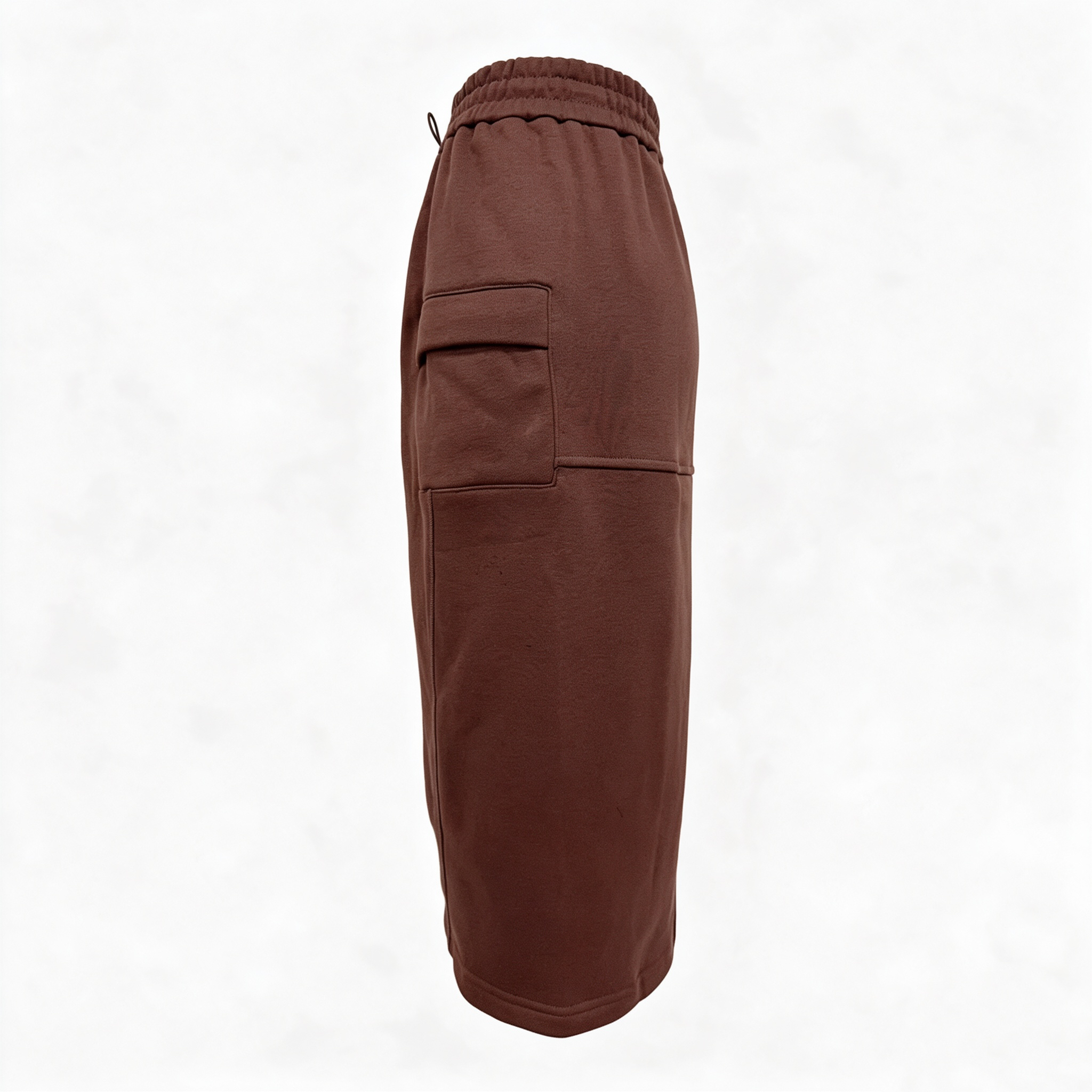
Two side pockets
The two side pockets are cut into the side seams and are deep enough to hold a phone, a card holder or keys, which is what makes them useful rather than decorative. The pocket bags are made from a light knit or a woven fabric so they do not add bulk at the hip, and the pocket openings are reinforced with bar tacks so they do not tear when a hand goes in and out.
Pockets are one of the features customers check first in a skirt review, and they are a strong selling point in the product copy. On a knit skirt, they also need to be positioned carefully: the pocket bag sits where the knit moves, so the opening is set slightly forward on the side seam and the bag is anchored at the top so it does not pull the skirt out of shape.
The diagonal back slit
The diagonal slit sits at the back of the skirt and gives the hem movement, so the wearer can walk, climb stairs and get into a car without the skirt pulling across the thigh. The slit is cut diagonally rather than straight, which makes it more interesting than a standard vent and gives the skirt a visible design detail when it moves.
The slit is finished on both sides so the cut edge does not fray or curl, and the top of the slit is reinforced with a bar tack so the knit does not tear beyond the intended point. The depth of the slit is confirmed on the sample: deep enough to give movement, shallow enough that the skirt still covers properly when the wearer is seated.
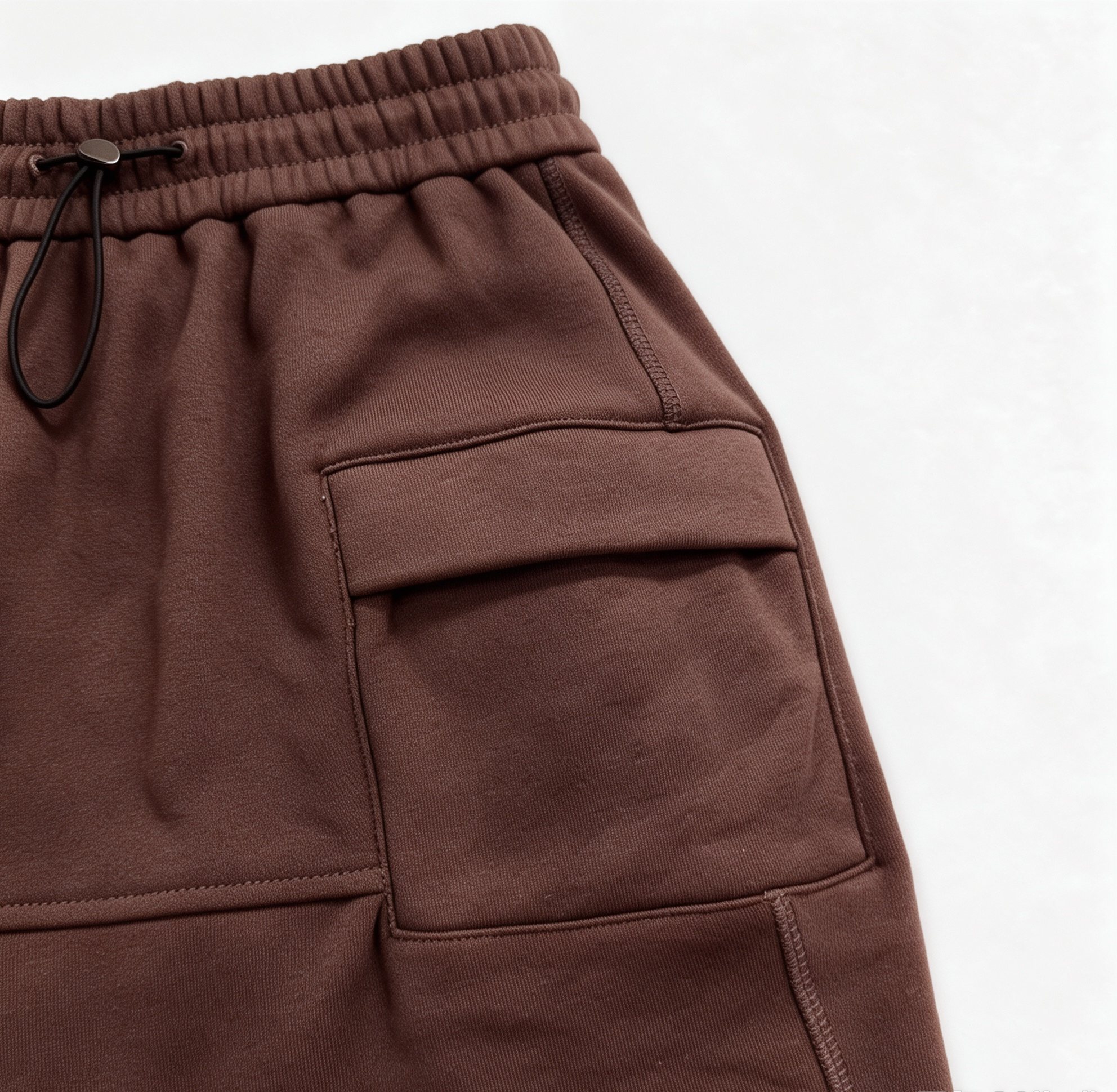
Knit fabric and drape
The skirt is made in a knit with enough weight to fall cleanly without clinging and enough recovery to keep its shape at the hip and the knee. A knit that is too light shows every line and blows around; a knit that is too heavy hangs rigidly and loses the softness that makes a knit skirt comfortable. The weight and the gauge are confirmed on the sample with the buyer.
The knit also needs to hold its shape over time. We test the fabric for pilling, shrinkage and stretch recovery, because a skirt that bags at the hip or the knee after two washes looks old long before it wears out. Colour is dyed on the yarn, which gives an even shade through the knit and keeps repeat orders consistent.
Embroidery and print customization
The skirt is designed to carry decoration. Embroidery can be placed on the front body, the side seam, the hem or the back above the slit, and a print can be developed as an all-over pattern, a border along the hem or a placed print on the front.
Both methods are confirmed on a sample. Embroidery on a knit needs a stabiliser so the stitches do not pucker the fabric, and the stitch count is controlled so the skirt keeps its softness and stretch. Print on a knit is developed for stretch and wash resistance, so the pattern does not crack when the skirt is pulled on or washed. Where a design is too detailed for embroidery, a woven patch or a printed patch gives a cleaner result.

Fit and sizing
Sizing is based on waist, hip and skirt length, measured flat and without stretching. Waist relaxed and waist extended are both listed, so the customer can see the full adjustable range, and the hip and the hem opening are shown next to them. Grading and midi length are developed to your own size chart. Reference sizes XS–XXXL, confirmed on the order, with both centimetres and inches printed on the size guide.
Fabric and care
The knit is chosen for drape, recovery and hand feel, and it can be tested for colourfastness, pilling, shrinkage and fibre composition where the market requires it. Care is simple: wash inside out on a gentle cycle, secure the drawstring before washing, dry flat rather than in a tumble dryer, do not bleach, and iron on the reverse at low temperature. The skirt is tested after the same wash cycle the customer will use, so the care label reflects real results.
Customization
Colours: deep burgundy and black as shown, or matched to your Pantone reference.
Knit: composition, weight and gauge confirmed on the sample.
Waist: band depth, elastic width, drawstring type and cord end finish.
Details: slit depth, pocket size and hem finish.
Decoration: embroidery, all-over print, placed print or woven patch.
Labels and packaging: woven labels, care labels, hangtags, barcodes and patches, plus poly bags, header cards or retail boxes with carton markings.
Sampling and production timeline
- Inquiry. Send a photo, a sketch or a tech pack.
- Fabric. Confirm the knit, the weight and the colour, 3–7 days.
- Pattern. Fit, midi length, slit and pockets, 2–3 days.
- Sample. First sample with the waist, pockets and slit, 7–10 working days per round.
- Approval. Your sign-off on fit, colour, slit depth and pockets.
- Bulk. Production, 25–40 days after approval and deposit.
- Shipment. Final inspection and packing, then sea, air or express.
Most knitwear styles are approved in two rounds: the first sample confirms the fit, the length and the slit, and the second confirms the knit, the colour, the pockets and any decoration.
Quality control, stage by stage
- Knit checked on arrival, including weight, shade and hand feel.
- Waist, hip, length and hem opening measured during sewing.
- Drawstring and elastic tested for recovery and checked for twisting after washing.
- Pocket openings and slit top bar-tacked and pull-tested.
- Pilling, shrinkage and colourfastness tested on the finished skirt.
- Measurement, colour and label verification, then needle detection and final inspection.
Minimum order quantity
The MOQ is 100 pieces per colourway, and mixed sizes within one colour are accepted, so a 100-piece order can cover a full size run. Custom dyeing, custom print or special cord ends may require a higher quantity, confirmed at quotation stage.
What we need from you
- A clear photo, a sketch, a sample from another market or a full tech pack.
- Fabric composition and the weight or gauge you want.
- Your size range and grading, or we can develop one for approval.
- Slit depth, pocket size and midi length confirmation.
- Decoration: embroidery or print, with artwork in vector or high-resolution format.
- Colour references, with Pantone numbers, plus label and packaging requirements.
FAQ
What is the MOQ? 100 pieces per colourway, mixed sizes accepted.
How long does sampling take? 7–10 working days per round.
How long is bulk production? 25–40 days after sample approval and deposit.
Is the fit tight? No. It is a regular fit — it follows the body without gripping it.
Are the pockets usable? Yes. The side pockets are deep enough for a phone, cards or keys.
Does the back slit restrict walking? No. The diagonal slit gives the hem movement and is reinforced at the top.
Can it be customized? Yes. Embroidery, all-over print, placed print and woven patches are all available.
Have a tech pack or a photo? Send it over.
We will come back with a sample plan, the MOQ and a quotation for your market. For repeat orders we keep your knit, colour and pattern on record, so the next order starts from the approved sample.


Leave a Reply
Want to join the discussion?Feel free to contribute!