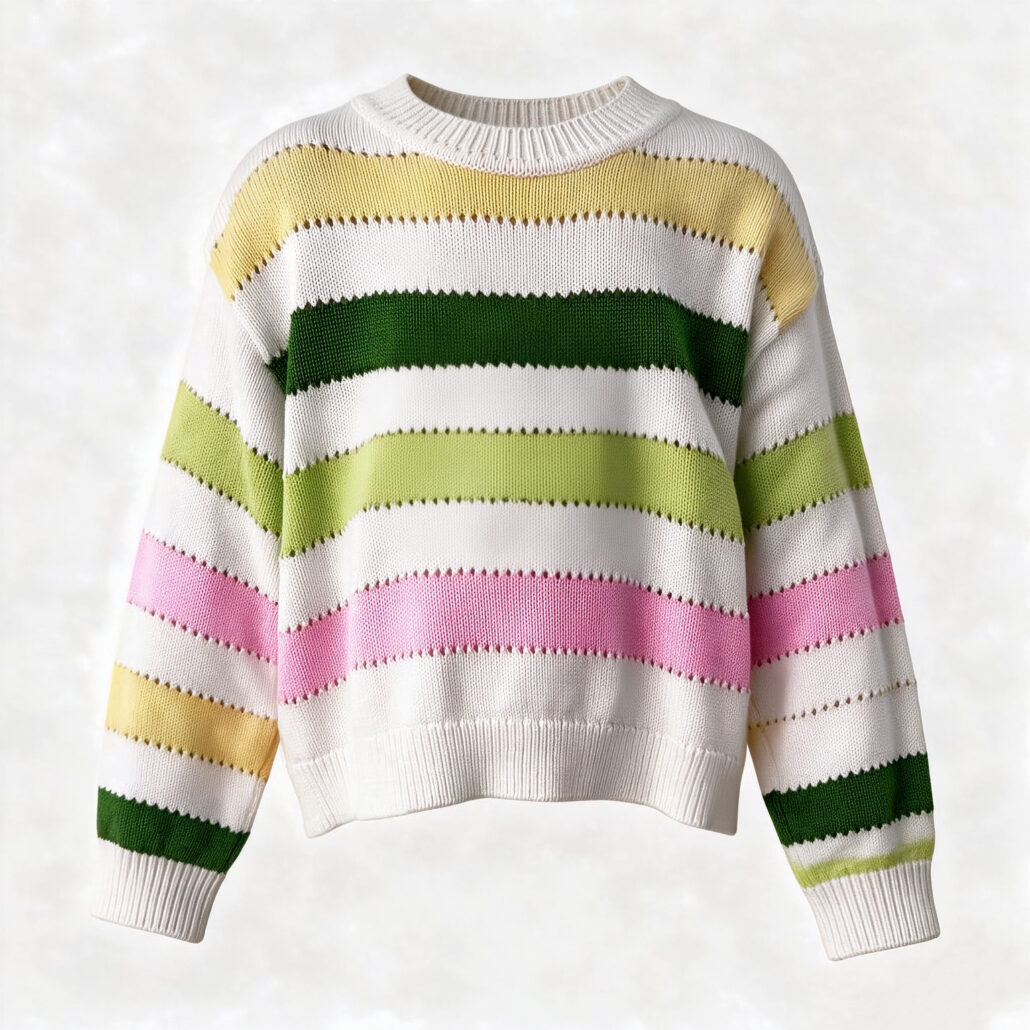
Kids Multi-Color Knit Sweater
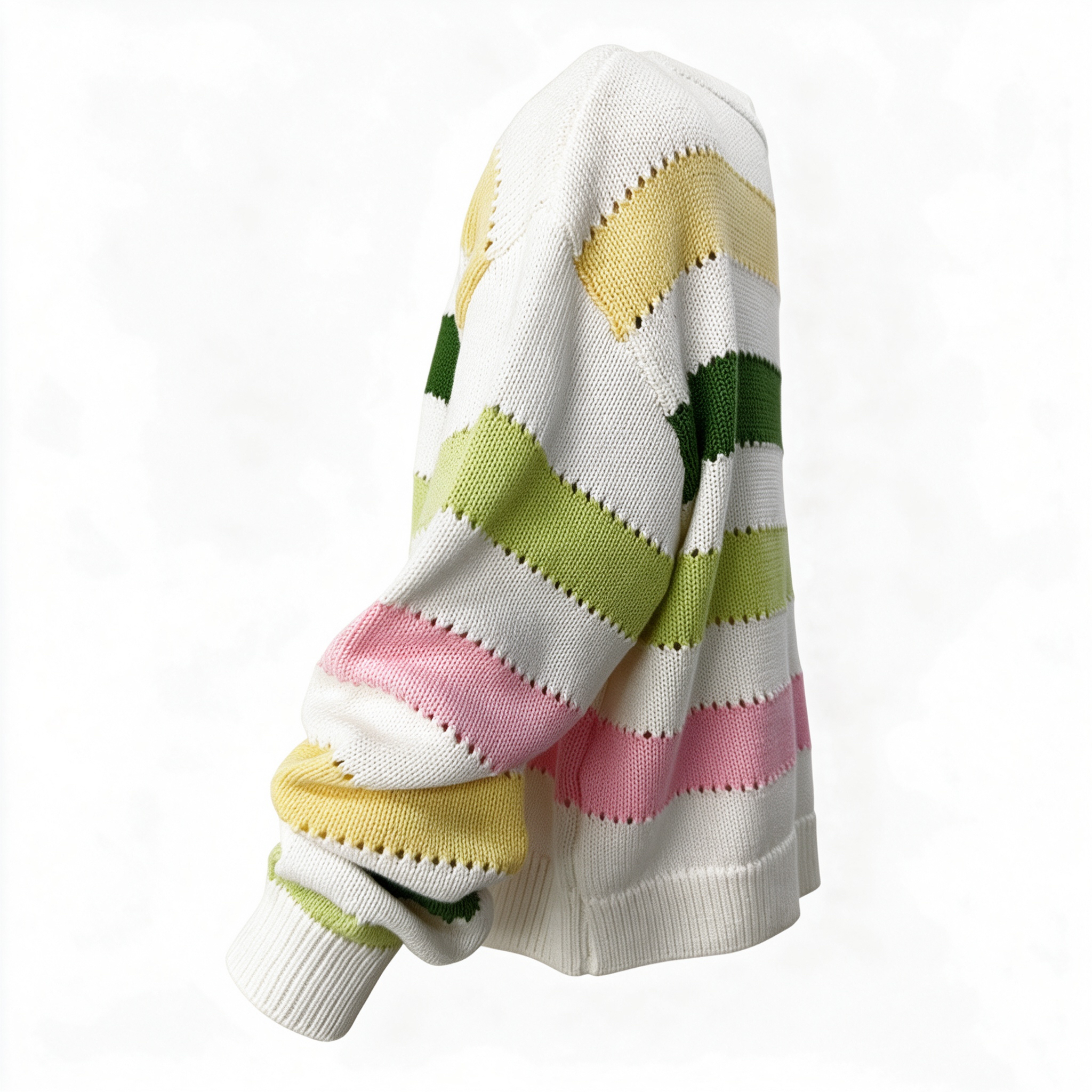
Kids’ striped knit sweater in a multi-colour palette, made for early winter. The weight sits in the middle: warm enough for a cold morning and the walk to school, light enough to wear in a heated classroom and under a coat. Stripes are produced as yarn-dyed or printed stripes, so the colours stay sharp and the pattern does not crack in the wash. Wide stripes read sporty, narrow stripes read classic, and the stripe sequence is matched to your reference and confirmed on a knitted sample. Ribbed neckline, cuffs and hem hold the shape, and the sweater pairs easily with jeans, joggers and skirts. Colours are matched to Pantone. Sizes 2T–12Y. MOQ 100 pieces, sampling 7–10 working days, bulk 25–40 days.
Kids’ Multi-Colour Striped Knit Sweater
Wholesale and private label
Overview
This is a kids’ knitted sweater with a multi-colour stripe design, made for early winter. The weight is deliberately in the middle: heavy enough to be warm when the temperature drops, light enough that a child can wear it indoors and under a coat without overheating. The stripes give it a bold, fashionable look that reads well in photographs and on a shop rail, and the palette can be developed to your own colour reference. It is designed for school, weekends and family occasions, and it works with jeans, joggers, skirts and layering pieces. Sizes run 2T–12Y, and can be graded to your own size chart. MOQ is 100 pieces per colourway.
Product specification
Design: multi-colour stripes, knitted or printed to your reference.
Weight: medium weight for early winter, warm but layerable.
Yarn: soft knit, cotton-rich or cotton/acrylic blend.
Neckline: crew neck, ribbed.
Cuffs and hem: ribbed, in the body colour or a stripe colour.
Sizes: 2T–12Y, graded to your size chart.
MOQ: 100 pieces per colourway, mixed sizes accepted.
Sample: 7–10 working days per round.
Bulk lead time: 25–40 days after sample approval and deposit.
Care: wash inside out with similar colours, dry flat, do not bleach.
Quality control: inline and final inspection, stripe matching check, colourfastness test, needle detection.
Why buyers choose this style
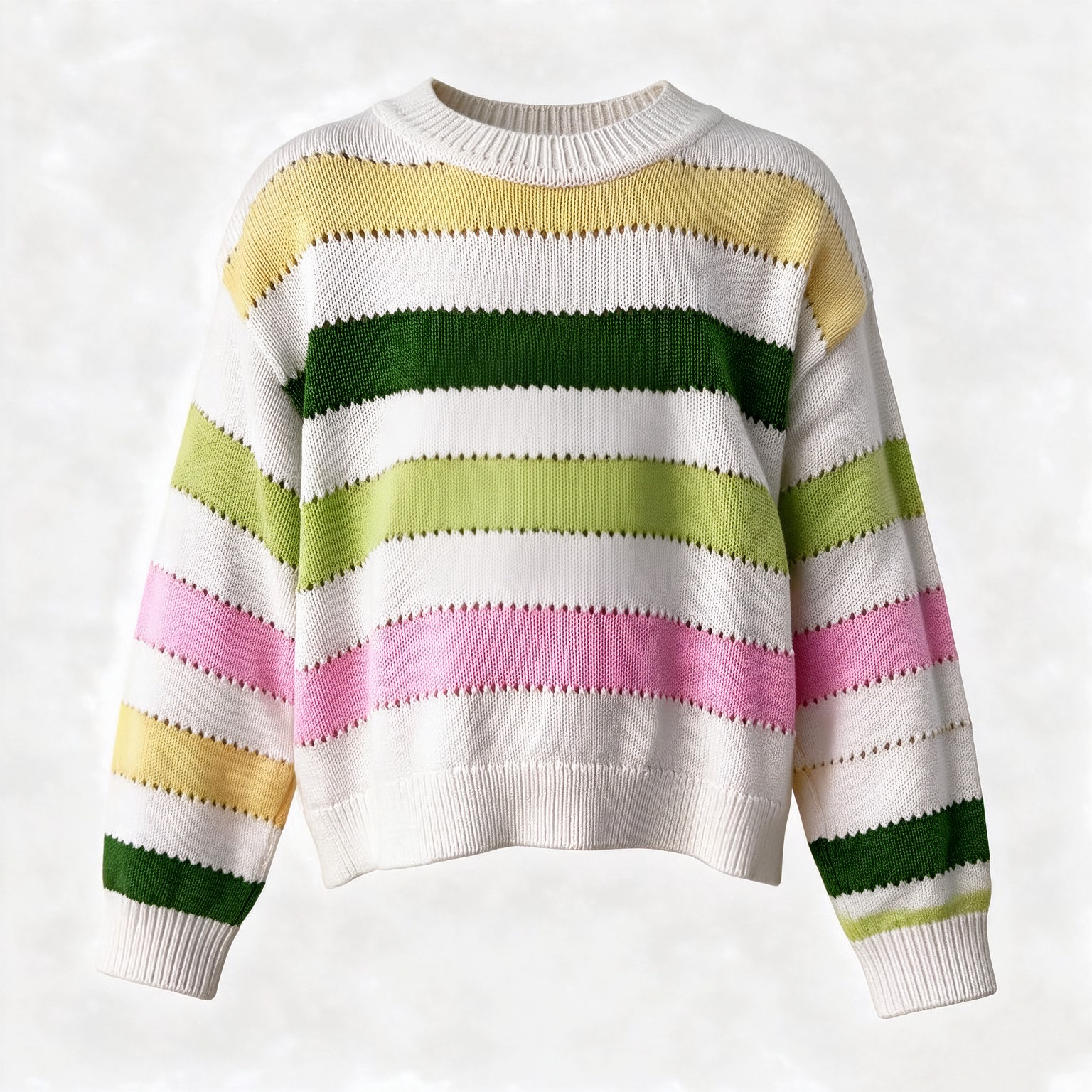
Stripes are the most reliable print in kidswear for two reasons: they sell to both boys and girls, and they make a plain knit look designed without adding cost. A sweater with a strong stripe reads well from a distance on a crowded shop rail, which is exactly what a buyer needs when the product has two seconds to catch a customer’s eye.
The medium weight is the second reason the style works. Early winter is the hardest part of the season to buy for: a heavy sweater is too warm for a heated classroom and a light sweater is not warm enough for the walk to school. This weight sits between the two, so the sweater is worn from October to December and then again in early spring.
For the buyer, the style is simple to repeat. The stripe sequence, the stripe width and the colour palette are fixed on an approved sample, so a repeat order matches the first. With a 100-piece MOQ, a 7–10 day sample and a 25–40 day bulk lead time, it is a low-risk style to test in a new market, and it sits easily next to plain knitwear in a range.
Multi-colour stripes: the design that sells
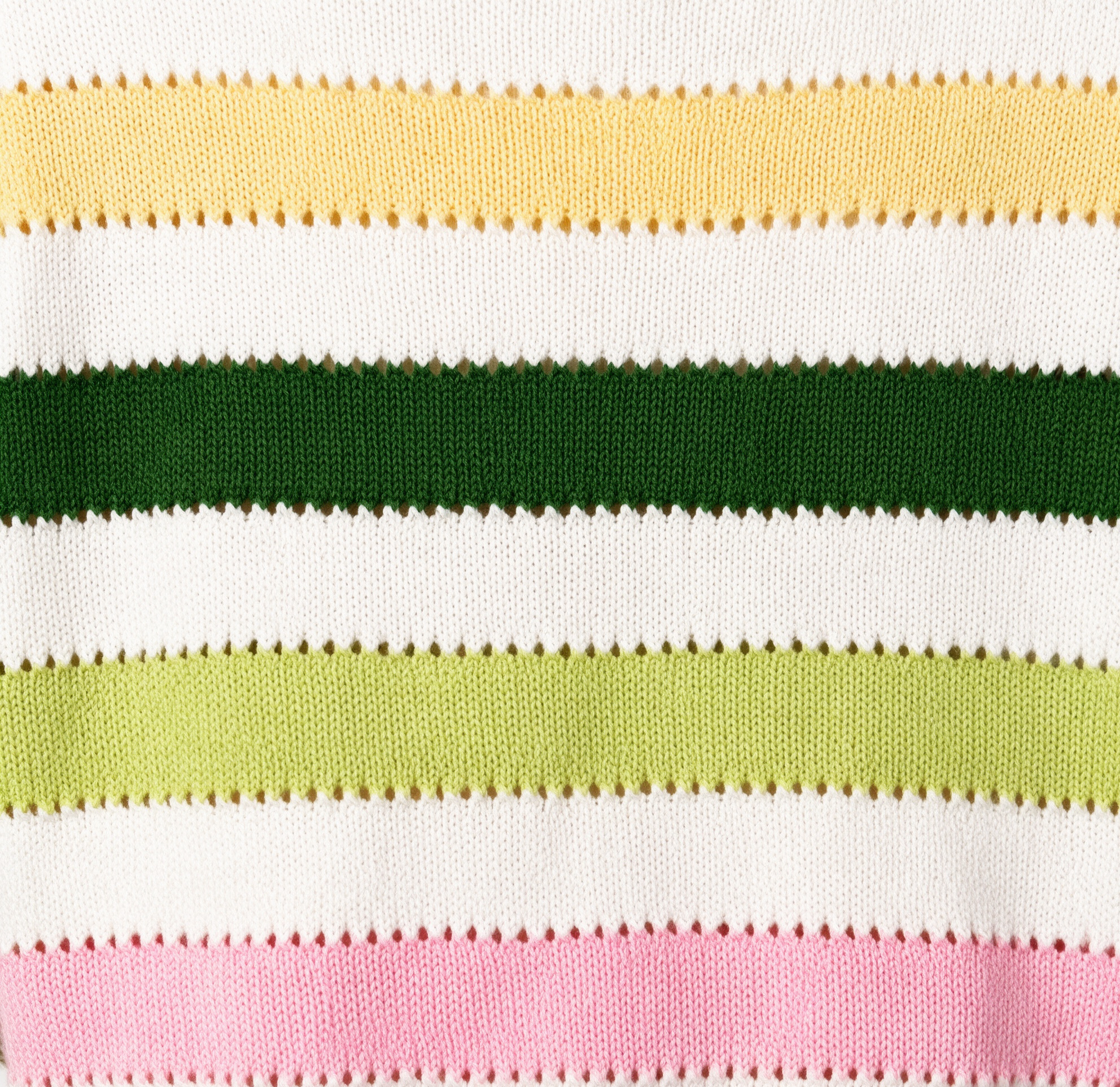
The stripe layout is developed to your reference: wide rugby stripes, narrow pinstripes, a two-colour combination or a full multi-colour palette. Stripe width changes the personality of the sweater more than anything else — wide stripes read as sporty, narrow stripes read as classic, and an uneven stripe sequence reads as fashion.
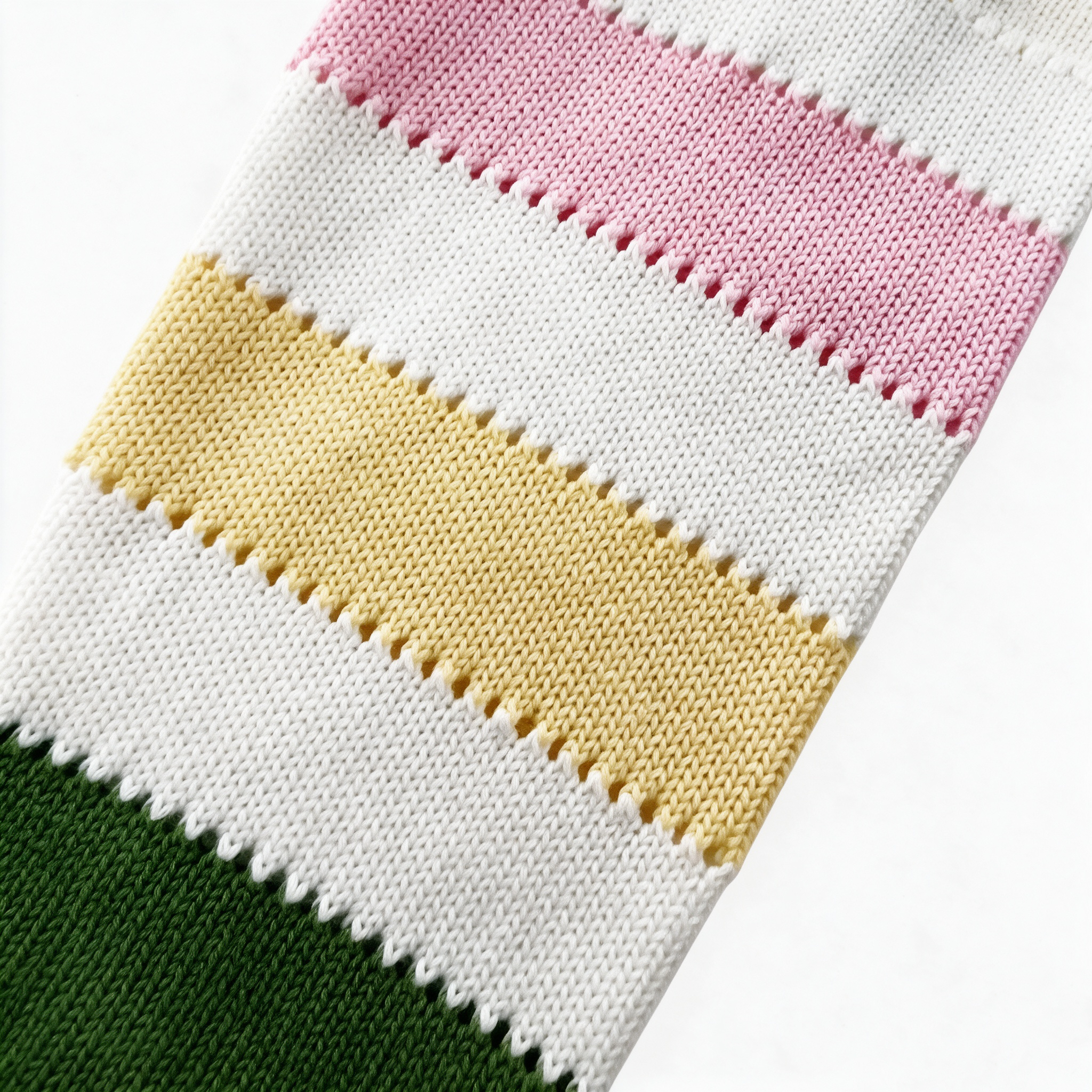
Stripe colour can be matched to Pantone references, and the sequence is confirmed on a knitted sample rather than on a screen, because the way two colours sit next to each other in a knit changes once the yarn is knitted up. In the sample we check how the colours read together, how they look in daylight and under shop lighting, and how the stripes sit on the body when the sweater is worn.
Yarn-dyed stripes or printed stripes
Stripes are produced in one of two ways, and the choice affects cost, sharpness and durability.
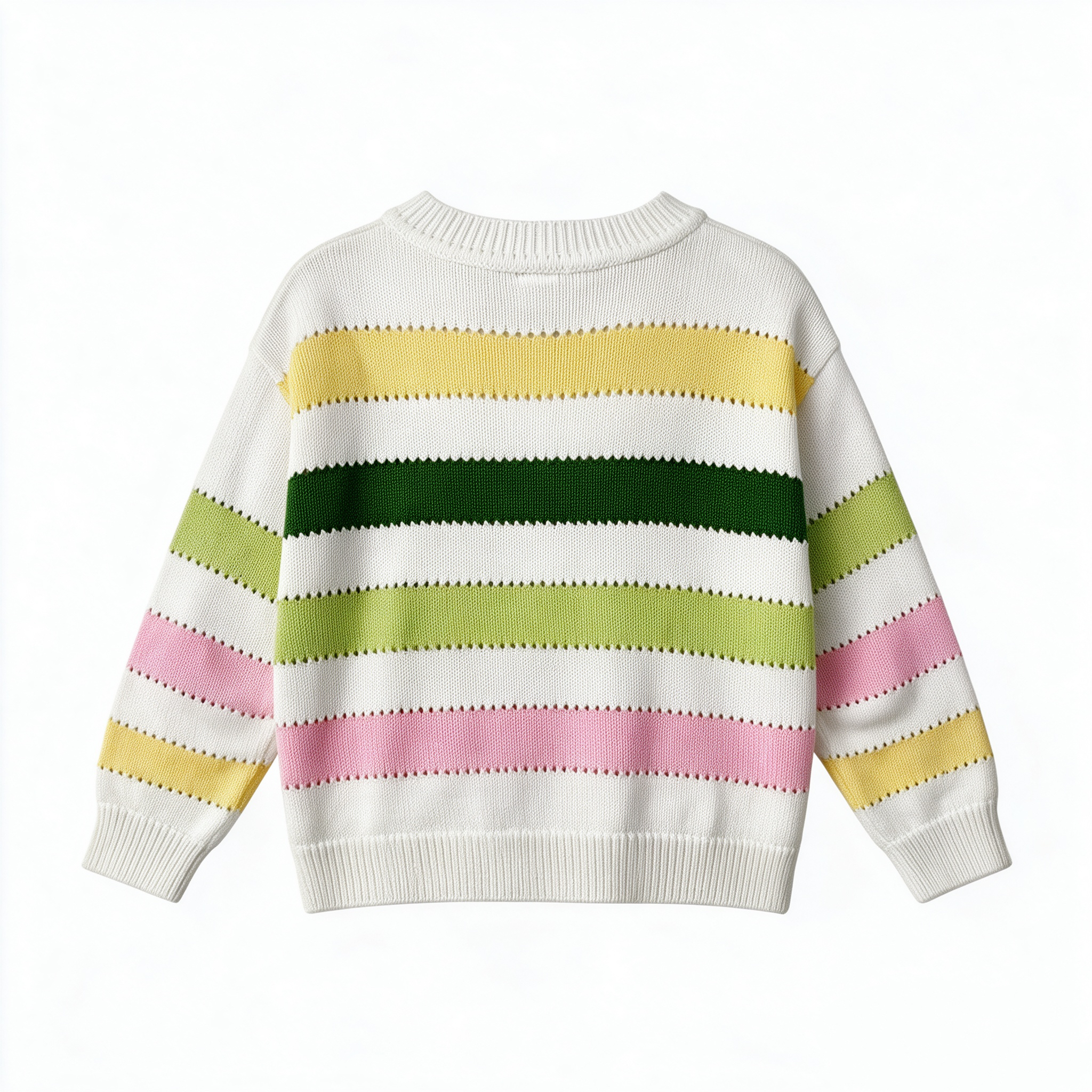
Yarn-dyed stripes are knitted from different coloured yarns. The stripes are sharp at the edge, they do not crack or fade across the stripe, and the colour goes all the way through the fabric. This is the method used for most premium striped knitwear, and it is the better choice where the stripe is the main feature of the sweater.
Printed stripes are applied to a knitted panel. This method is more economical, it allows fine detail and more colours in one design, and it is the right choice when the stripe is combined with a graphic or a character. The print is tested for stretch and wash resistance, so the pattern does not crack when the sweater is pulled on or washed.
We recommend choosing the method on the sample. In both cases, the stripe repeat is set so that the pattern stays in proportion from the smallest size to the largest, and the stripe runs in a consistent direction on the body and the sleeves.
Medium weight for early winter
The sweater is knitted at a medium weight: warm enough for early winter and for a cold house, light enough to wear in a classroom and under a coat. It is positioned as a three-season knit — autumn, early winter and early spring — rather than a deep-winter piece, which gives it a longer selling window.
The weight is decided with the buyer at the sample stage. A slightly heavier version can be developed for colder markets, and a slightly lighter version for warmer ones, using the same stripe design and the same pattern, so the fit stays consistent across the range.
Knit construction and stripe matching
The sweater is knitted to shape and linked at the seams where the design allows it, so the shoulder and the side seams are flat and thin. On a striped sweater, seam matching is the detail that separates a good garment from a cheap one: the stripes should align at the side seams, and the sleeve stripes should meet the body in a planned way rather than by accident.
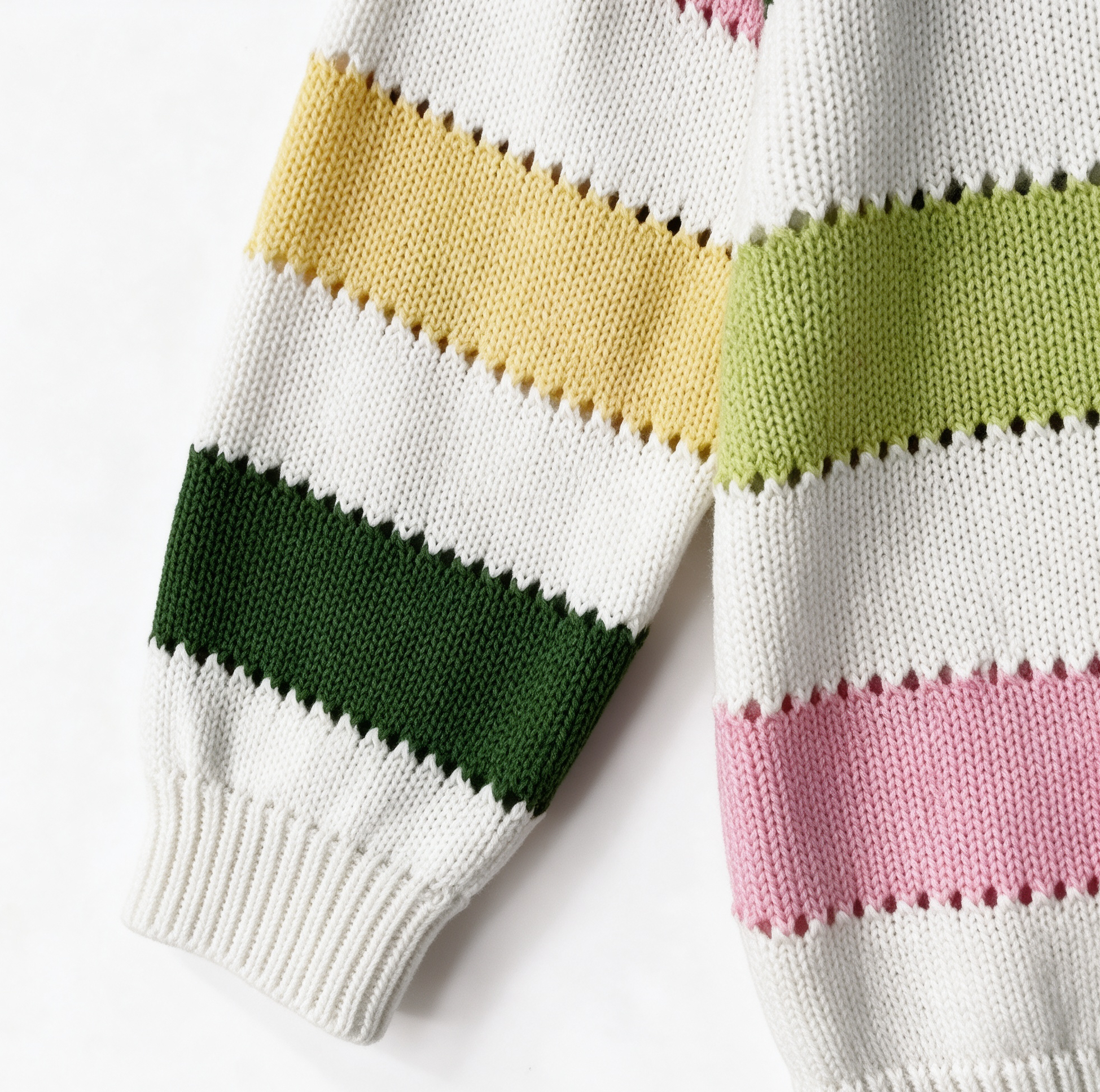
Ribbed neckline, cuffs and hem finish the sweater and hold its shape. The rib is knitted in a colour taken from the stripe palette, so the trim reads as part of the design rather than an afterthought. Rib recovery is checked after stretching, so the cuffs do not go slack after a season of wear.
Colour matching across sizes is also part of the process. All yarn for one order is checked against the approved colour standard, and the stripe sequence is confirmed so that a size 2T and a size 12Y do not differ in the order of the colours.
Fit and sizes
The sweater is cut with a comfortable body and enough room in the shoulder and the sleeve to layer over a T-shirt or a shirt. Grading, body length, sleeve length, neckband depth and rib depth are developed to your own size chart. Reference sizes 2T–12Y, confirmed on the order.
Fabric and care
The yarn is a soft knit in a cotton-rich or cotton/acrylic blend, chosen for warmth, hand feel and colour clarity. A multi-colour knit needs careful testing because different colours may behave differently in the wash, so the fabric is tested for colourfastness, pilling, shrinkage and fibre composition, colour by colour where the buyer requires it.
Care instructions are written for a striped knit: wash inside out with similar colours, use a low temperature and a gentle cycle, dry flat rather than in a tumble dryer, and do not bleach. Dark or saturated colours should be washed separately for the first few washes, and this is stated on the care label so the customer knows exactly what to do.
Customization
Stripe design: stripe width, sequence, colour combination and direction.
Colour: matched to your Pantone references, in yarn-dyed or printed stripes.
Trims: neckband, cuffs and hem in a matching or contrast colour.
Sizes: 2T–12Y, or graded to your own size chart.
Labels and packaging: woven labels, care labels, hangtags, barcodes and patches, plus poly bags, header cards or retail boxes with carton markings.
Sampling and production timeline
- Inquiry. Send a photo, a sketch or a tech pack.
- Yarn. Confirm the yarn, the colour palette and the stripe sequence, 3–7 days.
- Pattern. Fit, stripe repeat and placement, 2–3 days.
- Sample. First sample with the stripe design, 7–10 working days per round.
- Approval. Your sign-off on fit, colours, stripe width and trims.
- Bulk. Production, 25–40 days after approval and deposit.
- Shipment. Final inspection and packing, then sea, air or express.
Most knitwear styles are approved in two rounds: the first sample confirms the fit and the stripe layout, the second confirms the colours, the stripe sequence and the trims. A pre-production sample is approved before bulk knitting starts.
Quality control, stage by stage
- Yarn checked before knitting, colour by colour.
- Stripe sequence and width measured during knitting.
- Seam matching checked at the side seams and the sleeve joins.
- Colourfastness tested, including wash testing of the finished stripes.
- Pilling and shrinkage tested on the finished sweater.
- Measurement, colour and label verification, then needle detection and final inspection.

Minimum order quantity
The MOQ is 100 pieces per colourway, and mixed sizes within one colour are accepted, so a 100-piece order can cover a full size run. This applies across our whole range, which lets buyers test the fit and the sell-through before placing a larger order. Custom dyed yarn, a complex multi-colour stripe or special trims may require a higher quantity, confirmed at quotation stage.
What we need from you
- A clear photo, a sketch, a sample from another market or a full tech pack.
- The stripe reference: width, sequence and colour combination.
- Pantone references for each colour in the stripe.
- Your size range and grading, or we can develop one and send it for approval.
- Label, hangtag and packaging requirements, plus barcode details.
FAQ
What is the MOQ? 100 pieces per colourway, mixed sizes accepted.
How long does sampling take? 7–10 working days per round.
How long is bulk production? 25–40 days after sample approval and deposit.
Are the stripes yarn-dyed or printed? Both are available; the method is chosen on the sample.
What season is it for? Autumn, early winter and early spring — a medium weight, not a heavy winter knit.
Can the colours be changed? Yes. Each stripe colour is matched to your Pantone reference.
Have a tech pack or a photo? Send it over.
We will come back with a sample plan, the MOQ and a quotation for your market. For repeat orders we keep your yarn, stripe sequence and colour standard on record, so the next order starts from the approved sample.


Leave a Reply
Want to join the discussion?Feel free to contribute!