
{{{cp11}}}
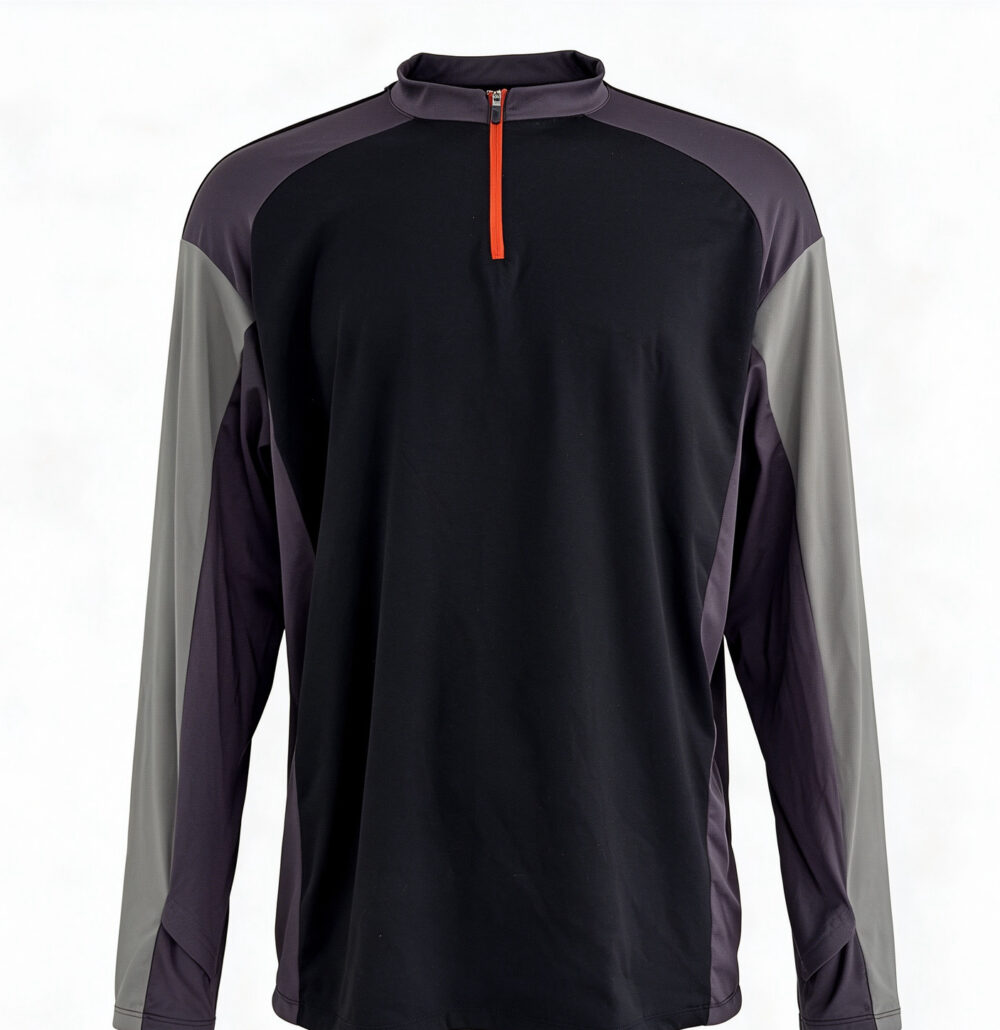
Men’s Half-Zip Sports Top
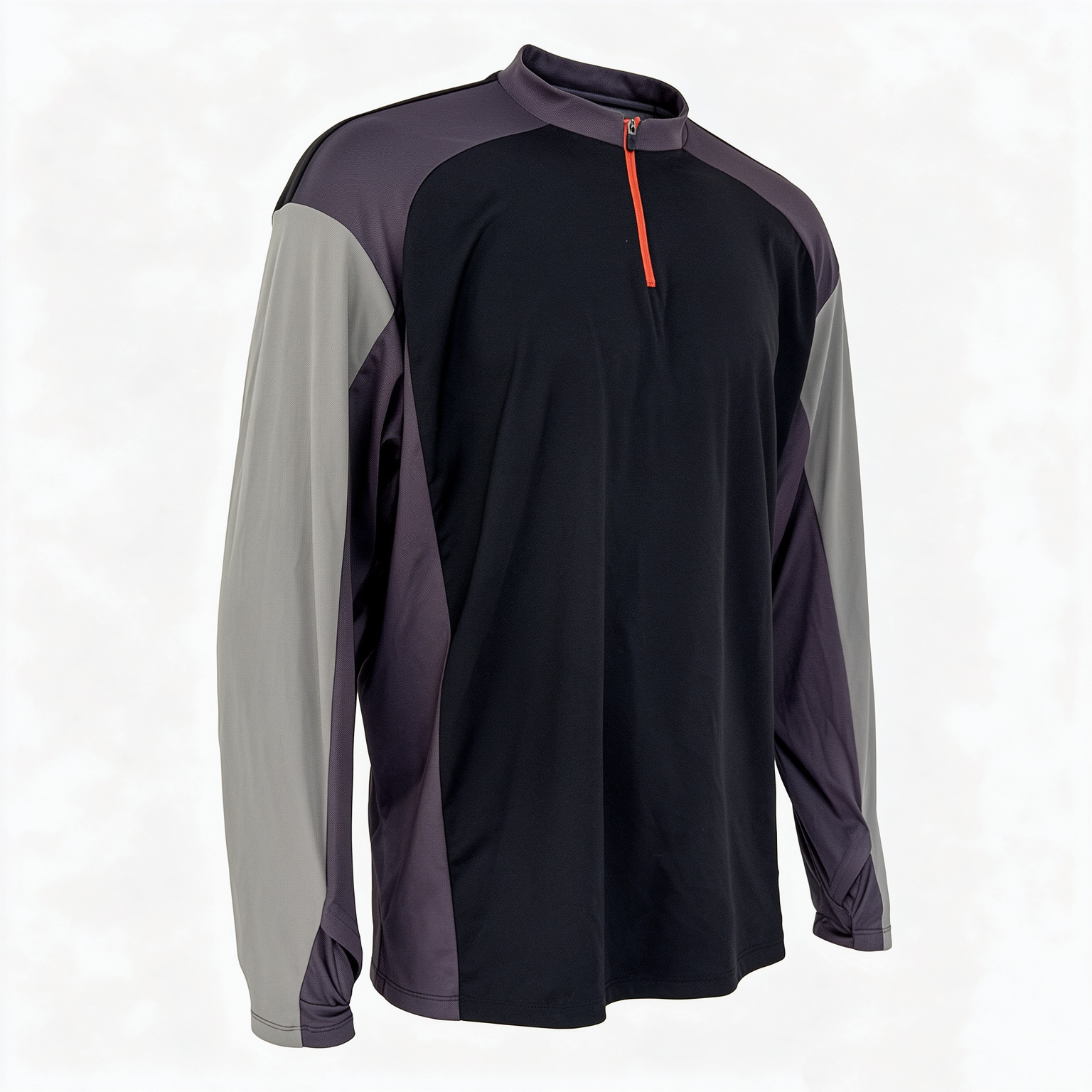
Men’s half-zip long-sleeve sports top in a colour-block black, dark grey and light grey design, made for running, the gym, hiking and everyday wear. The half-zip controls your temperature — open it to dump heat, close it for cold mornings — and the raglan sleeves let your shoulders move without the seam pulling. The body is a 180 gsm quick-dry knit with sweat channels, two-way stretch and a light anti-static finish; the shoulder and sleeve panels use a 120 gsm high-density woven fabric that resists wind and abrasion and sheds light rain. Thumb-hole cuffs stop the sleeves riding up and cover the back of your hand. It packs small. Sizes S–XXL. MOQ 100 pieces, sampling 7–10 working days, bulk 25–40 days.
Men’s Colour-Block Half-Zip Long-Sleeve Sports Top — Built for Moving
Why this top
This is a half-zip long-sleeve sports top made for outdoor training, running, the gym and everyday light activity. It is the layer you reach for when you are not sure what the weather is doing: the zip controls the temperature, the fabric manages sweat, and the cut gives you room to move without looking like you borrowed someone else’s kit. It is built to look sharp enough for a commute and functional enough for a hill, and it works across several seasons.
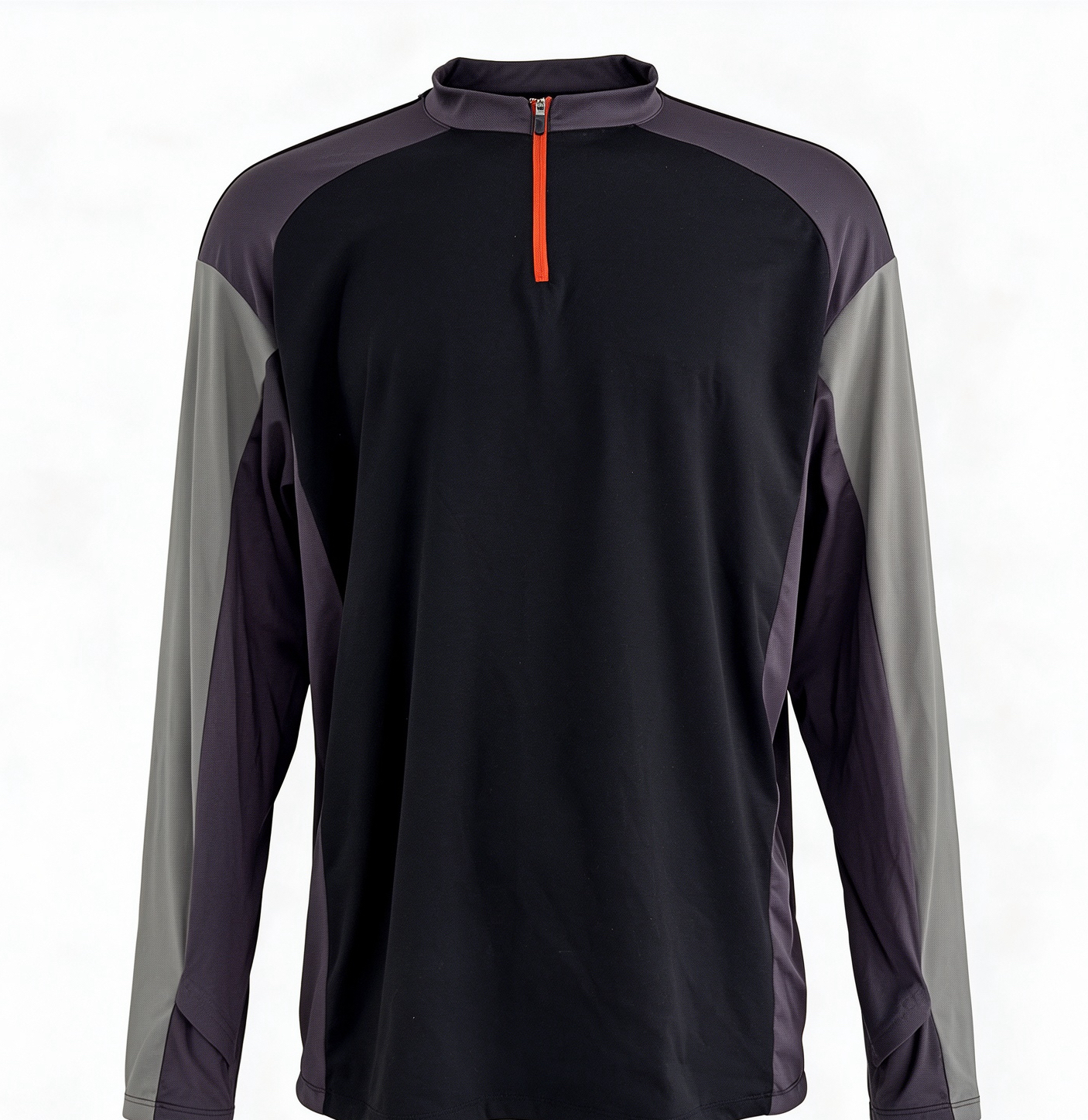
The design: a stand collar, a bright zip, and a body that moves
The collar and zip. The top has a stand collar with a half-zip running from the chest to the top of the collar. The zip is the bright accent on an otherwise restrained colour scheme, and it is the control for your temperature: open it and heat escapes from the neck and chest; close it and you keep the warmth in on a cold morning or a cool evening. The top end is finished so the slider does not press on the neck, and the zip runs smoothly with gloves on or with cold hands.
The colour blocking. The body is built from panels rather than one flat piece: a black main body with dark grey and light grey blocks. The seams are placed to shape the torso, so the top reads as structured rather than baggy, and the vertical lines make the wearer look leaner without any tightness across the chest or the waist. It is a design that photographs well — a plain black top can look like a base layer, while a well-cut colour block looks like a considered piece of kit.
Raglan sleeves. The sleeves are cut raglan, so the shoulder seam runs from the collar to the underarm instead of across the top of the shoulder. That matters in a sports top: the seam sits where you do not press on it when you lift your arms, and the shoulder is free to move. Running, swinging your arms, reaching overhead to stretch — nothing pulls across the chest or binds at the shoulder point.
Thumb-hole cuffs. The cuffs are finished close to the wrist and there is a thumb hole at the cuff opening. You can wear the cuff as a normal sleeve, or slide your thumb through and pull the cuff over the back of your hand. That does two things: it stops the sleeve sliding up when you run, and it covers the back of the hand in cold weather, which is where a chill starts. It also keeps the sleeve out of the way when you are using your hands.
Length and hem. The length is a regular sports cut: long enough to stay at the waist when you bend or reach, without being tight. The hem sits flat and does not ride up when you bend down, which is what you notice on a run or in a gym session. There is a simple letter logo on the front, understated enough to work with casual clothes as well as kit.
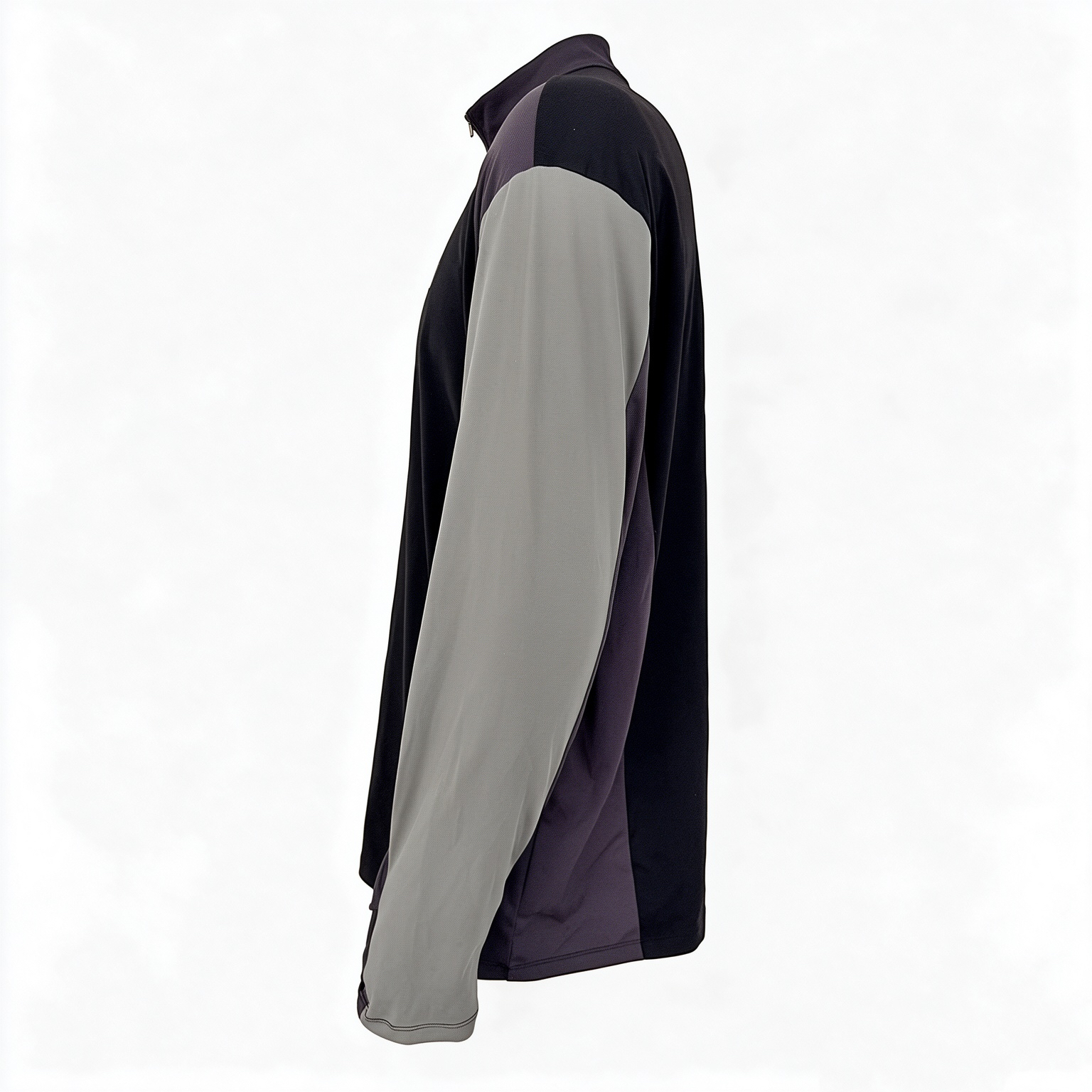
The top is made from a multi-zone composite knit — different fabrics in different places, chosen for what each area of the body needs.
The main body: 180 gsm high-stretch quick-dry knit. The body and back use a knit at around 180 gsm, which is a medium-weight sports fabric: not thin enough to be see-through, not heavy enough to make you sweat. Inside, the fabric has sweat-channel structure: when you sweat, the fibres move moisture from the skin to the outside of the fabric, where it evaporates, so you stay dry rather than sitting in a wet layer that turns cold when you stop moving.
The knit has stretch in both directions and recovers quickly. That means it moves with you when you run, stretch or lift, and it springs back instead of staying stretched — so it does not sag at the elbow or the waist after a long session, and it does not lose its shape after repeated washing. The surface has a light anti-static finish, so it does not attract dust and does not crackle in dry autumn and winter air. The hand feel is soft rather than slick or stiff, and it does not feel harsh against the skin — which matters if you wear it directly against your body.
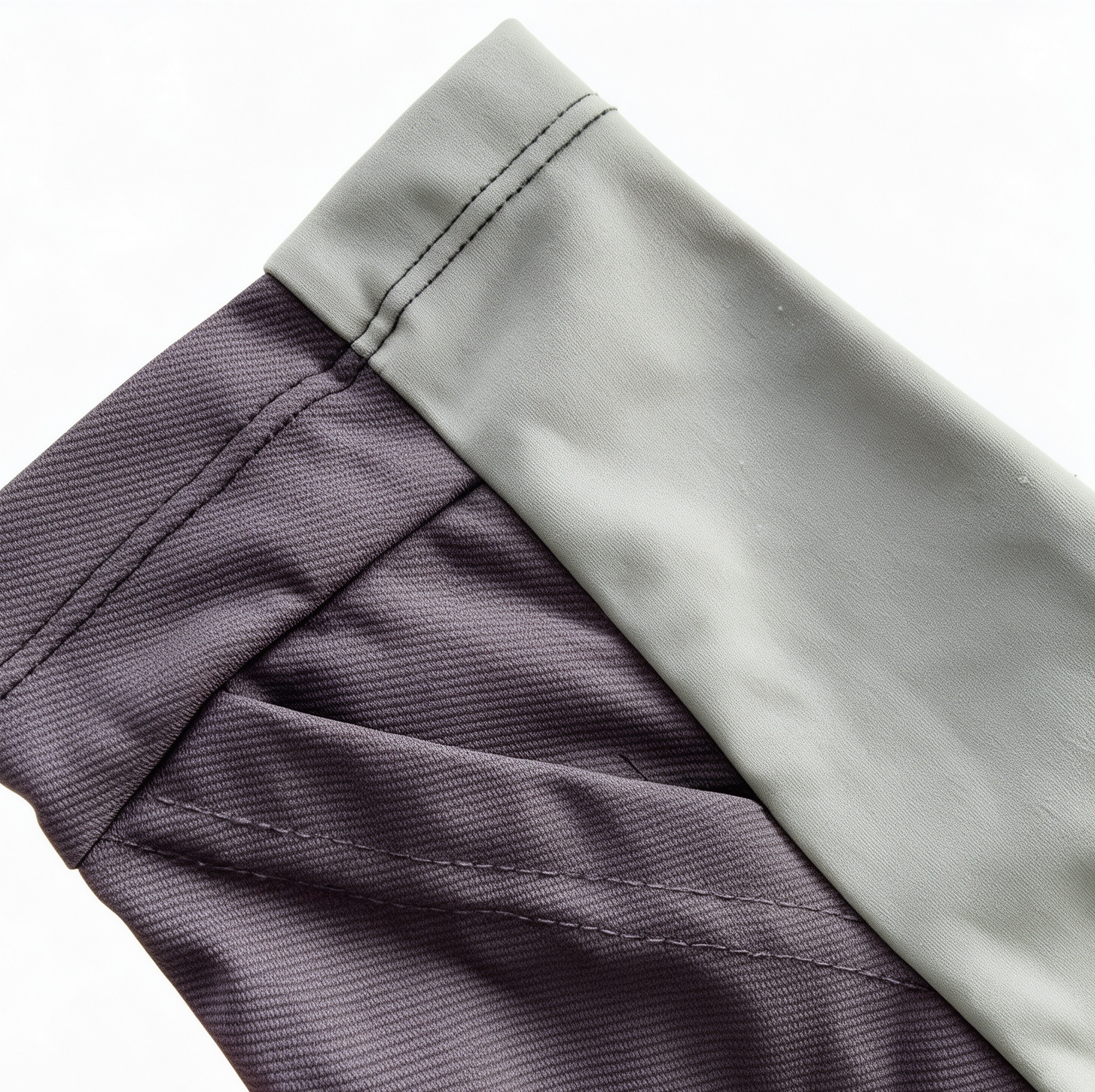
The shoulders, side seams and sleeve panels: 120 gsm high-density stretch woven. The panels where the body rubs against packs, straps and branches use a lighter, denser woven fabric at around 120 gsm. It is smoother and thinner than the main knit, and it does three jobs. First, it is lightly wind-resistant: on an exposed ridge or a windy street, it stops part of the cold air getting through. Second, it is more abrasion-resistant: the shoulders and upper arms are where a backpack strap, a barbell or a branch rubs, and this fabric reduces the surface damage, pilling and snagging that a knit would suffer there. Third, it has a light water-repellent finish, so a light shower or morning dew beads and rolls off, keeping the inside dry for the short term in unexpected rain.
The seams where the two fabrics meet. The panels are joined with a flat bound seam. The stitching is even and strong, and the finish is flat rather than raised — which matters when you are wearing the top for an hour: a raised seam under a backpack strap rubs, while a flat one does not.
Weight and packing. The combination keeps the top light. The 180 gsm body gives it substance, while the 120 gsm panels keep the overall weight down, so the top does not feel heavy on the shoulders. It packs down small, which makes it easy to carry in a gym bag or a day pack.
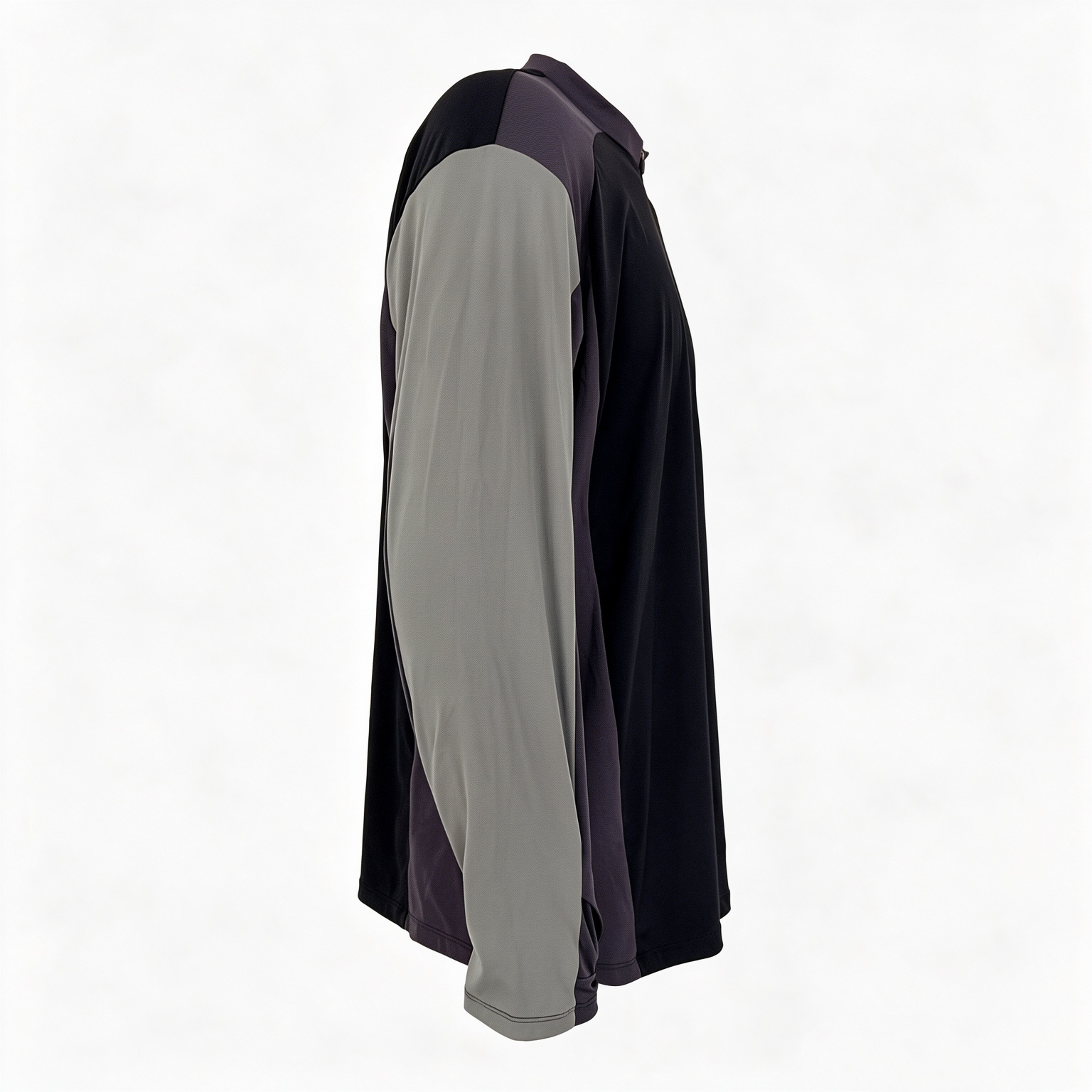
How it performs
Breathability and moisture. The knit structure has micro-perforations that let heat out and sweat vapour escape, so you do not build up a hot, wet layer during a session. That is the difference between a top you can wear for an hour and one you want to take off after twenty minutes.
Colourfastness. The fabric is dyed with a reactive process and tested for colour retention, so the black stays black and the greys stay grey after repeated cold washes. It does not bleed into other laundry, and the colour does not fade with sun exposure during normal wear.
Anti-pilling. The fabric is optimised against pilling, so the surface does not develop fuzz balls at the friction points — the sides, the underarms and where a bag strap sits — under normal wear and washing.
Fit and sizing
The top is a regular sports fit: it follows the body without compression, so you can wear it on its own or as a base layer under a shell. Sizing is based on chest width, body length, sleeve length and shoulder width, measured flat without stretching, and the size guide lists both centimetres and inches. It runs from [S–XXL]. If you plan to wear it over a base layer in winter, choose your normal size; if you prefer a looser fit for the gym, take one size up.
When and where to wear it
Running, morning and evening. The half-zip is the key here: closed at the start of a cold run, opened once you warm up, closed again on the walk home. The thumb-hole cuffs keep the sleeve in place and cover the back of the hand in cold air, and the sweat-channel fabric keeps the back and chest dry.
Hiking and hill walking. The woven panels at the shoulders take the abrasion from a pack, the light wind resistance helps on exposed sections, and the light water repellency handles damp grass and a passing shower. Because it packs small, it belongs in a day pack even if you start out wearing just a T-shirt.
Gym and indoor training. The stretch and the raglan cut give you full range of movement for lifting, rowing, classes and stretching, and the breathable knit keeps you from overheating indoors.
Commuting and casual wear. The colour-block design works with joggers, jeans and casual trousers, and the understated logo means it looks like a sporty everyday top rather than a race jersey. Wear it with jeans and trainers for a relaxed look, or with technical trousers for something more athletic.
Seasonal layering. In spring and autumn, it is the right weight on its own. In summer mornings or in air conditioning, it is the light outer layer you throw on. In winter, it becomes a base layer under a shell or a jacket: it manages sweat, the panels block some wind, and it packs down when you take it off.
Washing and care
Cold wash, or a gentle machine cycle with the top inside out, or hand wash. Do not use bleach and avoid strongly alkaline detergents; do not tumble dry at high heat and do not leave it in strong sun for long periods. Hang it to dry in the shade. Treating it this way protects the elasticity, the moisture management and the water-repellent finish, and keeps the colour stable for longer.
The practical version: wash it with similar colours, use a mesh bag if you machine wash it with anything with zips, air-dry it rather than tumble drying, and never iron the fabric — heat damages the finish on the woven panels and can mark the knit. If the water-repellent finish stops beading after a long period of use, a spray-on treatment on the clean, damp panels will restore it.
Questions buyers usually ask
Is it warm? On its own it is a spring and autumn layer. In winter, wear it as a base layer under a jacket — it manages sweat and blocks some wind, which makes the outer layer work better.
Does it hold sweat? No. The knit moves moisture to the outside of the fabric where it evaporates, which is why it stays comfortable during a session.
Will it stay in place when I run? Yes. The cuffs and the thumb holes keep the sleeves down, and the hem is cut to stay at the waist when you move.
Does the colour fade? The fabric is reactive-dyed and tested for colour retention, so the black and greys stay stable after repeated cold washes.
For buyers
100 pieces per colourway, with mixed sizes in one order. Sampling takes 7–10 working days per round, and bulk production runs 25–40 days after sample approval and deposit. The fabric weights, the panel layout, the colour blocking, the zip colour, the logo and the packaging can all be developed to your specification, and carton markings and barcodes are produced to your artwork.


Leave a Reply
Want to join the discussion?Feel free to contribute!