
Knitted Clothing Manufacturing: A Step-by-Step Guide
Knitted clothing manufacturing involves more than turning yarn or fabric into finished garments. For clothing brands, the process begins with product planning and material selection, then moves through design development, sampling, production, finishing, quality inspection, and shipment.
Understanding how knitted garments are manufactured helps brands communicate more effectively with suppliers, make better product decisions, and reduce avoidable problems during bulk production.
Whether you are developing knit tops, T-shirts, polo shirts, sweaters, dresses, or loungewear, knowing the manufacturing process can help you build a more reliable and commercially successful clothing collection.
In this guide, we explain the knitted clothing manufacturing process step by step, highlight the decisions that matter to buyers, and share practical considerations for working with an OEM or ODM clothing manufacturer.
What Is Knitted Clothing Manufacturing?
Knitted clothing manufacturing is the process of producing garments made from knitted textiles or knitted yarn structures. Knitted fabrics are formed by interlocking loops, which generally provide flexibility, softness, and stretch.
Unlike woven fabrics, which are constructed by crossing warp and weft yarns, knitted materials use loop-based structures. This construction makes them suitable for many products, including everyday tops, casualwear, sweaters, active-inspired garments, and comfortable loungewear.
However, not all knitted clothing is manufactured in the same way.
The production method depends on the garment design, fabric structure, yarn type, intended fit, and required finishing.
For example:
- A cotton knit T-shirt is commonly cut from knitted fabric and assembled through sewing.
- A ribbed knit top may require careful consideration of stretch, recovery, and neckline construction.
- A fully fashioned sweater is knitted into shaped panels or garment sections and then joined.
- A seamless knitted garment may be produced using specialized knitting technology.
Understanding these differences is the first step in choosing the right manufacturing route for your product.
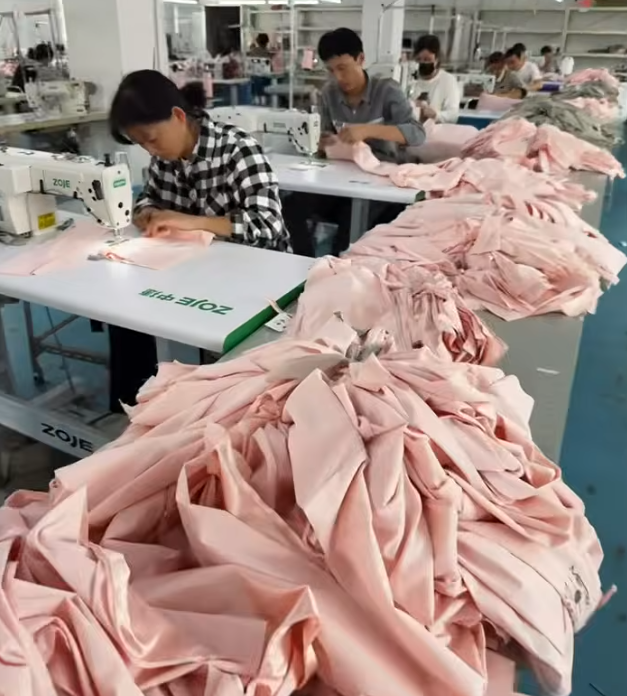
Chengyuan Garment factory clothing Manufacturing
The Main Methods of Knitted Clothing Manufacturing
Before starting product development, brands should identify how their garments will be constructed. The manufacturing method affects fabric usage, workmanship, development requirements, and production planning.
1. Cut-and-Sew Knit Garments
Cut-and-sew knit garments are made from knitted fabric produced in rolls or other fabric forms.
The fabric is inspected, relaxed when required, spread, cut into garment components, and sewn together.
This method is commonly used for:
- Knit T-shirts
- Polo shirts
- Basic knit tops
- Sweatshirts and hoodies
- Knit dresses
- Pajamas and loungewear
Cut-and-sew construction offers flexibility in garment design and is suitable for many commercial clothing collections.
For brands developing everyday knit tops, this method allows customization of fabric composition, GSM, colors, patterns, measurements, necklines, sleeves, and finishing details.
2. Fully Fashioned Knitwear
Fully fashioned knitwear is produced by knitting garment panels into specific shapes rather than cutting every component from a large fabric sheet.
The panels are shaped during knitting and then joined through linking or other suitable construction methods.
This approach is often used for sweaters, cardigans, and structured knitwear.
Because the garment shape is created during knitting, the process requires attention to yarn selection, machine gauge, stitch structure, shaping, and joining quality.
3. Seamless or Whole-Garment Knitting
Some garments can be produced using specialized knitting machines that create complete or nearly complete garment structures.
This method can reduce certain assembly operations, although its suitability depends on the design, machinery, order requirements, and production capabilities.
For most brands, the important point is not simply choosing the newest technology. It is selecting a manufacturing method that matches the product’s appearance, performance, cost, and commercial requirements.
Knitted Clothing Manufacturing Process: 8 Key Steps
A typical knitted garment project moves through several connected stages. The exact sequence may vary depending on whether the product is cut-and-sew knitwear, fully fashioned knitwear, or another construction type.
Step 1: Product Design and Requirement Planning
Every successful manufacturing project begins with a clear product brief.
Before contacting a factory, define the purpose of the garment and the market it is intended for.
Important product details include:
- Garment category and style
- Target customer and retail positioning
- Intended season
- Fit and silhouette
- Fabric or yarn preferences
- Target colors
- Size range
- Estimated order quantity
- Target cost and delivery requirements
A clear product brief helps the manufacturer understand what needs to be developed and identify potential technical challenges early.
For example, a lightweight fitted knit top and an oversized textured sweater may both belong to the knitted clothing category, but they require different material choices, construction details, and production planning.
If you are developing a custom collection, explore our OEM and ODM clothing manufacturing solutions to understand how product development and production can be coordinated.
Step 2: Fabric or Yarn Selection
Material selection is one of the most important decisions in knitted clothing manufacturing.
For cut-and-sew garments, brands usually select knitted fabric based on composition, structure, weight, width, color, and performance requirements.
For fully fashioned knitwear, yarn selection and knitting specifications become especially important.
Common material options include:
- Cotton
- Cotton blends
- Modal
- Viscose
- Polyester
- Cotton-elastane blends
- Wool and other specialty yarns, depending on the product
The best material depends on the intended garment.
Cotton may be suitable for breathable everyday knit tops. Elastane blends can help provide additional stretch and recovery. Certain synthetic or blended fabrics may be selected for durability, easy care, or specific performance requirements.
Brands should also evaluate fabric structure rather than focusing only on fiber composition.
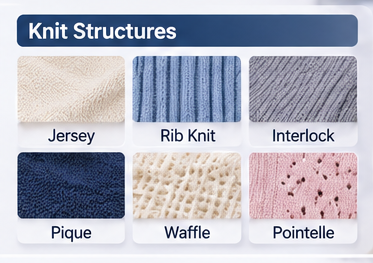
Single jersey, rib knit, interlock, waffle knit, and other structures can produce different levels of stretch, thickness, surface texture, and drape.
For a more detailed material selection framework, read our guide on how to choose the best fabric for knit tops.
Step 3: Tech Pack Preparation and Pattern Making
A tech pack translates a design concept into manufacturing instructions.
It helps the factory understand what the garment should look like, how it should be constructed, and which specifications must be followed.
A useful knit garment tech pack may include:
- Front and back technical drawings
- Measurement chart
- Fabric composition and GSM
- Knit structure or yarn specifications
- Color references
- Stitching and seam details
- Neckline, cuff, and hem construction
- Logo and artwork placement
- Labels and trims
- Packaging instructions
For knit garments, measurement specifications deserve particular attention.
Because knitted materials can stretch and relax, brands should clarify whether measurements are taken in a relaxed state, after washing, or under another agreed condition.
Pattern making then converts the design and measurements into garment components or knitting instructions, depending on the production method.
A well-prepared tech pack reduces interpretation errors and gives the development team a clear reference.
Step 4: Sample Development and Fit Evaluation
Sampling allows brands to evaluate a physical garment before committing to bulk production.
During sample development, the manufacturer may create an initial pattern, select or source materials, assemble the garment, and review its appearance and construction.
The first sample is not always expected to be perfect. Its purpose is to reveal what needs to be improved.
Brands should evaluate:
- Overall fit and silhouette
- Garment measurements
- Fabric hand feel
- Stretch and recovery
- Neckline and sleeve construction
- Stitching quality
- Color and appearance
- Branding and trim placement
For example, a fitted rib knit top may need adjustments to its body width or neckline recovery. A loose knit T-shirt may require changes to its shoulder position, sleeve shape, or fabric drape.
Provide revision comments clearly. Photos, measurement records, and marked-up technical drawings can help the factory understand the required changes.
Chengyuan supports product development for custom women’s knit tops, from initial design discussion to sample development and production preparation.
Step 5: Sample Approval and Pre-Production Confirmation
Once the sample has been revised and accepted, the project moves toward pre-production confirmation.
This stage is important because the approved sample becomes a practical reference for bulk manufacturing.
Before production begins, confirm the following:
- Final fabric or yarn
- Approved color
- Measurements and grading
- Construction details
- Stitching and finishing
- Logo, labels, and trims
- Packaging specifications
- Quality inspection requirements
For larger or more complex projects, a pre-production sample may be required to verify that the final specifications can be reproduced under production conditions.
A sample approval should not rely only on verbal confirmation. Written comments and clearly identified reference samples help prevent misunderstandings later.
Step 6: Bulk Knitted Clothing Production
Bulk production begins after the required materials, specifications, and approvals have been confirmed.
The actual production process depends on the garment construction.
For cut-and-sew knit garments, a typical sequence includes:
- Fabric receiving and inspection
- Fabric relaxation or preparation
- Pattern and marker planning
- Fabric spreading and cutting
- Component bundling
- Sewing and garment assembly
- Label and trim attachment
- Finishing and pressing
For fully fashioned knitwear, the process may include:
- Yarn preparation
- Knitting program development
- Panel or garment knitting
- Panel inspection
- Linking or joining
- Washing and finishing
- Shaping and measurement checking
The factory should follow the approved construction and material specifications throughout production.
For brands developing women’s knit T-shirts or men’s knit T-shirts, fabric consistency, cutting accuracy, seam quality, and measurement control are especially important for repeatable bulk results.
Step 7: Finishing and Garment Quality Inspection
Finishing gives the garment its final appearance and prepares it for delivery.
Depending on the product, finishing may include:
- Thread trimming
- Washing or other approved treatments
- Pressing and shaping
- Measurement checking
- Label and hangtag verification
- Folding and packaging preparation
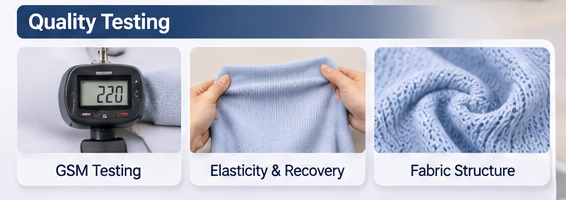
Quality control should not be limited to the final inspection.
A more effective approach is to establish checkpoints throughout development and production.
At the material stage, inspect fabric or yarn against the confirmed requirements.
During production, monitor workmanship, construction, measurements, and appearance.
At the final stage, compare finished garments with the approved sample and order specifications.
For knitted garments, inspection may also consider fabric defects, stitch irregularities, seam appearance, shrinkage, stretch recovery, and dimensional stability where relevant to the product.
The inspection criteria should be agreed before production so that both the buyer and manufacturer understand the expected standard.
Step 8: Packaging and Shipment
Once finished garments pass the agreed inspection process, they move into packaging and shipment preparation.
Packaging requirements may include:
- Individual garment bags
- Folding methods
- Size and color stickers
- Hangtags
- Carton labels
- Packing quantities
- Retail or private-label packaging
For overseas buyers, accurate packing information is important for receiving, inventory management, and distribution.
The manufacturer should follow the confirmed packaging instructions and shipment requirements rather than making unapproved changes at the final stage.

What Affects the Cost of Knitted Clothing Manufacturing?
The cost of knitted clothing depends on more than the garment’s fabric price.
Several factors influence the final quotation.
Material and Fabric Requirements
Fiber composition, fabric weight, knit structure, yarn count, color requirements, and finishing treatments can affect material cost.
Special textures, custom colors, or unusual material specifications may require additional development or sourcing work.
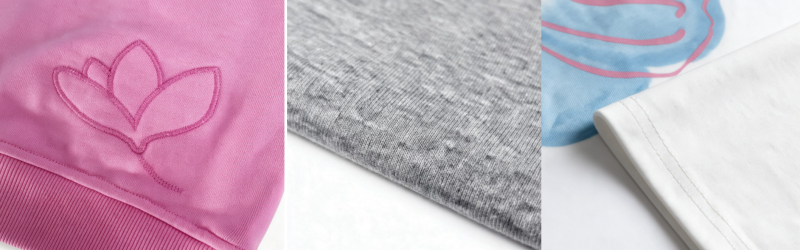
Chengyuan Garment offers a variety of materials, including Tencel-wool-spandex blends and cotton etc.
Garment Construction
A basic knit T-shirt and a complex textured sweater do not require the same production operations.
Construction details such as ribbed panels, special necklines, decorative stitching, embroidery, or multiple fabric combinations can increase development and manufacturing complexity.
Customization and Branding
Custom labels, logos, printing, embroidery, buttons, trims, and packaging all contribute to the final product cost.
Brands should confirm these details early rather than adding them after the sample has been approved.
Order Quantity and Production Planning
Order quantity affects material planning, production efficiency, and the allocation of development costs.
Smaller trial orders may have different unit economics from larger repeat orders. The actual MOQ and quotation depend on the garment, material, customization requirements, and factory production plan.
When requesting a quotation, provide the product specifications and estimated quantity as clearly as possible.
Common Challenges in Knitted Garment Manufacturing
Knitted garments offer comfort and flexibility, but their loop-based construction also creates specific production considerations.
Fabric Shrinkage and Dimensional Stability
Knitted fabrics may change dimensions during washing, drying, or finishing.
Brands should confirm the expected finished measurements and relevant shrinkage requirements before bulk production.
Stretch and Recovery
A knitted garment may stretch during wear or handling.
The fabric should be evaluated for its ability to return toward its original shape, particularly around necklines, cuffs, waistbands, and fitted areas.
Fabric and Color Consistency
Differences between material lots can affect garment appearance.
Color references, material approvals, and production checks help reduce inconsistencies across a collection.
Sample-to-Bulk Differences
A sample is developed under specific conditions, while bulk production involves larger quantities and repeated operations.
The approved sample should therefore be supported by written specifications, confirmed materials, and clear production references.
How to Choose a Knitted Clothing Manufacturer
Selecting the right knitted clothing manufacturer is an important part of product development and sourcing.
A suitable supplier should be able to understand your product requirements, communicate technical details clearly, and support the manufacturing process from development to delivery.
When evaluating a factory, consider the following:
Product Development Capability
Can the manufacturer work from a tech pack, sketch, reference garment, or initial concept?
Can the team support pattern making, sampling, and product revisions?
Material and Construction Knowledge
Does the supplier understand the differences between knit structures, fabric weights, yarn types, and garment construction methods?
A manufacturer should be able to discuss how material and construction choices affect the final product.
Sampling and Production Coordination
Can the factory explain the sample process, approval requirements, and transition to bulk production?
Clear communication at these stages is essential for reducing avoidable development delays.
Quality Management
Ask how the manufacturer checks materials, workmanship, measurements, and finished garments.
The most useful answer is a clear explanation of the actual control process and the specifications used as references.
Order Flexibility and Capacity
Consider whether the supplier can support your current order and potential future growth.
For emerging brands, flexible trial quantities may be important. Established brands may place greater emphasis on repeat production, capacity planning, and consistent delivery.
Chengyuan Garment provides integrated OEM and ODM garment development, including design support, pattern making, sampling, bulk production, and customization. Our monthly production capacity is approximately 80,000–120,000 pieces, supporting both trial orders and larger production programs.
You can explore our women’s sweater manufacturing solutions or women’s open-knit sweater development to see examples of product categories that can be developed for clothing brands.
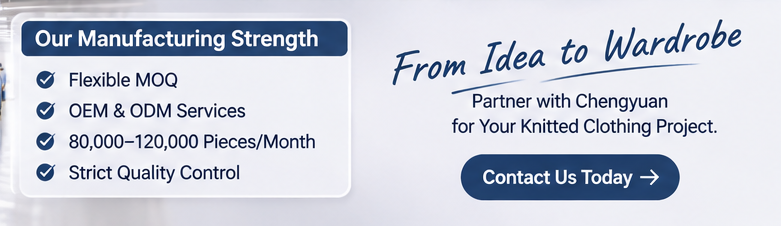
Manufacturing strengths of Chengyuan Garment.
Knitted Clothing Manufacturing for Different Product Categories
The knitted clothing category covers a wide range of garments, each with different material and construction requirements.
Knit Tops and T-Shirts
Knit tops and T-shirts are commonly produced from knitted fabrics such as jersey, rib, or interlock.
Brands can customize fabric composition, GSM, fit, neckline, sleeve length, colors, prints, and branding.
Polo Shirts
Knit polo shirts combine a knitted body with specific collar, placket, and button details.
The collar construction, fabric stability, and overall fit should be confirmed during development.
Sweaters and Knitwear
Sweaters may use cut-and-sew construction or fully fashioned knitting, depending on the design.
Yarn, gauge, stitch structure, shaping, and finishing play important roles in the final appearance.
Knit Dresses
Knit dresses require attention to drape, stretch, body fit, length, and dimensional stability.
Material selection should reflect the intended silhouette and wearing conditions.
Sleepwear and Loungewear
Comfort-focused knitted sleepwear and loungewear often prioritize softness, flexibility, and suitable fabric weight.
Brands should also consider garment durability, care requirements, and the intended seasonal use.
For broader product development, Chengyuan also supports categories such as women’s knit dresses and custom knitwear collections.
What Should You Prepare Before Contacting a Knitted Clothing Manufacturer?
A clear project brief helps the factory review your requirements and prepare a more useful quotation.
If available, prepare:
- Product photos, sketches, or technical drawings
- Tech pack and measurement chart
- Fabric or yarn preferences
- Estimated order quantity
- Color and size breakdown
- Branding and label requirements
- Packaging instructions
- Target delivery date
- Destination market
You do not need to have every detail finalized before starting a conversation.
If you are at the early development stage, you can begin with a product concept or reference garment and discuss the main requirements with the manufacturer.
The goal is to clarify the product step by step before moving into sampling and bulk production.
Frequently Asked Questions About Knitted Clothing Manufacturing
What is the knitted clothing manufacturing process?
The process generally includes product planning, material selection, tech pack preparation, pattern making or knitting programming, sample development, approval, bulk production, finishing, quality inspection, packaging, and shipment.
The exact steps depend on the garment construction method.
What is the difference between knitted and woven clothing?
Knitted fabrics are formed by interlocking loops, while woven fabrics are created by crossing yarns.
Knitted garments often provide more flexibility and stretch, although the actual performance depends on fiber composition, structure, and finishing.
Is knitted clothing always made by cutting and sewing?
No. Many knit garments are cut from knitted fabric and sewn, but sweaters and other knitwear may be produced using fully fashioned or specialized knitting methods.
How long does knitted clothing manufacturing take?
The timeline depends on product complexity, material availability, sampling revisions, order quantity, and production scheduling.
A realistic schedule should be confirmed after the manufacturer reviews the product requirements and development plan.
What is the MOQ for knitted clothing manufacturing?
MOQ varies by garment type, fabric or yarn requirements, customization, and factory production arrangements.
Brands should discuss the intended quantity and material requirements with the manufacturer before finalizing the project.
Can clothing brands customize knitted garments?
Yes. Depending on the product and manufacturing method, brands may customize fabric or yarn, colors, measurements, fit, knit structure, neckline, sleeves, prints, embroidery, logos, labels, trims, and packaging.
How can brands ensure bulk garments match the approved sample?
Confirm the material, measurements, construction, colors, finishing, and packaging before bulk production.
Keep the approved sample and written specifications as production references, and establish quality checkpoints during manufacturing.
Start Your Knitted Clothing Manufacturing Project
Successful knitted clothing manufacturing begins with clear product requirements and a reliable development process.
By understanding the manufacturing method, selecting suitable materials, preparing accurate specifications, reviewing samples carefully, and confirming quality requirements before bulk production, clothing brands can make more informed sourcing decisions.
Whether you are developing a new knit top, a seasonal sweater collection, or a private-label knitwear range, working with an experienced OEM/ODM manufacturer can help connect your product concept with practical production requirements.
Qingdao Chengyuan Garment Co., Ltd. supports clothing brands, retailers, wholesalers, and emerging labels with integrated design, sampling, customization, and bulk garment production.
If you are planning a new knitted clothing collection, contact Chengyuan Garment to discuss your product concept, material requirements, estimated quantity, and development goals.


Leave a Reply
Want to join the discussion?Feel free to contribute!