
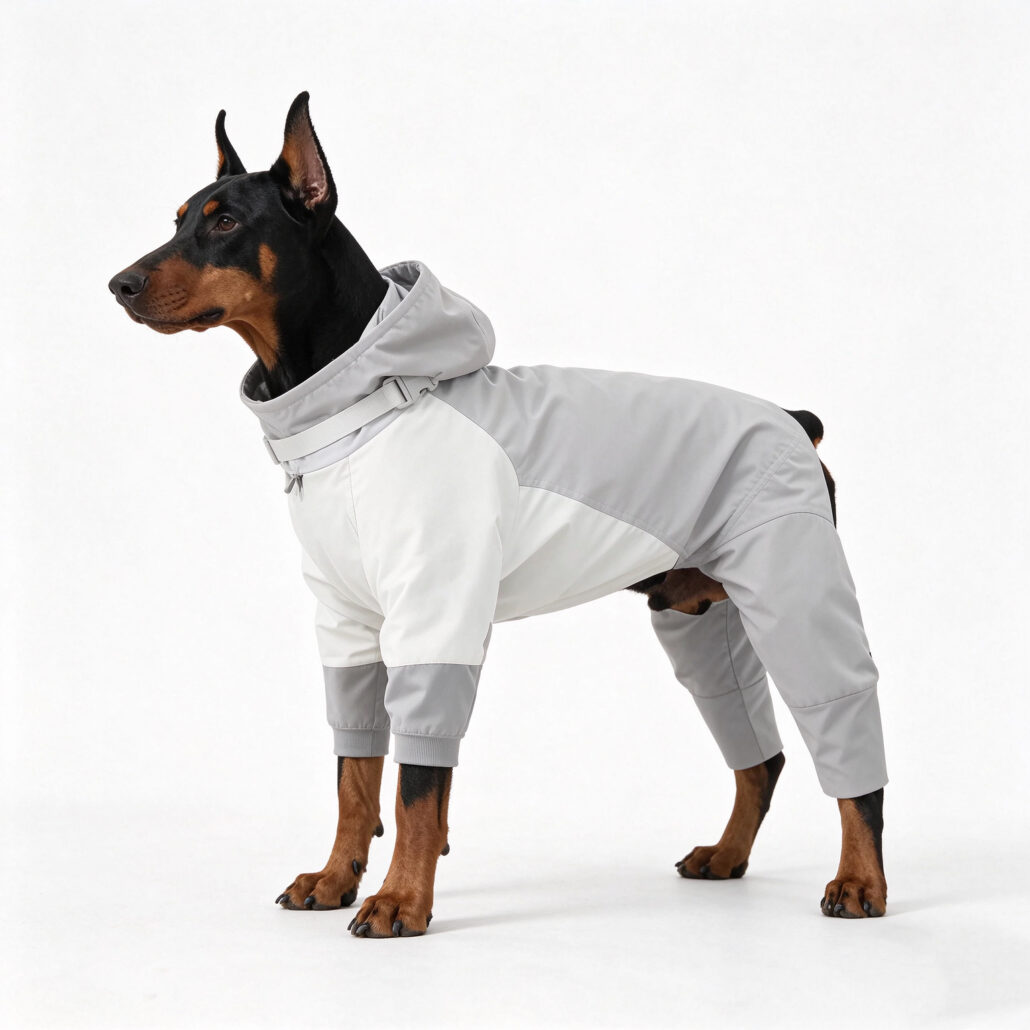
dog jacket amazon
A four-leg dog raincoat can provide fuller outdoor protection without sacrificing comfort. The best designs combine durable, dirt-resistant fabric with water resistance for light rain, wind-blocking construction for cool autumn walks, and tested UV protection for summer use. Four-leg patterns must allow natural movement while maintaining belly access. A full back zipper makes dressing easier, and an optional marked opening can adapt a gender-neutral suit for male dogs without creating an unfinished edge. Insect protection should be described as a physical barrier unless a repellent finish has been properly tested. Pet brands should also verify stain resistance, abrasion performance, water repellency after washing, and breathability before approving bulk production. Clear fabric claims, accurate measurements, and multi-size movement testing turn a simple outdoor coat into a practical product customers can trust across different environments. Thoughtful construction also improves durability and gives the final product a stronger reason to be worn again.
Four-Leg Dog Raincoats and Outdoor Suits: A Practical All-Season Protection Guide
A four-leg dog raincoat is often sold as a single solution for every trail, forecast, and season. In reality, “all-season protection” is a product architecture, not one fabric claim. A useful outdoor suit has to cover the body without shortening the dog’s stride, open easily for dressing, support bathroom access, and separate genuine weather performance from broad marketing language. It also needs to explain which conditions it is designed for: light summer sun, cool autumn wind, mud, light rain, or a combination of them.
This guide examines a four-legged outdoor garment with a water-resistant, dirt-resistant shell, full back zipper, durable construction, gender-neutral fit, and an optional relief opening for male dogs. It explains how to evaluate protection claims, how the garment should move, and what pet brands must test before placing “three-proof,” waterproof, UV-protective, or insect-barrier claims on a product page. Brands sourcing through a custom pet clothing manufacturer can use the same framework to turn a reference design into a repeatable outdoor collection.

Quick answer: what makes a four-legged outdoor suit useful?
The strongest design is not necessarily the one with the highest number of claims. It should do six jobs well:
- Cover the legs, belly, and back without pulling across the shoulders.
- Allow natural walking, turning, sitting, and bathroom access.
- Offer a clear dressing sequence through a wide back opening.
- Provide enough ventilation for the stated season and activity.
- Match the fabric finish to the actual weather, with tested performance claims.
- Fit both male and female dogs through a well-developed unisex pattern.
A suit that traps heat in summer, leaks at the seams in rain, or must be pulled over the dog’s head is not “all-purpose” just because it covers more body area. Comfort and movement remain the baseline.
Why a four-leg design belongs in an outdoor wardrobe
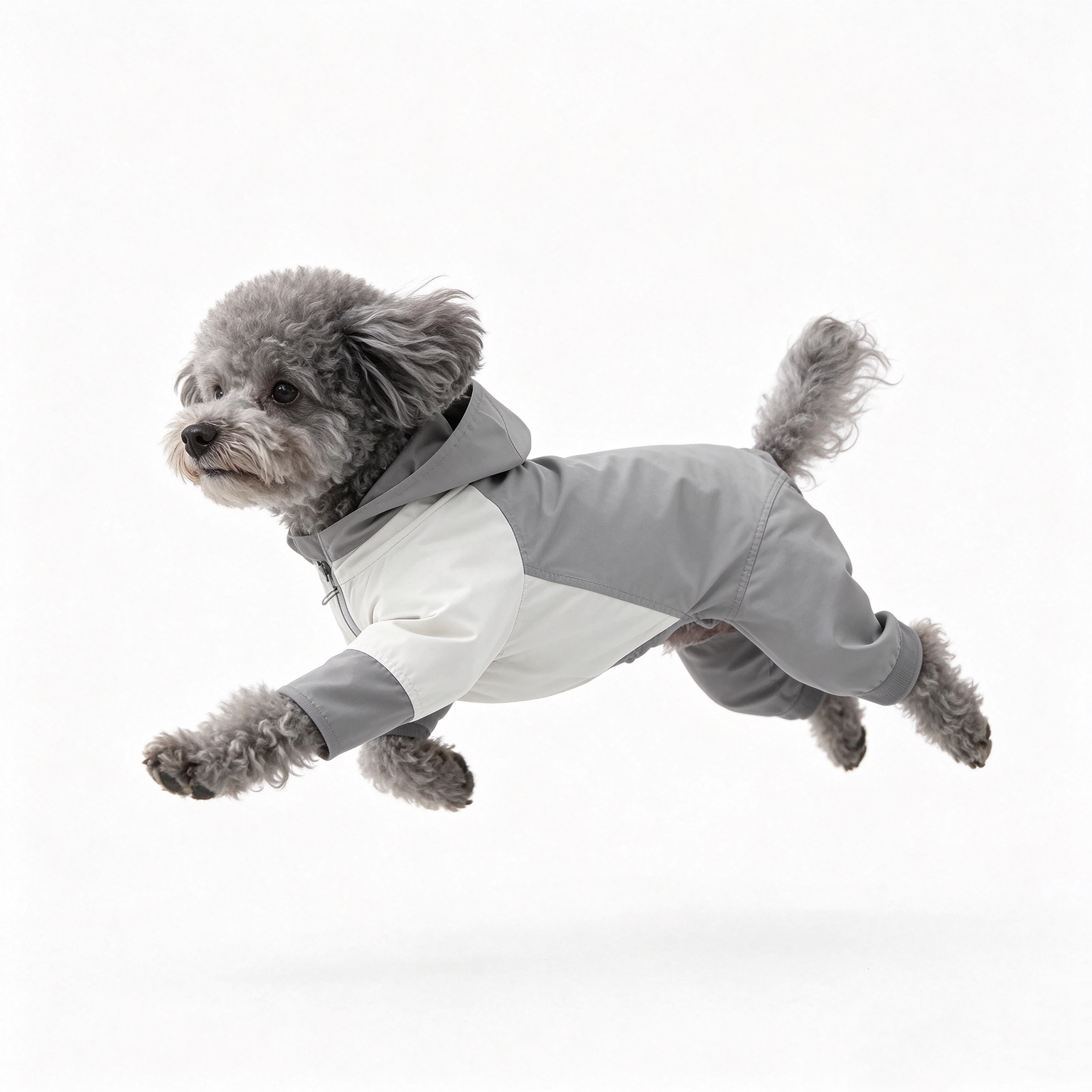
Most standard rain jackets cover the back and upper sides, leaving the lower legs and belly exposed. A four-legged suit increases coverage and can reduce dirt, mud, and light rain reaching the dog’s coat during trail walks or city outings. The extra coverage is particularly useful for short-haired dogs, dogs that walk close to wet grass, and owners who want less cleaning after every outing.
The tradeoff is complexity. Extra fabric adds weight and can catch around the shoulders, belly, or rear legs. The design belongs in the same broader category as a dog four-leg jumpsuit, but its patterns and materials should be adapted to outdoor movement. A four-leg raincoat is not simply a short jacket with four tubes attached.
Different outdoor layers also solve different problems:
| Product type | Primary job | Important limitation |
|---|---|---|
| Four-leg raincoat or outdoor suit | Wind, dirt, light rain, and fuller coverage | Can become warm if ventilation and fabric weight are wrong |
| Standard dog rain jacket | Faster dressing and rain protection around the upper body | Less leg and belly coverage |
| Dog sun-protection shirt | Light summer coverage and UV performance when tested | Not a substitute for shade, water, or heat management |
| Dog dust-proof coat | Dust and dry-trail protection | Dust resistance does not prove waterproofing |
| Four-leg outdoor shell with removable or optional opening | All-purpose walking and travel garment | Needs careful grading, harness planning, and claim testing |
For brands, this means the product line should show customers when to choose each layer. The categories can share a visual identity without pretending to perform identically.
Separate “three-proof” into testable properties
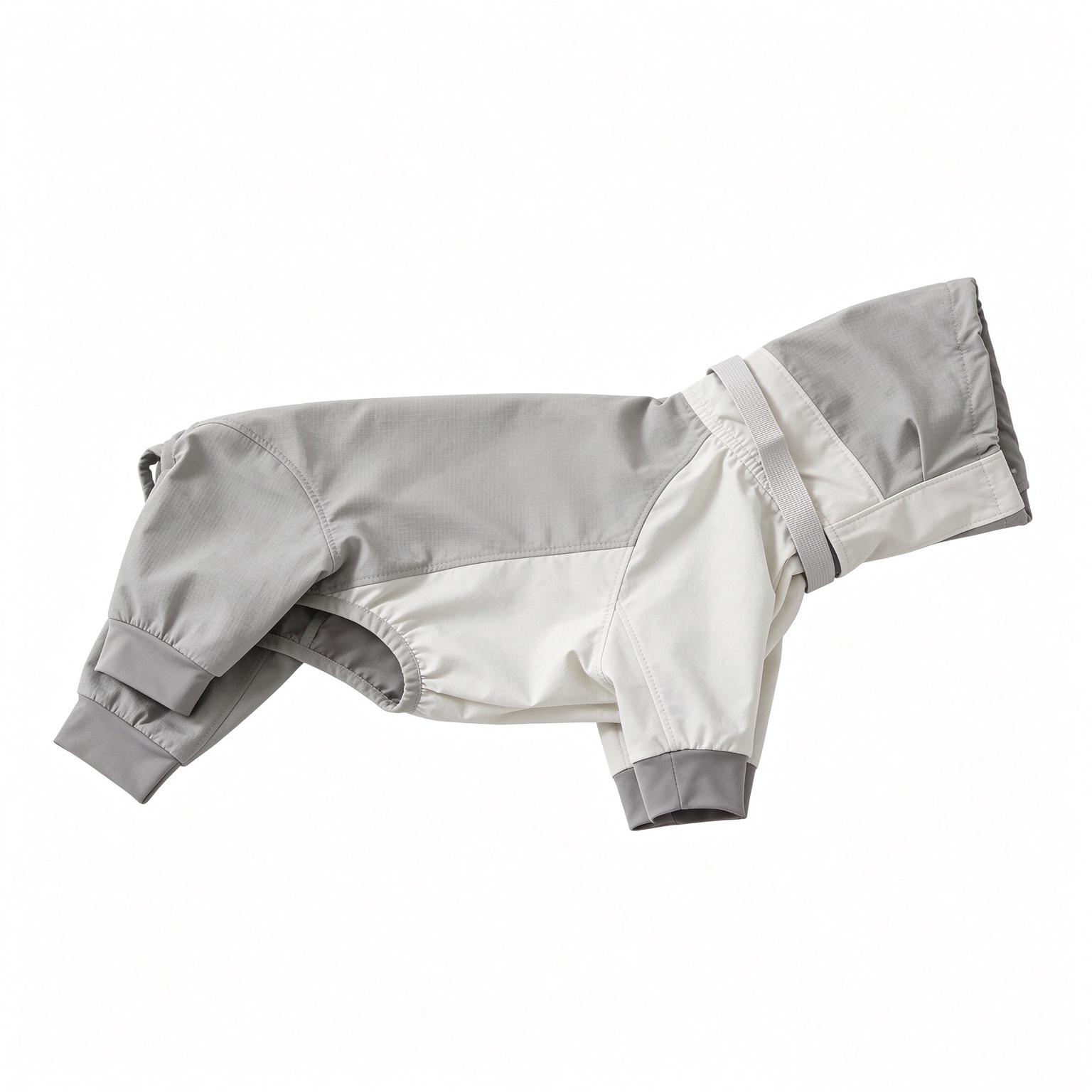
“Three-proof fabric” is useful shorthand internally, but it is too vague for a consumer-facing product page. The exact claims depend on the textile and finishing system. At minimum, separate:
- water resistance or waterproofing;
- stain and dirt resistance;
- wind resistance;
- insect-barrier function;
- UV protection;
- abrasion and tear resistance.
These are not interchangeable. A fabric with a durable water-repellent finish may repel light rain while allowing water to pass through under sustained pressure. A densely woven cloth may reduce wind and dust without being waterproof. A no-see-um mesh may create a physical insect barrier without being a chemical repellent. UPF protection must be measured on the actual fabric, including variables such as stretch and wetness.

Water-resistant versus waterproof
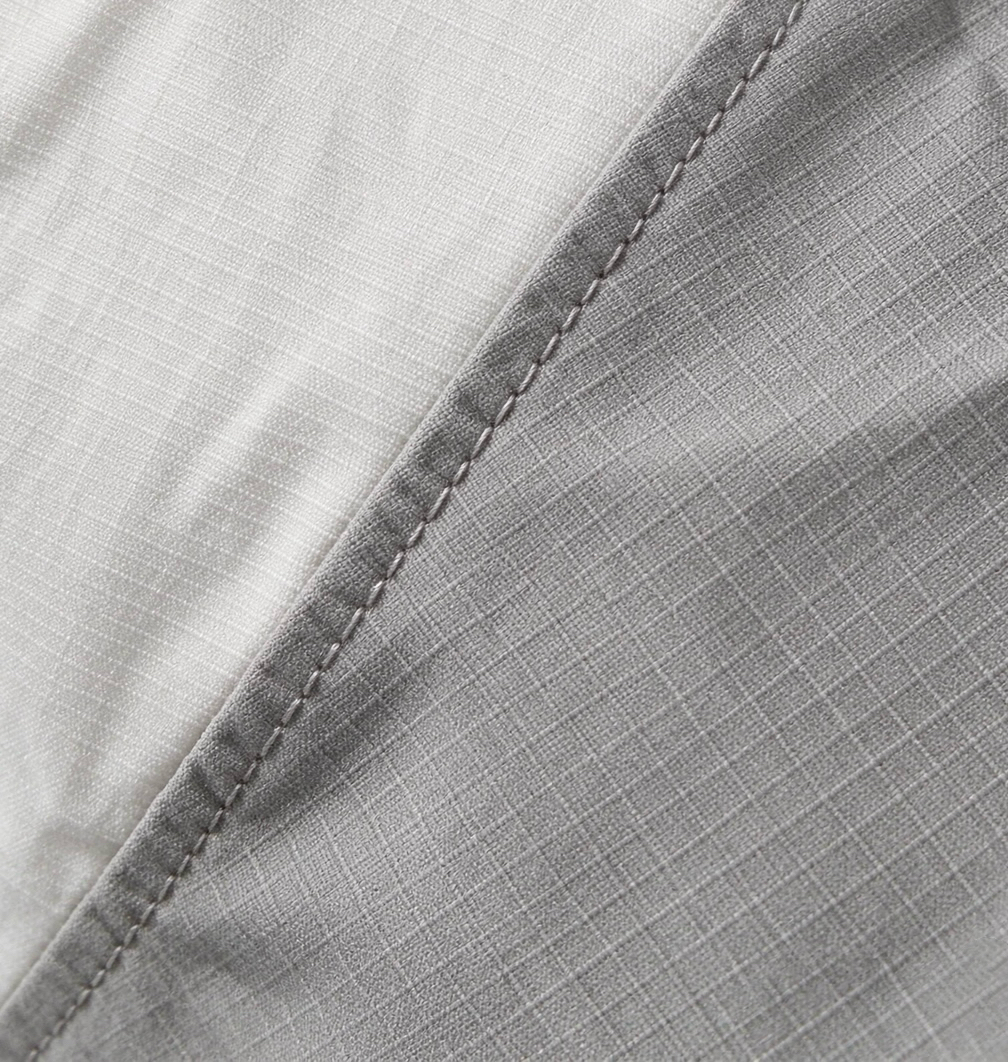
For a light-rain walking suit, a water-resistant shell with a durable water-repellent finish may be appropriate. Product copy should make the limit clear: “water-resistant for light rain and splashes” is more credible than “waterproof” without a measured hydrostatic rating and sealed construction.
True waterproofing involves the complete garment system: shell fabric, coating or membrane, seam treatment, zipper protection, and opening design. A “waterproof zipper” does not automatically make the suit waterproof if water can enter around the collar, cuffs, or underlap.
The related waterproof dog jacket guide covers the higher-performance shell category in more detail. The current article focuses on a lighter outdoor suit where dirt, wind, and short rain exposure may matter more than survival in a prolonged downpour.
Stain and dirt resistance
Stain resistance can refer to a coated surface, taffeta lining, dense weave, or finish that makes mud easier to wipe away. The claim should be connected to a cleaning method. If the fabric requires immediate rinsing to stay clean, say so. If the finish changes after washing, test it through the expected care cycle.
Wind resistance
Autumn wind protection usually comes from fabric density, a coating, or a wind-blocking layer. A suit that blocks wind but traps humidity can become uncomfortable during a fast walk. Ventilation, lining choice, and the activity level of the intended dog should be considered together.
Insect barrier
An insect-resistant outdoor suit can create a physical barrier over the body. That is different from an insect-repellent garment treated with an active ingredient. For a barrier product, show which areas are covered, how the closures limit gaps, and whether the mesh is fine enough for the insects named in the claim.
Do not use medical or pesticide-style promises without market-specific evidence and regulatory review. The safest product language explains the mechanism: “fine mesh barrier,” “full-body coverage,” or “helps reduce direct exposure through covered areas.” It should not imply complete tick, mosquito, or flea protection.
Sun protection
Summer coverage and sun protection are not the same claim. A lightweight suit may reduce direct exposure, but a UPF rating must be supported by testing on the actual material. Because coverage, stretch, color, and wetness affect UV transmission, verify the final garment rather than assuming that a pale or tightly woven fabric automatically qualifies.
The dedicated dog UV protection set addresses shade-oriented summer gear and heat safety; a dark, dense outdoor shell may be a poor choice in high heat unless its ventilation and material are designed for that use.

Design the four-leg pattern around movement
Shoulder freedom comes before leg coverage
When a dog extends a front leg, the shoulder moves more than the visible lower leg. The suit’s chest panel, front armhole angle, and side seam must allow that movement without dragging the body upward. A garment may look generous while the dog stands and still pull at the first trot.
Test the sample while the dog walks, trots, turns, sits, lies down, climbs a step, and sniffs the ground. Watch for:
- fabric pulling under the front legs;
- the back panel lifting away from the tail;
- rear cuffs sliding up or twisting;
- the belly panel catching during squatting;
- the zipper bending or opening under tension.
The belly panel should support bathroom access
Four-leg raincoats often fail at the bathroom opening because designers prioritize coverage in the product photo. The garment should keep the belly protected while leaving a clear path for urination. The opening should not sit where it will be pulled by the front or rear legs during a normal stance.
The measurement guide covers chest and back length, but an outdoor suit also needs leg length, leg circumference, belly-width, and front-to-rear leg distance. Compare those values with a calibrated dog clothes size chart by breed rather than selecting by body weight alone.
Gender-neutral fit and the optional male cutout
A gender-neutral pattern can reduce SKU duplication and make the jacket easier to merchandise. The same fit can serve female dogs, while male dogs receive an optional relief opening. The key is to make the opening clear, controlled, and neatly finished rather than treating it as an afterthought.
Why use a marked cut line?
A visible dotted line or marked panel can help the customer create the male opening after purchase. It allows one base garment to serve more dogs and may reduce the number of color and size variants a retailer must carry.
What the design must get right
The cutting instruction should define:
- exactly where the cut begins and ends;
- how much material remains between the cut and the body;
- whether the edge is bound, overlocked, or intentionally faced;
- how the opening behaves when the dog walks and squats;
- how to prevent the raw edge from curling, fraying, or contacting skin;
- whether the opening remains compatible with the belly lining and zipper.
A dotted line alone is not enough. Test the opened version on male dogs of different sizes. The opening should not be so high that urine hits the suit, nor so low that it weakens the belly panel. If the design uses a heat-sealed or stitched finish, validate it after washing.
This is one of the most useful differentiators in the outdoor category because it solves a real fit problem rather than adding another decorative feature.
Why the back zipper matters
A full back zipper can turn the suit into an open panel that is placed around the dog rather than pulled over the head and through four legs. For reactive, senior, or broad-chested dogs, that can make dressing safer and faster.
The zipper system should include:
- a locking slider that remains closed during movement;
- an inner guard or underlap to protect fur and skin;
- reinforced top and bottom stops;
- a curve-friendly placement that follows the spine without puckering;
- a tail-end opening that does not pinch when the dog sits;
- a harness strategy so the leash attachment does not collide with the zipper.
If the suit includes a harness portal or built-in attachment, its location should be tested under load. A D-ring sewn into weak fabric can deform the back panel; an external harness may be a better option for some designs. The same principles apply to the smooth back zipper discussed in the related four-leg dog jumpsuit guide, although that product targets a different seasonal material.
Using one suit architecture across summer and autumn
“All-season” does not mean every version should use the same fabric. It means the fit and construction system can support more than one material brief.
Summer and warm-weather version
Use a lighter shell, larger ventilation zones, smooth lining, and a color direction that does not absorb unnecessary heat. If UPF protection is part of the offer, test the final fabric and state the scope of protection. Keep walks short in high heat and treat clothing as partial coverage, not a replacement for shade and water.
The article on keeping pets cool in summer provides a useful consumer-safety companion page.
Autumn and cool-weather version
Use a denser outer fabric, a wind-blocking structure, and a light lining appropriate to the target climate. The suit should remain flexible around the shoulders and belly. Adding a heavier lining without revising the leg openings can reduce stride and create excess heat during active walks.
Light-rain version
Keep the same four-leg silhouette, but use a tested water-resistant shell, protected seams, a splash-resistant zipper, and cuffs that shed water away from the paws. Add a separate waterproof layer when the product must perform in sustained rain.
This approach produces a recognizable collection without making claims that the same garment is ideal in extreme summer heat and cold autumn wind.
Durability and care are part of the product promise
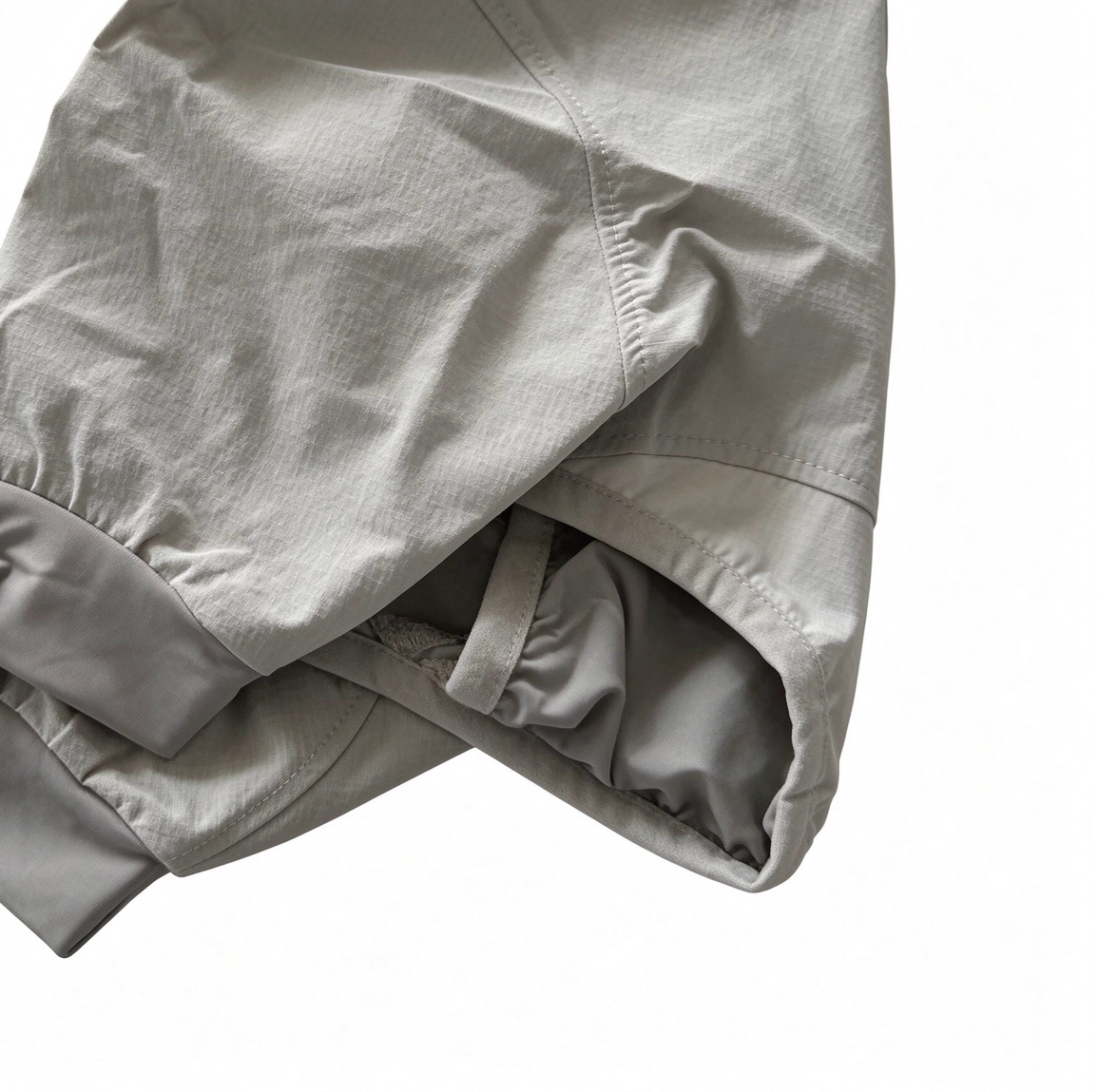
An outdoor suit is exposed to more abrasion than a fashion jacket: shoulders rub under harness straps, leg cuffs brush grass and pavement, and the belly panel contacts mud and grit. “Durable” should therefore be supported by measurable wear points, not a generic adjective.
Check:
- abrasion performance on the outer shell;
- seam strength around leg openings and the back zipper;
- pilling and snagging after contact with grass and brush;
- water repellency after washing;
- color transfer between light and dark panels;
- zipper glide after repeated use;
- cuff elasticity and shape recovery;
- drying time after a wet walk.
Care instructions should be specific enough to protect the finish. A coated fabric may require a gentle wash, cool water, and air drying; heat-setting or ironing can damage the surface. Brands should test the cleaning method their customers will realistically use.
A sample checklist for four-leg outdoor suits
Before approving bulk production, document:
- neck, chest, back, belly, leg length, and leg circumference across all sizes;
- front and rear leg-opening placement;
- optional male cutout location, edge finish, and instructions;
- full back zipper type, guard, slider lock, stops, and tail clearance;
- water-repellent finish and care requirements;
- stain, dirt, abrasion, wind, UV, and insect-barrier test reports as applicable;
- ventilation and lining selection;
- harness and leash-access strategy;
- wash shrinkage and colorfastness;
- color-block or panel alignment;
- labeling language that does not exceed the evidence.
Sample approval should include a full size run and a movement test, not only a static photo session.
How pet brands can build a differentiated outdoor line
Marketplace listings often compete on the number of claims: waterproof, windproof, dustproof, sunproof, insect-proof. A stronger brand strategy is to group those claims by use case and prove each one.
Build a compact line with four clear tiers:
- Everyday trail shell: dirt-resistant and wind-resistant, with light water repellency.
- Rain-focused suit: tested water resistance, covered seams, and a more secure neck/chest closure.
- Summer coverage suit: verified UV performance, ventilation, and light materials.
- Cold-weather or bug-season version: different lining, mesh specification, or outer material, with claims supported by the right testing.
The shared silhouette maintains brand recognition, while the materials and product descriptions explain the choice. For launch planning, the site’s guide to starting a dog clothing business can help organize sampling, SKU count, pricing, and first-order scope.
Frequently asked questions
Is a four-leg dog raincoat better than a regular raincoat?
It can provide more leg and belly coverage, but it also has more complex fit requirements. Choose it when fuller coverage matters and confirm that the leg openings allow free movement.
Can one jacket be used in summer and autumn?
The same style architecture can support lighter and denser versions, but one material is unlikely to be ideal for extreme heat and cold wind. Use different fabric weights or system components while keeping the pattern and visual language consistent.
What does three-proof fabric mean?
It should be defined by the seller. The phrase may refer to water, oil, stain, dirt, or wind resistance, depending on the fabric. Ask for the specific test method and performance claim rather than relying on the label alone.
Is insect-resistant dog clothing the same as insect repellent?
No. A fine mesh or fabric barrier physically reduces exposure; an insect-repellent treatment may contain an active ingredient and require separate testing and regulatory review. Avoid any claim that suggests complete protection from fleas, ticks, or mosquitoes.
How should a male dog relief opening work?
The marked opening should allow a clear urine path without exposing a raw edge or weakening the belly panel. Test it in motion, after washing, and across multiple sizes. Follow the supplier’s cutting and finishing instructions rather than cutting through seams or reinforcement.
Can pet brands customize the back zipper and fabric?
Yes. Buyers can specify zipper type, slider, inner guard, seam treatment, shell fabric, lining, ventilation, colors, and branding. Physical samples should be tested before bulk production.
The bottom line
A four-leg dog raincoat becomes more useful when it is designed as a complete outdoor system: a movement-friendly four-leg pattern, a secure back zipper, a thoughtful unisex relief opening, durable materials, and claims that match actual test results. Summer sun, autumn wind, light rain, dirt, and insects should be handled as separate performance questions, not blended into one vague promise.
For pet parents, that means a better chance of finding a suit the dog will wear. For pet brands, it creates a product story that can survive customer scrutiny and support repeat orders. Brands can contact Chengyuan Garment with a reference sample, target size range, fabric performance brief, back-zipper specification, male cutout requirement, and intended market claims to begin development.


Leave a Reply
Want to join the discussion?Feel free to contribute!