

dog winter vest
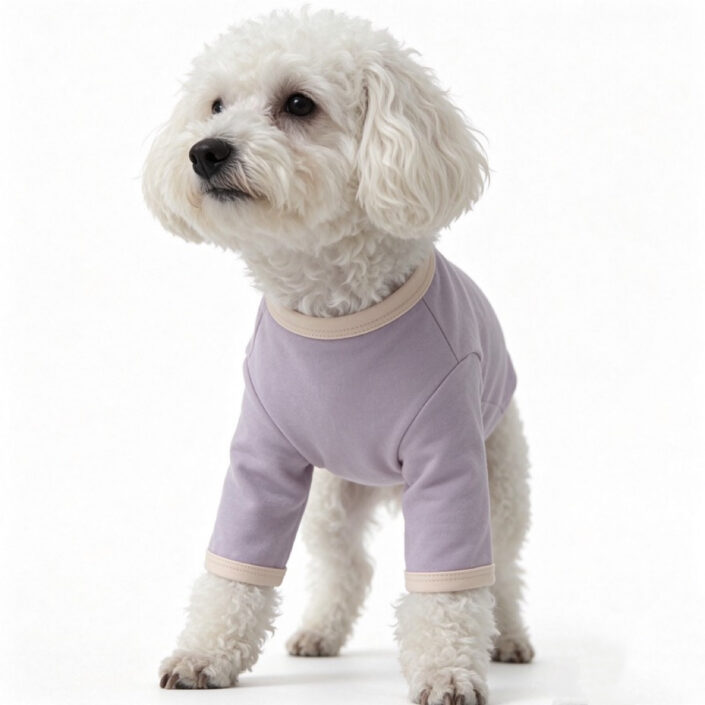
A cotton dog vest is a practical mild-weather layer when it is designed for the right temperature range. A 95% cotton / 5% spandex construction with a 40s soft-brushed cotton knit offers a gentle hand feel, useful stretch, and light warmth without excessive bulk. A round neck keeps the garment easy to wear and visually clean, while contrast trim adds a recognizable brand detail and frames the dog’s face. This vest is also best suited to dry conditions around 10–20°C, although wind, activity, coat type, age, and body shape can change the dog’s comfort. It can be worn alone indoors or during short walks, or layered under a suitable coat when temperatures fall. Brands should test neck recovery, armhole stretch, hem stability, shrinkage, pilling, and contrast-color fastness before bulk production. Accurate grading and tested 95/5 fabric performance turn a simple cotton vest into a dependable transition-season essential.
Cotton Dog Vests for 10–20°C Weather: Fabric, Fit, and Layering Guide
A cotton dog vest is most useful when it matches the weather rather than trying to cover every climate. A heavy coat can be excessive at 15°C, while a thin shirt may not take the edge off a cool morning. The 10–20°C range is a transition zone: mild enough for a sleeveless layer, but variable enough that wind, sunlight, activity, coat length, age, and the dog’s body shape still matter.
A 95% cotton / 5% spandex vest made from a 40s soft-brushed cotton knit offers a practical balance of softness, light stretch, and mild warmth. A round neck and contrast trim can make the garment easy to style while keeping the silhouette simple. This guide explains when that construction is appropriate, how to evaluate fit and fabric quality, and how pet brands can develop the style without confusing it with a winter sweater or a protective outdoor shell. Brands working with a custom pet clothing manufacturer can use the same checks to move from a sample photo to a production-ready vest.
Quick answer: what should a 10–20°C dog vest do?
For mild weather, a useful vest should:
- add a light layer over the chest and back;
- remain soft and flexible around the front legs;
- fit without compressing the neck or chest;
- allow normal walking, sitting, and lying down;
- be easy to put on and remove;
- remain comfortable indoors or under a light outer layer;
- wash and recover without losing shape.
It should not be described as a winter coat, a rain jacket, or a cooling product. Its strongest use is as a simple everyday layer for dry, mild weather and transitional seasons.
Why 10–20°C is a difficult clothing range
Ten degrees Celsius is near 50°F, while 20°C is about 68°F. A dog may need very different clothing at either end of that range. A short-haired, small, senior, or low-activity dog may appreciate a vest at the cooler end. A thick-coated or active dog may be more comfortable in a lighter shirt or no garment at 18–20°C.
The listed temperature range should therefore be treated as a starting guide rather than a universal guarantee. Wind, rain, shade, sunlight, humidity, and the length of the walk can change the felt temperature. Observe the individual dog for signs of discomfort, overheating, shivering, or restricted movement.
This is why a light vest works best as one part of a wardrobe. The pet clothing collection gives brands a way to distinguish a mild-weather vest from a rain jacket, knit sweater, four-leg suit, or heavier winter layer.

What 95% cotton / 5% spandex means for a dog vest
Cotton contributes softness, breathability, and a natural hand feel. Spandex adds stretch so a fitted pullover can move over the chest and shoulders without using bulky closures. For short walks and indoor wear, the combination can feel more comfortable than a stiff woven fabric.
The blend also has limits. Cotton can absorb moisture and does not become waterproof because it feels dense. A 5% spandex content does not guarantee the vest will keep its shape; knit quality and recovery still matter. Two fabrics with the same percentage can behave differently depending on yarn, stitch, fabric weight, finishing, and laundering.
What 40s cotton adds
A 40s yarn is relatively fine compared with coarser cotton counts. It can produce a smoother, softer fabric with a cleaner surface. That does not automatically make the garment warmer or more durable. The yarn count should be considered together with fabric weight, knit density, and the brushed finish.
What a soft-brushed finish adds
A soft-brushed cotton knit has a gentler surface and a slightly warmer hand feel than a flat jersey. It is suitable for mild weather because it adds comfort without the loft of fleece or padding. The brushed surface should be controlled so it does not pill quickly or trap excessive lint.
The finish does not make the vest weatherproof. A separate dog rain jacket is the appropriate product for wet conditions.
Why a round neck can work well
A round neck creates a clean, everyday silhouette. It can frame the chest without the visual weight of a tall mock neck and may feel less restrictive for dogs that dislike extra fabric around the throat.
Fit the neck before choosing the size
The neck opening must pass comfortably over the dog’s head without stretching the fabric excessively. It should sit neatly at the neck without pressing on the throat or exposing the chest too much. Test whether the neck returns to shape after dressing and washing.
For brands, the neck finish is a critical sample point. A narrow binding may look minimal but roll under tension. A wider round-neck band can look more balanced and distribute stretch, provided it recovers cleanly.
Use contrast trim with a purpose
Contrast color around the round neck adds visual definition and can support a brand palette. It can also draw attention to the face and make the vest look more finished. But contrasting trim is not only a styling choice:
- the trim must stretch with the neck opening;
- the seam must lie flat against the dog;
- the dark and light materials must not bleed during washing;
- the contrast band must maintain the intended width after production;
- the colors should remain consistent across sizes and replenishment orders.
Request lab dips or physical color standards when precise brand colors matter.

Four ways the vest should fit
Neck
The opening must allow dressing without excess stretch. Once on the dog, it should feel close but not tight. A loose neck may let the vest slide toward one shoulder.
Chest
The vest should cover the chest without pulling at the front armholes. A broad-chested dog may need more front depth than its back length suggests.
Back length
The hem should cover the intended area without interfering with the tail or catching when the dog sits. Review the length from the side and from above.
Armholes and hem
Sleeveless construction reduces bulk, but the armholes should not cut into the shoulder or expose too much chest. The hem should sit flat and return to shape after stretching. Test the vest while the dog walks and reaches forward.
Use the dog measurement guide to collect neck, chest, and back length. For multiple sizes, compare the measurements with a developed dog clothes size chart by breed and test the full range.

Wear it alone or layer it
Single layer
At the warmer end of the range, the vest can be worn alone for indoor spaces, travel, car rides, and dry short walks. A clean round neck and contrast trim make it suitable for everyday styling rather than only sleepwear.
Under a light coat
At the cooler end, the vest can sit under a weather shell or another coat. The outer garment should have enough room to avoid compressing the vest against the chest. Two lightweight layers should not create the same pressure as one well-fitting heavier layer.
Under a sweater
A cotton vest can also add a smooth layer beneath a sweater when the dog tolerates layering. The dog sweater should be sized to accommodate the base layer without pulling at the shoulders. Check that the neck openings do not bunch together.
When the vest is not enough
For colder conditions, use a heavier dog winter vest or knitwear designed for lower temperatures. The existing winter vest direction uses a different mock-neck knit construction and is intended for cooler seasonal wear. This cotton round-neck vest targets the milder 10–20°C range.

The mild-weather layer matrix
| Conditions | Light cotton vest | Additional layer | Main consideration |
|---|---|---|---|
| Indoor or travel at 18–20°C | Yes | None | Breathability and easy movement |
| Dry outdoor walk around 15°C | Yes | Optional light sweater or vest | Body shape, coat length, wind, activity |
| Cooler morning near 10°C | Yes | Suitable outer layer | Neck overlap and chest compression |
| Light rain | Keep the vest dry | Dog rain jacket | Cotton is not waterproof |
| Longer cold-weather outing | Use as a base if appropriate | Warmer coat or winter vest | Heat buildup and freedom of movement |
| Home, sleep, recovery | Yes | None | Softness, washability, belly clearance |
How this vest differs from other dog garments
| Product | Best use | Difference from this cotton vest |
|---|---|---|
| Cotton round-neck vest | Dry mild weather, indoor wear, layering | Light, simple, stretch cotton |
| Dog sweater | Knit warmth in cooler conditions | Usually warmer and more structured |
| Dog pajamas | Sleep and indoor comfort | More lifestyle or full-body focus |
| Dog four-leg jumpsuit | Full leg coverage | More coverage and more complex fit |
| Winter vest | Cooler autumn and winter wear | Heavier or more insulating construction |
| Rain jacket | Wet weather | Weather-resistant outer shell |
The classifications help customers understand why similar-looking products perform differently. They also prevent a brand from using the same “warm and breathable” copy across every product.
Fabric quality checks for brands
Before approving a 95% cotton / 5% spandex round-neck vest, test:
- stretch and recovery at the neck and armholes;
- length and width shrinkage after the specified wash;
- pilling on the brushed surface;
- colorfastness of the contrast neckband;
- seam extension and smoothness;
- hem recovery;
- shape stability after three or more washes;
- hand feel after laundering;
- appearance of the brushed inner surface;
- consistency between production lots.
For a 40s cotton knit, evaluate the actual fabric weight rather than assuming the yarn count defines the product. A finer yarn can still produce a stable fabric with the right knit structure and finishing.

Pattern grading across dog shapes
Small dogs
The neck and chest may require a different scale from the back. Avoid simply reducing all measurements by one proportion.
Broad-chested dogs
Increase front depth without making the neck opening excessively wide. The vest should sit around the chest, not slide upward.
Long-bodied dogs
Extend the body while maintaining correct armhole placement. Added length should not pull the front forward.
Large dogs
Check that the fabric has enough recovery for the weight of the garment and that the neck opening remains practical. A larger size should not look like a scaled-up small pattern without fit review.
The dog sweater sizing guide is useful when a brand also offers knitwear, because the same neck, chest, and back logic should remain consistent across the collection.
How to develop the vest for a private-label collection
A strong product brief should specify:
- 95% cotton / 5% spandex composition;
- 40s yarn direction and target fabric weight;
- soft-brushed surface and care requirements;
- round-neck depth and binding width;
- contrast color placement and Pantone references;
- armhole shape and hem length;
- size grading for the target breed range;
- neck and armhole stretch-recovery targets;
- shrinkage and colorfastness standards;
- labels, hangtags, folding, and packaging.
Keep the style simple enough to repeat. A dependable neutral vest with one contrast color may generate more reorders than a complex seasonal design that is difficult to reproduce.
For teams planning their first pet apparel range, the dog clothing business guide can help organize sampling, product count, and launch requirements.
Frequently asked questions
Is a cotton dog vest suitable for 10–20°C weather?
It can be a practical mild-weather layer, especially for short-haired or cold-sensitive dogs. Actual comfort depends on the individual dog, activity, wind, sunlight, coat condition, and whether the garment is worn alone or layered.
Is 95% cotton and 5% spandex good for dog vests?
It can provide softness and useful stretch for a lightweight pullover. Quality depends on the knit, fabric weight, recovery, seams, and fit. The percentage alone is not a performance guarantee.
What is 40s cotton?
It refers to a relatively fine cotton yarn count. It can contribute to a smooth, soft fabric, but warmth and durability should be evaluated from the finished fabric and garment, not the yarn count alone.
Does contrast trim affect quality?
It can improve the visual design, but the neckband must stretch and recover with the opening. Contrast colors also need wash-fastness testing to prevent bleeding or fading.
Can a dog wear this vest under a coat?
Yes, if both garments have enough room and the necklines do not create pressure. Test the combined outfit in motion and remove a layer if the dog appears uncomfortable.
Can pet brands customize sizes and colors?
Yes. Buyers can specify the size range, fabric, soft-brushed finish, round-neck shape, contrast colors, trims, labels, and packaging. Physical samples should be tested before bulk production.
The bottom line
A cotton dog vest is at its best when it is designed for a specific wear window. The 95% cotton / 5% spandex blend and 40s soft-brushed knit can create a gentle, flexible layer for dry 10–20°C weather. A round neck keeps the construction simple, while contrast trim gives the product a recognizable brand detail. The real quality appears in the less visible details: neck recovery, armhole comfort, hem stability, wash performance, and correct grading.
Pet brands can contact Chengyuan Garment with a reference sample, target size range, fabric weight, round-neck specification, contrast colors, and intended temperature positioning to begin development.



Leave a Reply
Want to join the discussion?Feel free to contribute!