
{{{cp11}}}

mountain jacket brand
A men’s outdoor jacket is most useful when its features work together rather than appear as isolated specifications. A mesh lining can improve interior comfort and reduce the sticky feeling of the shell, but true breathability still depends on the fabric, seams, ventilation, fit, and level of activity. A hood with hook-and-loop adjustment should protect the neck and face without blocking vision or becoming difficult to use with cold hands. The front placket must also stay secure while allowing practical movement and layering. A self-stowing pocket extends the jacket’s value by making it easier to carry during travel, commuting, hiking, and changing weather. It should accommodate the actual folded volume of each size without straining the zipper, mesh lining, hood, or hardware. This guide explains how to assess these features, choose the right fit and layers, care for the jacket, and develop a reliable practical private-label men’s outdoor jacket collection.
Men’s Outdoor Jacket Guide: Mesh Lining, Breathability and Self-Storage
A men’s outdoor jacket can look technical while still feeling uncomfortable on the trail. The shell may keep rain out, yet the inside can become damp from trapped body heat. A fixed hood can protect the neck in wind, but obstruct vision when tightened incorrectly. A front placket may look secure until the wearer starts moving, carrying a pack, or trying to adjust the hood with cold hands.
This is why useful outdoor outerwear should be evaluated as a system rather than a list of materials. The shell controls weather exposure, the lining affects how the interior feels, the hood and placket regulate coverage, the fit determines whether all of those details still work during movement, and the storage design decides how easily the jacket travels when it is not being worn. A mesh lining, hook-and-loop hood adjustment, and self-stowing pocket can improve everyday practicality when they are developed for the right climate and activity.
This guide explains those choices for both wearers and product teams. It covers how to choose a breathable outdoor jacket, what mesh lining really does, how to assess a hood with hook-and-loop fastening, what makes a self-stowing pocket practical, and how a brand can translate the idea into a reliable private-label production specification. As a private-label outdoor clothing manufacturer, Chengyuan Garment supports design development, sampling, and bulk production for urban outdoor, hiking, camping, travel, and workwear collections. The men’s outdoor jacket manufacturing page provides a reference for customizable fabrics, hoods, linings, pockets, zippers, trims, logos, labels, and packaging.

Start With the Activity and Weather
“Outdoor jacket” describes a broad family of products. A lightweight shell for a rainy commute, a breathable hiking layer, a wind-resistant travel jacket, and an insulated camping jacket may share a silhouette but need different materials and construction.
Before comparing features, define:
- the expected weather: light rain, sustained rain, wind, snow, or dry cold;
- the activity level: walking, hiking uphill, commuting, camping, or outdoor work;
- the amount of heat and moisture the wearer will generate;
- whether the jacket will be worn over a T-shirt, fleece, sweater, or insulating layer;
- the required hood, pocket, pack, and harness compatibility;
- the target market, retail price, care routine, and size range.
An urban commuter may value a clean front, weather protection, and easy packing. A hiker who climbs steadily may need more ventilation and a hood that adjusts without restricting peripheral vision. A worker who wears the jacket for several hours may care more about abrasion resistance, pocket access, and durability at the cuffs and shoulders.
The broader men’s outdoor wear category shows how jackets, tops, and bottoms can share a collection language even when their performance priorities differ. The same weather system may require a lighter top for exertion and a more protective outer shell for exposed sections of the route.

What a Mesh Lining Actually Does
A mesh lining is an inner textile layer with an open structure. It can:
- create a small air gap between the body or base layer and the outer shell;
- reduce the sticky feeling of a coated or laminated fabric against the skin;
- help the jacket slide on and off more easily;
- provide a softer interior surface;
- cover seams, coatings, or lamination edges for comfort;
- improve the perception of airflow when the garment is open or vented.
A mesh lining is useful, but it is not a ventilation system by itself. A fine mesh can add comfort while still sitting inside an almost sealed shell. The jacket’s overall breathability depends on the shell membrane or coating, the face fabric and backer, seam construction, adjustable openings, vent placement, temperature, humidity, and the wearer’s exertion level.
This distinction matters in product copy. “Mesh lining for breathable comfort” is a reasonable benefit if it describes the standoff and inner feel. “A mesh lining guarantees sweat-free performance” would overstate what a lining alone can do.
When mesh lining is a good fit
Mesh lining is often useful for:
- lightweight rain shells where the coating may otherwise feel clammy;
- three-season hiking jackets;
- travel outerwear that may be worn over different layers;
- workwear or commuter jackets that need a comfortable interior;
- products where the outer shell needs protection from direct contact with the body.
For deep winter insulation, a mesh layer alone may not be enough. A brushed knit lining, taffeta, or another backing may feel warmer or slide more easily over inner layers. The lining should match the purpose rather than be added because it looks technical.
Breathability Is More Than an Airy Feeling
Breathability describes the movement of moisture vapor through the garment. A breathable jacket helps perspiration escape so that the wearer does not become wet from condensation. It does not mean the jacket feels like a mesh shirt.
Performance depends on several components:
| Component | What it affects | What to check |
|---|---|---|
| Face fabric | Abrasion resistance, surface feel, wind resistance | Density, texture, durability, hand feel |
| Membrane or coating | Water resistance and moisture-vapor transmission | Test method, result, and construction |
| Backer or lining | Comfort, seam protection, moisture handling | Mesh, knit, taffeta, or unlined design |
| Seams | Water entry and flexibility | Taped, critically taped, sealed, or open |
| Vents and openings | Heat exchange during activity | Pit zips, back vents, front openings, cuffs |
| Hood and collar | Protection versus trapping heat | Adjustability, opening size, and comfort |
| Fit and layering | Air circulation and movement | Shoulder room, body length, sleeve shape |
A jacket with a high breathability number can still feel uncomfortable if it is worn over a saturated cotton base layer or if the fit traps too much heat. Conversely, a jacket with moderate breathability may work well for low-output commuting when it is opened or layered correctly.
This is why product teams should define both fabric performance and real-use conditions. “Breathable” should be linked to the intended activity, climate, layer system, and test evidence.
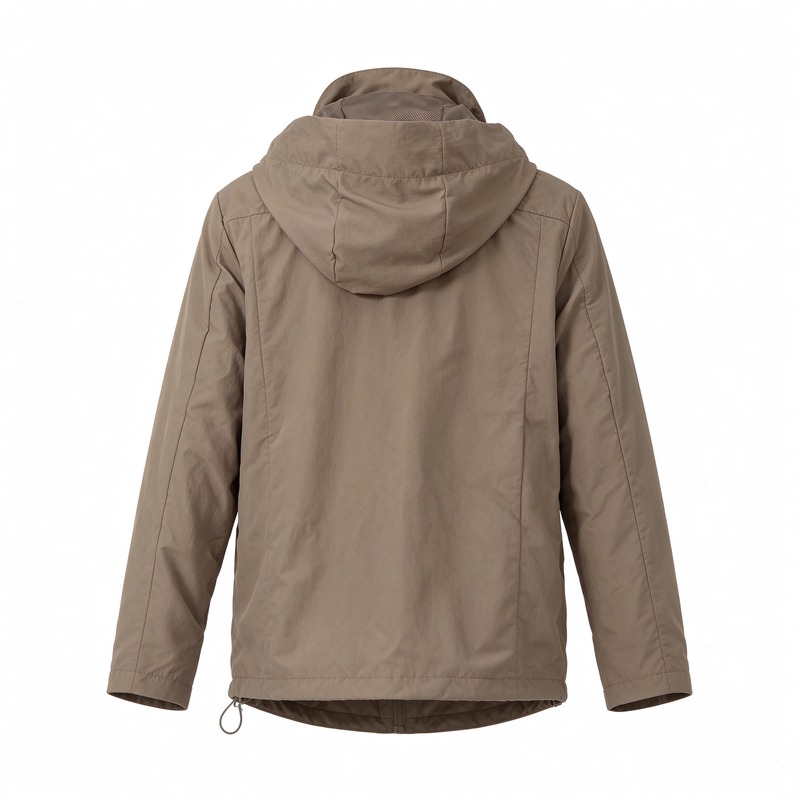
Understanding Hook-and-Loop Hood Adjustment
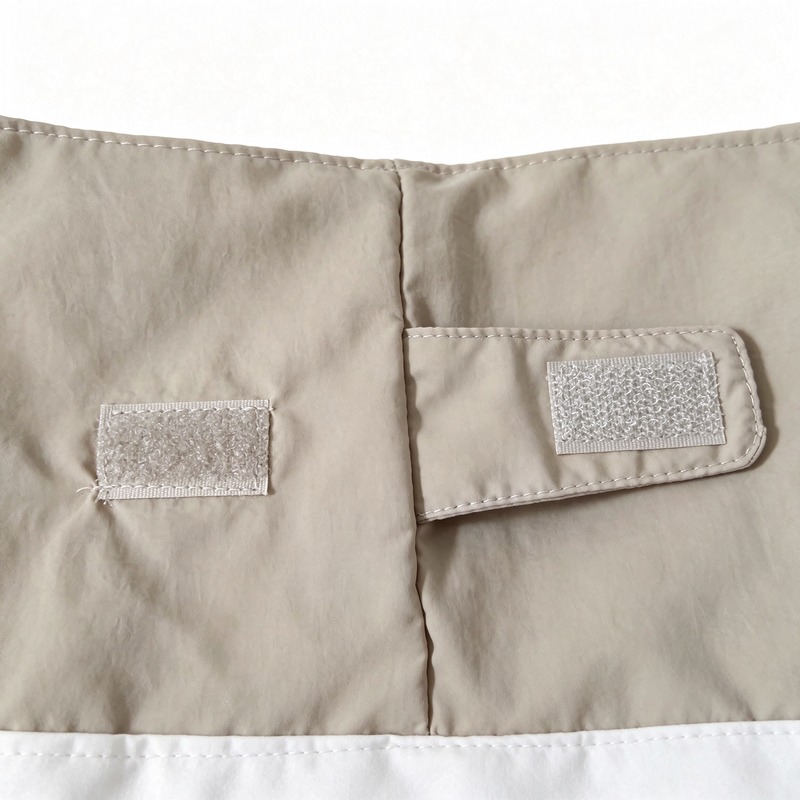
Hook-and-loop fastening, often called Velcro in everyday language, is common on hood openings, cuff tabs, and front plackets. On a hood, it can provide quick adjustment without requiring the wearer to find a drawcord. On a front placket, it can help keep the layers aligned and reduce gaps.
The design is most useful when it supports controlled coverage rather than forcing one rigid shape.
What a good hood system should do
- stay clear of the eyes during normal movement;
- provide enough coverage at the neck and sides;
- adjust without pulling the whole jacket upward;
- allow peripheral vision when the wearer turns their head;
- remain secure in wind;
- work with or without a cap and hooded underlayer;
- avoid exposed hard edges near the face;
- be easy to operate with gloves;
- release without damaging the shell when opened.
What to check on the hook-and-loop placket
- Does the closure align without curling the front edge?
- Does the opening stay closed while the wearer moves or carries a backpack?
- Is the fastener positioned to avoid rubbing the chin or neck?
- Does rain channel behind a storm flap rather than into the closure?
- Does the hook side catch on knit sleeves, scarves, or a backpack strap?
- Does the hook-and-loop still hold after repeated opening and closing?
- Can the wearer adjust the hood without loosening the entire front?
Hook-and-loop is not automatically better than a drawcord or snap. Each system has trade-offs. It is fast and easy to adjust, but it may be noisy, collect lint, wear out, or snag other materials. A combination of hook-and-loop for coarse adjustment and a drawcord for fine control can work well when the construction is carefully developed.

Water Resistance, Wind Protection, and Breathability Together
Most outdoor jackets need to balance protection with heat release. A fully sealed jacket may protect well in wind and rain but feel warm during a steep climb. A highly air-permeable jacket may vent heat effectively but provide less weather protection.
The best balance depends on the product:
| Intended use | Protection priority | Ventilation priority |
|---|---|---|
| Urban rain shell | Weather resistance and clean coverage | Easy front opening and manageable weight |
| Hiking shell | Rain and wind protection | Pit zips, adjustable hood, breathable construction |
| Travel windbreaker | Packability and wind resistance | Lightweight mesh lining and simple openings |
| Outdoor workwear | Durability and coverage | Practical front closure and manageable heat |
| Camping layer | Wind and light-weather protection | Easy layering and comfortable inner surface |
Waterproof and breathable are not opposites, but they are also not automatically solved by one membrane. The face fabric can wet out, seams can leak, and closures can become water paths. A good product brief should include the full garment, not only a fabric number.
When comparing waterproof ratings, confirm whether the figure refers to a fabric sample or the finished garment, and ask how seams and openings were evaluated. A technical value without a test context is difficult to use as a buying decision.
Make the Self-Stowing Pocket Part of the Design
A jacket that can pack into its own storage pocket is easier to carry through changing weather. It can travel in a daypack, stay in a vehicle, or move between indoor and outdoor environments without requiring a separate stuff sack. The storage feature is especially useful for commuting, hiking rest stops, travel, and layering when the jacket is worn only during part of the day.
The exact format may be an integrated pocket that turns inside out or an attached internal pouch, depending on the design. Either approach should be specified as part of the garment rather than added as a generic accessory at the end of development.
What makes a self-stowing jacket work
- The target folded volume is realistic for the actual jacket size.
- The storage pocket can be closed without compressing the zipper, lining, or hood hardware.
- The seams and attachment points can withstand repeated packing and unpacking.
- The jacket folds in a consistent way that is easy to explain to customers.
- Internal hardware does not press against the wearer when the jacket is being worn normally.
- The storage pocket does not interfere with hand pockets, ventilation, or the front placket.
- The packed bundle remains small and light enough for the intended activity.
- The product can be labeled clearly as a packable or self-stowing jacket.
Packability is also a structural trade-off. A mesh lining adds comfort, but it can increase bulk. A substantial hood and protected hook-and-loop placket improve weather coverage, but they require careful folding. A jacket with many pockets, rigid closures, and heavy trims may not compress neatly. Product development should test the complete garment rather than assume that every size folds into the same pocket.
Packing and care rules
Store the jacket only after it is clean and dry. A damp shell or mesh lining can develop odor, transfer moisture to a backpack, and remain compressed where it cannot air out. Shake out the hood and placket, empty all pockets, close fasteners, fold according to the approved method, and secure the storage closure without forcing it. After unpacking, allow the jacket to recover its shape before wearing.
A useful demo for both retail and B2B sampling is to pack the smallest and largest sizes, time the process, open the bundle, inspect creases and wrinkles, and then check the hood, lining, closures, and water-shedding surfaces for damage. The storage feature should remain practical after the care cycle, not only on the first sample.

Fit and Movement Matter as Much as Fabric
An outdoor jacket needs enough room for the intended layers without becoming so large that it loses shape. The shoulder, sleeve, underarm, body length, hem, and hood all interact with movement.
Useful fit checks include:
- raising the arms as if reaching for a branch or handhold;
- walking with a normal to long stride;
- turning the head while wearing the hood;
- lifting a backpack strap over the shoulder;
- zipping the jacket over the intended mid-layer;
- sitting, kneeling, and bending forward;
- checking that the hem does not ride up when the arms move;
- confirming the front placket does not pull open when the wearer breathes deeply.
A jacket can look correct on a mannequin and still restrict movement. Range of motion should be tested on a person or fit model in the target size, with the same layers and backpack the customer will use.
The size range should also be considered. Across a collection, shoulder breadth, chest circumference, waist, sleeve length, torso length, and hem opening may not grade at the same rate. A technical outdoor jacket needs a coherent fit system rather than several unrelated garment sizes.
Build the Layer System, Not Just the Jacket
Outdoor comfort depends on what is worn underneath. A breathable shell works best over a base layer that manages moisture and a mid-layer that provides the required warmth. A cotton T-shirt that becomes saturated can make even a good shell feel cold and clammy.
For a coordinated collection, men’s outdoor tops can include base layers, lightweight fleece, or technical knit tops designed to sit under the jacket. Men’s waterproof hiking pants can complete the lower half with compatible weather protection and movement. A custom men’s bottoms manufacturing guide explains how the lower garment can be developed as part of the same outdoor outfit rather than an unrelated product.
This system view is useful to consumers: buy the jacket for the weather and activity, then select layers for warmth and moisture management. It is also useful to brands: a collection can be designed around a shared color palette and use case, while each garment keeps its own performance specification.
Match the Jacket to Common Outdoor Scenarios
City commuting and travel
A lightweight men’s outdoor jacket with a clean hood, protected front placket, mesh lining, and self-stowing pocket can handle wet commutes and unpredictable travel weather. It should be compact enough to carry, easy to unpack, and comfortable over a shirt or light sweater.
Day hiking
Look for freedom of movement, an adjustable hood, ventilation options, a breathable lining or backer, and enough weather resistance for the local climate. A jacket that is too heavily insulated for uphill exertion may become uncomfortable even if it protects against rain.
Camping and variable weather
A versatile shell can be worn over different layers around camp. Practical pockets, a hood that stays stable in wind, and a comfortable inner surface matter more than a single extreme performance number.
Outdoor work
Durability, abrasion resistance, easy cleaning, and reinforcement at high-contact areas become more important. A hood and front closure must remain functional during repeated use, and pockets must be reachable without removing the jacket.
Cold conditions
A breathable mesh-lined shell can be combined with an insulating mid-layer. The shell should still fit over the layer without compressing it. A jacket with mesh lining alone is not a replacement for insulation.
Care That Preserves Breathability and Water Repellency
Outdoor jackets often fail not because the original design was poor, but because dirt, detergent residue, abrasion, and heat damage reduce performance over time.
General care principles include:
- follow the care label and the approved material specification;
- close zippers, hook-and-loop fasteners, and flaps before washing;
- avoid fabric softener unless specifically approved;
- use a suitable technical or mild detergent;
- brush off dry dirt from the face fabric before washing;
- rinse thoroughly to avoid detergent residue;
- air-dry or tumble-dry only at the temperature allowed by the product;
- inspect seams, hood adjustment, closures, and lining after each wash;
- store the jacket clean and fully dry;
- avoid hanging a heavy jacket by the hood for long periods.
If water begins to wet the surface even though the interior remains dry, the durable water-repellent finish may need cleaning or renewal. Reapply only a product compatible with the jacket’s material and care instructions.
Common Buying and Development Mistakes
Assuming mesh lining equals breathability. Mesh improves inner comfort and surface separation, but the full garment still needs suitable shell, venting, fit, and seams.
Choosing a hood only by size. A large hood can block vision; a small hood can pull uncomfortably. Test adjustability and coverage together.
Using hook-and-loop everywhere. Hook-and-loop should solve a specific access or adjustment problem. It can snag knitwear, collect debris, and create noise if overused.
Testing only while standing. Raise the arms, turn the head, carry a pack, and wear the intended layers. A jacket’s performance changes with movement.
Confusing wind resistance with waterproofing. A windproof jacket can feel protective without being suitable for sustained rain.
Skipping wash testing. Mesh, seam tape, hook-and-loop, and water repellency can all change after the care process. Test the finished sample after the intended cleaning cycle.
Filling the storage pocket while the jacket is wet. A self-stowing jacket should be packed dry. Moisture trapped in a compressed bundle can cause odor and make the garment unpleasant to use later.

Turn the Design Into a Production-Ready Outdoor Jacket
For a fashion brand or sourcing team, the idea should be described as a garment system. A useful technical brief includes:
| Specification | What the buyer should define |
|---|---|
| Shell | Fiber, construction, weight, color, hand feel, and performance |
| Water resistance | Target use, test method, seam treatment, and finishing |
| Breathability | Intended activity and required test result |
| Lining | Mesh type, position, coverage, weight, and color |
| Hood | Shape, depth, adjustability, opening, and lining |
| Front placket | Storm flap, closure, hook-and-loop coverage, and access |
| Cuffs and hem | Adjustment type, stretch, bulk, and fit range |
| Pockets | Size, position, closure, function, and reinforcement |
| Ventilation | Pit zips, back vents, opening design, or other feature |
| Branding | Embroidery, print, woven label, care label, hangtag, and packaging |
| Sizing | Measurements, ease, grading, and fit model |
| Self-stowing pocket | Location, opening, closure, packed-volume target, attachment, labeling, and fold method |
| Quality | Inspection points, tolerances, care test, and acceptance criteria |
Sampling should confirm how the hood behaves when adjusted, whether the hook-and-loop fastens cleanly, whether the mesh lining twists or catches, and whether the jacket maintains movement through the shoulders and arms. Review the sample with the intended underlayers and, where possible, with the backpack and accessories the target customer will use.
The general jacket customization and bulk-order guide provides useful context on specification, cost drivers, and approval stages. For supplier selection, the guide to clothing manufacturers in China can help brands compare capability, communication, sampling, and production support rather than price alone.
Chengyuan’s integrated design and manufacturing operations can support pattern development, sample revision, bulk production, branding, and packaging. Reviewing these stages together helps a brand keep the mesh lining, hood placket, performance claims, and size range aligned from the first sample to final shipment.
A Final Buying Checklist
Before buying or approving a men’s outdoor jacket, confirm:
- the jacket matches the intended weather and activity;
- the mesh lining adds comfort without being mistaken for ventilation;
- the shell, membrane or coating, seams, and closures work as a complete system;
- the hood can be adjusted without blocking vision;
- the hook-and-loop placket stays closed, lies flat, and does not rub;
- the front opening is protected from rain and still easy to operate;
- the fit allows shoulder, arm, neck, and torso movement;
- the wearer can layer appropriately underneath;
- ventilation is sufficient for the expected exertion;
- the jacket remains usable after the intended care cycle;
- the self-stowing pocket fits the intended size range and closes without strain;
- the packed jacket can be carried easily and opens without creasing the hood or placket;
- size grading and production tolerances have been agreed.
Frequently Asked Questions
Is a mesh lining good for a men’s outdoor jacket?
It can be. Mesh adds a comfortable inner layer, helps prevent the shell from sticking to the skin, and can improve airflow around the body. It does not replace the need for a breathable membrane, vents, or suitable layering.
Does a mesh lining make a jacket waterproof?
No. Waterproofing comes from the shell, coating or membrane, seams, and closures. A mesh lining is an internal comfort and construction feature.
Is hook-and-loop fastening good for a hood?
It can provide quick, glove-friendly adjustment and a secure opening. The design should avoid face contact, snagging, and excessive noise, and it should be tested through repeated opening and closing.
What is the difference between waterproof and breathable?
Waterproofing resists liquid water entry. Breathability allows moisture vapor to escape. Outdoor jackets need both properties balanced for the intended activity.
Can a breathable outdoor jacket be worn in heavy rain?
That depends on the complete construction. Check the fabric’s tested performance, seam treatment, closures, hood, and coverage. Breathability alone does not determine rain protection.
Is a self-stowing outdoor jacket convenient for travel?
Yes, when the storage pocket is designed around the jacket’s real folded volume. Check the packed size, closure, weight, fold method, and whether the bundle opens cleanly without distorting the hood, mesh lining, or front placket.
Can a self-stowing jacket be packed when wet?
It is better to let the jacket dry first. Packing a wet shell or mesh lining into a compressed pocket can trap moisture and odor. If the jacket must be carried wet, use a separate ventilated bag and dry it fully as soon as possible.
What should a brand prepare for a custom jacket quotation?
Prepare sketches or a technical pack, target use, shell and lining preferences, hood and placket details, measurements, size range, colors, order quantity, branding, packaging, and any required performance tests. Brands can discuss a custom men’s outdoor jacket project or review more outdoor apparel sourcing guides before requesting a quotation.
Final Thoughts
The most useful men’s outdoor jacket is not the one with the longest feature list. It is the one that balances weather protection, breathability, movement, and practical use. A mesh lining can make the inside more comfortable; a hood with hook-and-loop adjustment can make changing conditions easier to manage; a carefully built front placket and hood can protect without interfering with vision or movement; and a self-stowing pocket can make the jacket easier to carry whenever the weather changes.
For consumers, choose the jacket around the weather and activity you actually experience. For brands, define those use cases clearly, then confirm the shell, lining, closures, fit, ventilation, and care performance through a representative sample. When the small construction details work together, a technical outdoor jacket becomes more comfortable on the move, easier to wear across seasons, and more dependable as a private-label product.


Leave a Reply
Want to join the discussion?Feel free to contribute!