
OEM/ODM Women’s Sweaters Manufacturer | Custom Knitwear Guide
How to Make OEM/ODM Women’s Sweaters: A Complete Guide for Fashion Brands
Women’s sweaters are more than seasonal basics. For fashion brands, retailers, wholesalers, and private-label businesses, a successful sweater collection depends on the right combination of yarn, knit structure, fit, color, workmanship, and production consistency.
But how do you turn a design idea into a commercially viable product? How do you choose between different yarns and knitting structures? What should you prepare before contacting a manufacturer? And how can you make sure bulk sweaters match the approved sample?
OEM/ODM women’s sweater manufacturing provides a practical way to develop custom knitwear without investing in your own production facilities. You can work with a manufacturer to develop products from technical drawings, reference samples, or initial design concepts, then customize the materials, construction, measurements, branding, and packaging.
This guide explains how to make OEM/ODM women’s sweaters step by step, with practical advice on product development, yarn selection, knit construction, fit, sampling, quality control, costs, and supplier evaluation.
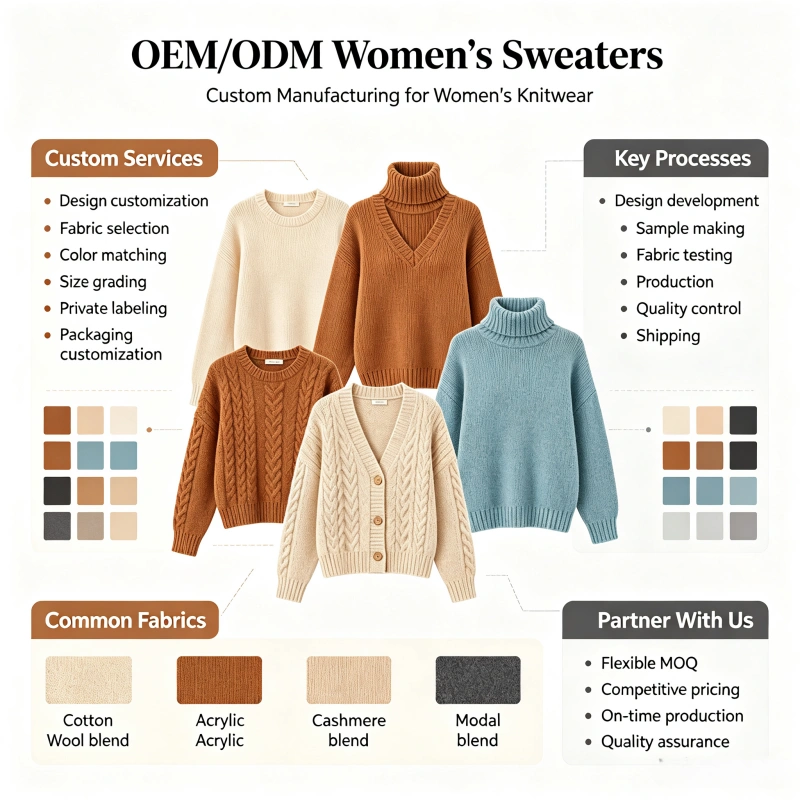
1. What Is OEM/ODM Women’s Sweater Manufacturing?
OEM and ODM are two common manufacturing models for brands that want to develop women’s sweaters under their own labels.
Although suppliers sometimes use these terms differently, the main distinction is the level of design input and responsibility for product development.
| Manufacturing Model | Starting Point | Main Responsibilities | Suitable Buyers |
|---|---|---|---|
| OEM | Buyer’s design, tech pack, or reference sample | Manufacturer develops and produces according to agreed specifications | Brands with established designs |
| ODM | Initial concept, design direction, or market requirements | Manufacturer contributes product development and design support | Brands that need help developing new styles |
| Private Label | Existing or customized product design | Manufacturer produces garments with the buyer’s branding | Retailers, wholesalers, and emerging brands |
| White Label | Existing product style | Buyer mainly adds branding or packaging | Businesses seeking a faster market entry |
For example, a fashion brand may provide a detailed technical package for a fitted women’s sweater. The manufacturer follows the buyer’s yarn, measurements, stitch pattern, neckline, and construction requirements. This is a typical OEM project.
Another brand may provide several reference photographs and ask the manufacturer to develop a lightweight cardigan collection for the next spring season. The manufacturer may help assess yarn options, suggest knit structures, develop samples, and refine the product. This is closer to ODM.
A project can also combine both approaches. You may have a fixed design but need technical suggestions about yarn, stitch density, or garment construction.
Before starting, confirm who is responsible for the design, technical specifications, sample approval, and intellectual property. These details should be documented to avoid misunderstandings later.
2. Define Your Women’s Sweater Collection Before Manufacturing
Before choosing a factory or asking for a quotation, define what you want to sell.
A women’s sweater collection should be developed around a target customer, wearing occasion, season, and retail price range. These factors influence nearly every manufacturing decision.
Identify Your Target Customer
Consider the following questions:
- Are you targeting young fashion consumers, office professionals, or everyday casualwear customers?
- Will the sweaters be sold through boutiques, department stores, e-commerce platforms, or wholesale distributors?
- Does your market prefer fitted silhouettes, relaxed fits, oversized sweaters, or classic styles?
- Are customers more interested in easy-care materials or premium natural fibers?
- What retail price range are you targeting?
For example, a brand selling affordable everyday knitwear may prioritize versatile styles, commercially available yarns, repeatable colors, and easy-care requirements.
A premium fashion label may place greater emphasis on yarn hand feel, detailed knit structures, refined finishing, and distinctive silhouettes.
Plan the Product Types
A balanced women’s sweater collection can include several product categories:
| Sweater Type | Common Design Features | Typical Applications |
|---|---|---|
| Crew-Neck Sweater | Round neckline, classic body shape | Everyday and casual collections |
| V-Neck Sweater | Open neckline, layered styling | Office and smart-casual wear |
| Cardigan | Button or open-front construction | Layering and transitional seasons |
| Turtleneck Sweater | High neckline, close or relaxed fit | Autumn and winter collections |
| Oversized Sweater | Relaxed body, dropped shoulders | Casual and lifestyle collections |
| Cropped Sweater | Shorter body length | Contemporary fashion collections |
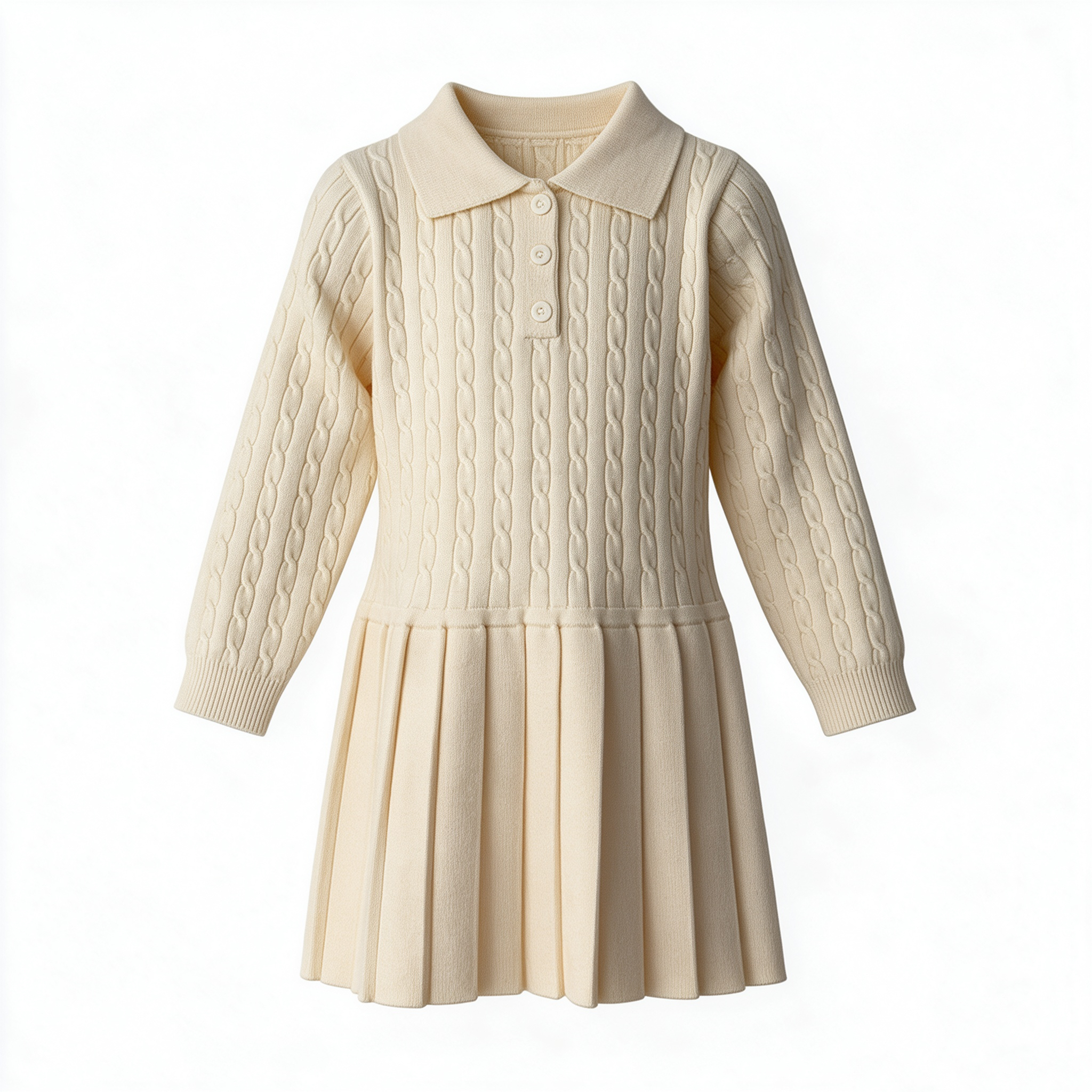
| Cable-Knit Sweater | Raised decorative stitch patterns | Traditional and winter collections |
| Open-Knit Sweater | Decorative gaps and lighter construction | Spring and transitional collections |
| Sweater Vest | Sleeveless knitted body | Layering and coordinated outfits |
You can explore Chengyuan’s women’s sweaters collection to review product directions for different seasons and customer groups.
A practical starting strategy is to develop a few coordinated styles rather than launching too many unrelated designs. Shared yarns, colors, and design details can make collection development and inventory planning easier.
3. Choose the Right Sweater Construction and Knit Structure
One of the most important decisions in OEM women’s sweater manufacturing is the construction method.
A sweater is not simply a garment made from a particular fabric. Its appearance, stretch, weight, drape, and durability are influenced by how the knitted material or garment panels are constructed.
Understand Different Sweater Construction Methods
Depending on the product and the manufacturer’s capabilities, two common approaches are:
Fully fashioned or panel-knit construction
Individual garment sections, such as the front, back, and sleeves, are knitted into specific shapes. The panels are then joined using an appropriate linking or sewing method.
This approach can provide a more integrated knit construction and may suit many traditional sweaters, cardigans, and structured knitwear styles.
Cut-and-sew knit construction
Knitted fabric is produced first and then cut and assembled into garments.
This approach may suit certain knit tops and sweater-like garments made from knitted fabric.
These approaches have different requirements for equipment, material consumption, seam construction, production planning, and finishing. Not every supplier uses the same production route.
When evaluating a manufacturer, ask whether the required knitting process is handled in-house or through an external production partner. Also confirm who controls yarn specifications, panel quality, linking, finishing, and final garment inspection.
Select a Knit Structure That Matches Your Design
Different knit structures create different visual and functional results.
| Knit Structure | Main Characteristics | Common Applications |
|---|---|---|
| Plain Knit | Smooth surface and versatile appearance | Basic pullovers and cardigans |
| Rib Knit | Pronounced vertical ribs with stretch | Fitted sweaters, cuffs, necklines, and hems |
| Cable Knit | Raised patterns and textured appearance | Chunky and classic winter sweaters |
| Jacquard Knit | Complex patterns and multiple colors | Patterned fashion sweaters |
| Intarsia Knit | Separate color areas within a design | Graphic and color-block sweaters |
| Pointelle Knit | Decorative openwork details | Lightweight and feminine knitwear |
| Waffle or Textured Knit | Three-dimensional surface texture | Casual and contemporary sweaters |
| Open Knit | Visible gaps between stitches | Lightweight layering garments |
The best structure depends on the yarn, gauge, target weight, season, design, and required fit.
For example, a cable-knit sweater requires a different construction approach from a fine-gauge fitted cardigan. A large open-knit pattern also needs evaluation for stability, transparency, and potential snagging.
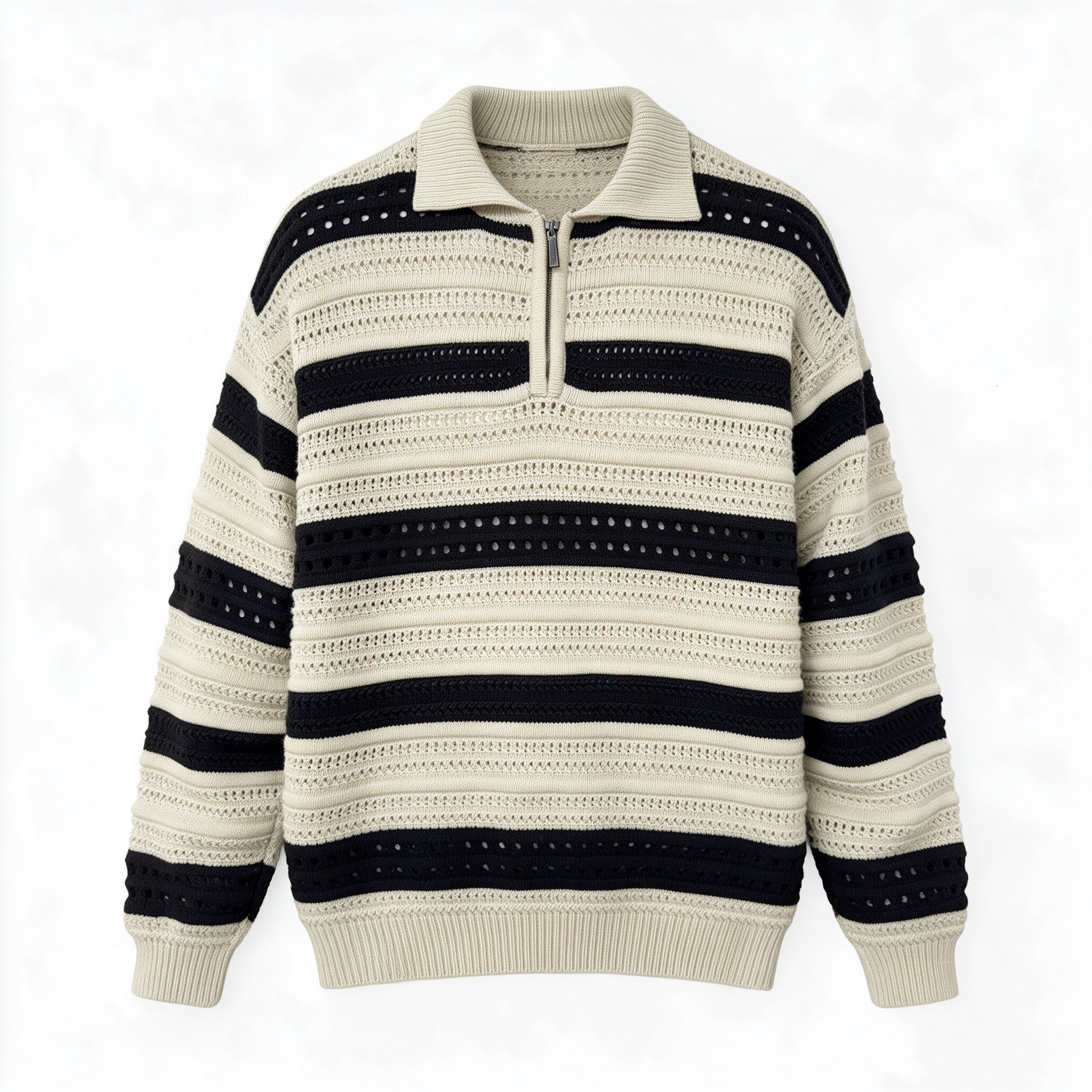
Chengyuan’s women’s open-knit sweater is an example of a lightweight decorative knitwear direction for spring and transitional-season collections.
Why Gauge Matters
Gauge is an important technical consideration in sweater development. It generally describes the needle density of a knitting machine, although the exact terminology and measurement conventions should be confirmed with the supplier.
Lower-gauge constructions are commonly associated with chunkier knit appearances, while higher-gauge constructions can create finer, more compact surfaces.
However, gauge should not be selected independently.
The same gauge can produce different results depending on yarn count, fiber composition, stitch structure, machine characteristics, and finishing process.
Before approving a sweater design, ask the manufacturer to confirm:
- Proposed gauge and knitting construction
- Yarn count and yarn composition
- Target fabric or garment weight
- Surface appearance and hand feel
- Stretch and recovery requirements
- Whether the structure remains stable after washing
For a new or complicated stitch pattern, approving a small knitted swatch before producing the full sample can reduce unnecessary revisions.
4. Select Suitable Yarn for Women’s Sweaters
Yarn selection directly affects the appearance, softness, warmth, drape, durability, pilling behavior, and cost of a sweater.
There is no universally best yarn. The right choice depends on your product positioning and target customer.
Common Yarn Options
| Yarn Type | General Characteristics | Suitable Sweater Applications |
|---|---|---|
| Cotton | Familiar hand feel, breathable, and suitable for many casual products | Everyday sweaters and transitional-season knitwear |
| Wool | Provides warmth and natural resilience | Autumn and winter sweaters |
| Merino Wool | Fine wool fiber with a soft hand feel when appropriately selected | Premium lightweight and winter knitwear |
| Acrylic | Can create a wool-like appearance at a different price positioning | Commercial fashion sweaters |
| Viscose | Smooth feel and fluid drape | Lightweight fashion knitwear |
| Polyester | Useful for durable and easy-care blends | Casual and commercial knitwear |
| Nylon | Adds strength and abrasion resistance in many blends | Blended sweaters requiring additional durability |
| Blended Yarn | Combines selected fiber characteristics | Products balancing comfort, appearance, and cost |
These are general material characteristics, not performance guarantees. Actual results depend on yarn quality, fiber ratios, yarn construction, knitting, and finishing.
How to Compare Yarn Options
Instead of asking a manufacturer only whether a yarn is cotton, wool, or acrylic, request more detailed information.
Important specifications include:
- Fiber composition: The percentage of each fiber in the yarn.
- Yarn count: A technical indicator of yarn thickness.
- Ply: The number of yarn strands combined in the yarn construction.
- Twist and surface: These influence the yarn’s appearance, touch, and behavior during production.
- Color performance: Confirm the shade and relevant colorfastness requirements.
- Pilling performance: Evaluate the finished material under an agreed testing method.
- Care requirements: Consider whether the product requires hand washing, gentle machine washing, or other special care.
A soft yarn is not automatically a high-quality yarn. Some soft surfaces may develop visible pills more easily, while a stronger or more compact yarn may produce a different hand feel.
For a premium sweater collection, assess yarn samples physically rather than selecting materials based only on a composition label or digital photograph.
Control Yarn and Color Consistency
For custom colors, request a physical yarn swatch or lab dip for approval before bulk production.
This becomes particularly important for sweaters with stripes, contrast ribbing, jacquard patterns, or multiple color sections.
Confirm whether yarn for the same colorway will be sourced or dyed in consistent lots. Ask how the supplier will handle shade differences between production batches and repeat orders.
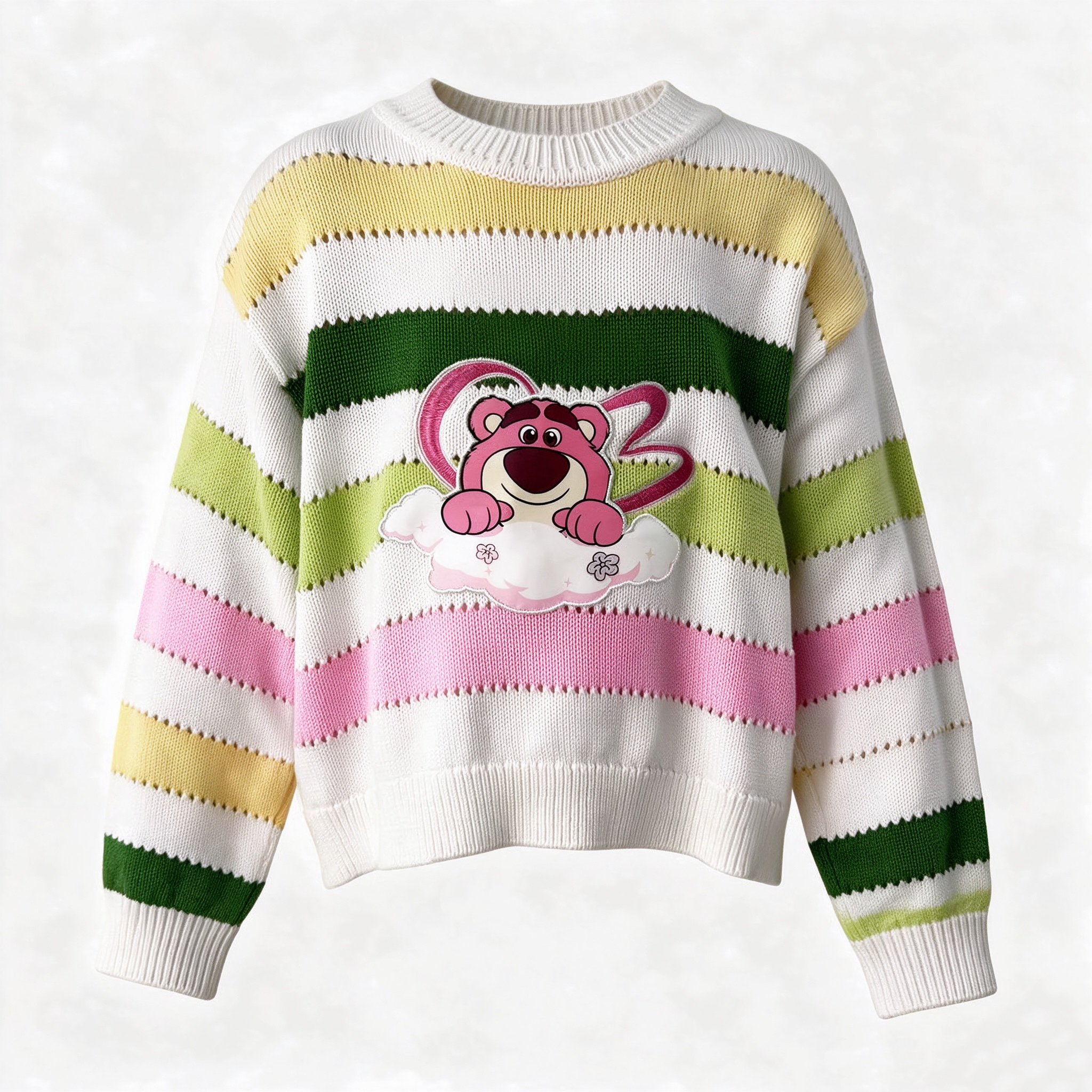
For a striped sweater, for example, the contrast color should be checked together with the ground color. A small shade difference can become very visible when the two colors are knitted side by side.
5. Develop the Right Women’s Sweater Fit and Size Range
A sweater can have attractive yarn and a well-designed pattern but still perform poorly in retail if the fit is incorrect.
Women’s sweater development should consider the intended silhouette, body proportions, wearing habits, and target market.
Define the Fit Before Creating the Pattern
Common fit directions include:
- Slim fit: Closer to the body, often used for fine-gauge or fitted styles.
- Regular fit: A balanced silhouette for everyday collections.
- Relaxed fit: Additional room through the body and sleeves.
- Oversized fit: Deliberately generous proportions, often with dropped shoulders.
- Cropped fit: Shorter body length designed for specific styling proportions.
Do not assume that an oversized sweater simply needs a larger chest measurement. Shoulder position, armhole depth, sleeve volume, body length, and hem construction all contribute to the intended silhouette.
Define Important Measurement Points
A women’s sweater measurement chart should normally include:
| Measurement Point | Why It Matters |
|---|---|
| Chest Width | Controls body volume and ease |
| Shoulder Width | Defines the shoulder silhouette |
| Body Length | Determines the overall proportion |
| Sleeve Length | Affects comfort and styling |
| Armhole Depth | Influences movement and fit |
| Bicep Width | Controls upper-sleeve volume |
| Cuff Opening | Affects wrist fit and sleeve appearance |
| Hem Width | Influences how the sweater sits on the body |
| Neck Opening | Determines neckline comfort and appearance |
| Neckline Depth | Important for crew-neck, V-neck, and other styles |
All measurement points should have clear definitions. For knitted products, also specify whether measurements are taken in a relaxed state or under controlled stretching.
Check Fit After Finishing
Knitwear can change dimensions after washing, steaming, pressing, or relaxation.
A sample that measures correctly immediately after assembly may become wider, shorter, longer, or twisted after finishing.
For this reason, fit approval should be based on the garment after it has undergone the intended finishing and care process.
A practical sample review should include:
- Flat measurements against the approved size chart
- On-body fit assessment
- Sleeve and shoulder movement
- Neckline and cuff comfort
- Body length and overall proportions
- Dimensional stability after the agreed washing process
If your collection covers several sizes, discuss grading rules before bulk production. Changes should follow a defined measurement chart rather than relying on informal instructions such as “make the larger sizes a little wider.”
6. Prepare a Complete Tech Pack for OEM Women’s Sweaters
A tech pack translates your design into instructions that designers, pattern makers, manufacturers, and quality inspectors can understand consistently.
A product photograph alone rarely contains enough technical information for accurate production.
A useful women’s sweater tech pack should include the following:
| Tech Pack Section | Information to Include |
|---|---|
| Product Information | Style name, style number, season, and version |
| Technical Drawings | Front, back, and relevant detail views |
| Yarn Specifications | Fiber composition, yarn count, ply, and approved yarn reference |
| Knit Construction | Gauge, stitch structure, pattern details, and target weight |
| Measurements | Base-size chart, measurement points, and grading rules |
| Colors | Pantone references or approved physical samples |
| Design Details | Neckline, cuffs, hem, sleeves, buttons, and pockets |
| Branding | Woven labels, printed labels, embroidery, and logo placement |
| Trims | Buttons, zippers, decorative accessories, and other components |
| Finishing | Washing, steaming, pressing, and care requirements |
| Packaging | Folding method, hangtags, labels, polybags, and carton requirements |
| Quality Requirements | Measurement criteria, defect standards, and testing requirements |
| Commercial Information | Quantity, color breakdown, size ratio, and target delivery date |
What If You Do Not Have a Complete Tech Pack?
You can still begin product development with:
- A hand-drawn sketch
- Front and back reference photographs
- A physical sweater sample
- A measurement chart
- A mood board or collection concept
However, clearly explain which details must be reproduced and which can be adjusted.
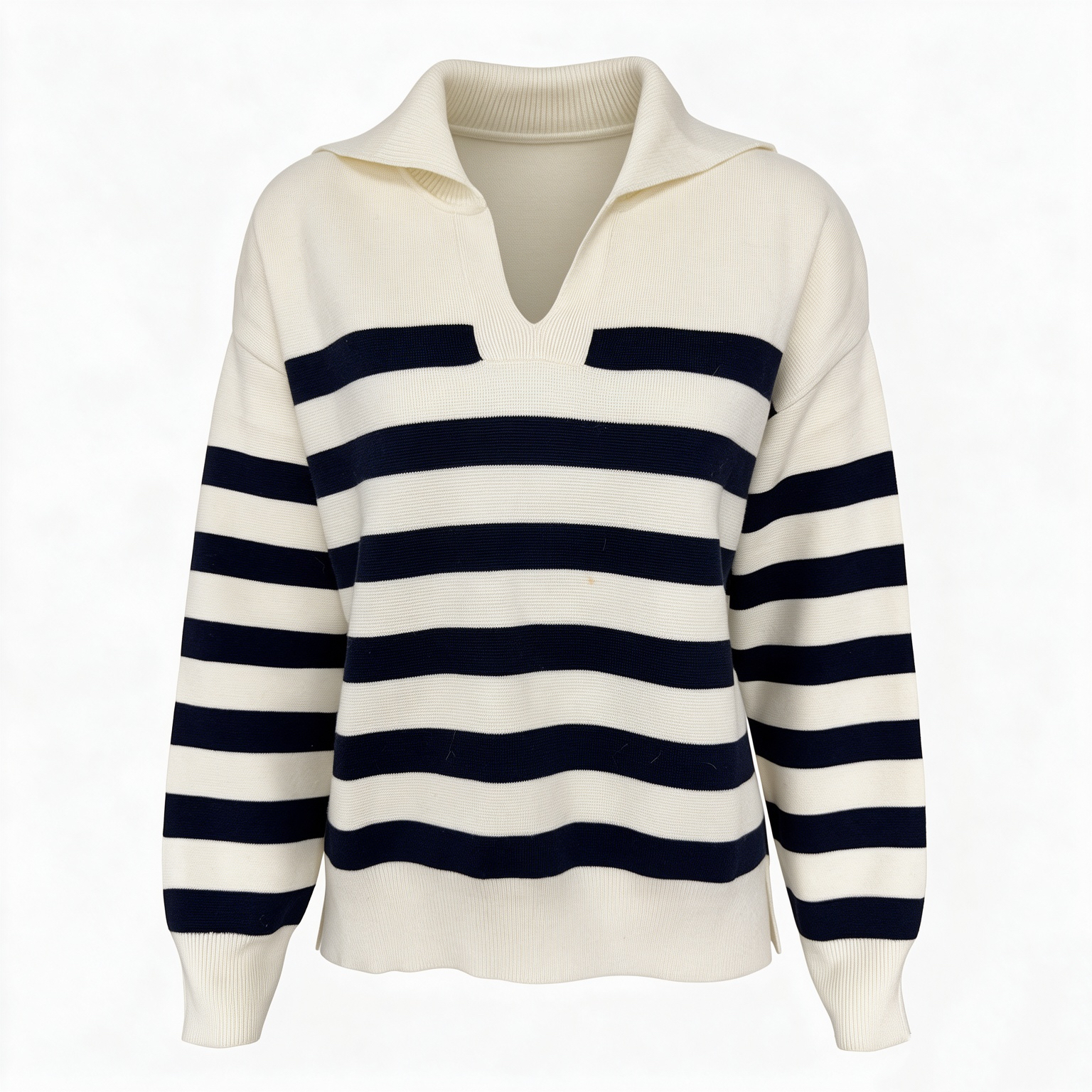
For example, if you provide a photograph of an oversized striped sweater, specify whether the manufacturer should follow the original body shape, stripe width, yarn texture, neckline, sleeve length, or all of these details.
You can also review this related step-by-step guide to making custom women’s knit tops for additional guidance on technical drawings, measurements, and sample development.
{“ARInfo”:{“IsUseAR”:false},”Version”:”1.0.0″,”MakeupInfo”:{“IsUseMakeup”:false},”FaceliftInfo”:{“IsChangeEyeLift”:false,”IsChangeFacelift”:false,”IsChangePostureLift”:false,”IsChangeNose”:false,”IsChangeFaceChin”:false,”IsChangeMouth”:false,”IsChangeThinFace”:false},”BeautyInfo”:{“SwitchMedicatedAcne”:false,”IsAIBeauty”:false,”IsBrightEyes”:false,”IsSharpen”:false,”IsOldBeauty”:false,”IsReduceBlackEyes”:false},”HandlerInfo”:{“AppName”:2},”FilterInfo”:{“IsUseFilter”:false}}
7. The OEM/ODM Women’s Sweater Manufacturing Process
A well-managed sweater manufacturing project moves through several development and production stages.
The exact sequence depends on the product construction, material availability, and supplier’s manufacturing capabilities.
Step 1: Project Review and Technical Assessment
The manufacturer reviews your design, target price, quantity, materials, construction, and delivery requirements.
At this stage, discuss whether the requested sweater can be produced using the proposed yarn and knit structure.
Potential problems should be identified early, including:
- Special yarn availability
- Complicated stitch patterns
- Unusual color combinations
- Difficult measurements or proportions
- Special buttons, trims, or branding
- Low quantities for custom-dyed yarn
A preliminary technical assessment helps avoid developing a sample that cannot be manufactured economically.
Step 2: Yarn and Knit Swatch Development
The manufacturer sources or evaluates the proposed yarn and develops material samples when required.
You should review the yarn composition, color, thickness, surface appearance, and hand feel.
If the sweater has a special stitch, request a knitted swatch or sample panel to evaluate the actual structure.
This is especially useful for cable, jacquard, intarsia, pointelle, and other decorative constructions.
Step 3: Pattern Making and First Sample
After the main specifications are agreed upon, the pattern and sample development process begins.
The first sample should demonstrate the intended garment shape, material, stitch construction, and important design features.
Review the sample against the technical requirements rather than judging it only by appearance.
Step 4: Sample Comments and Revisions
Record sample feedback in a clear and measurable format.
Instead of writing “the sleeve is too long,” provide the actual measurement, the required adjustment, and the relevant size.
Similarly, comments such as “the ribbing is too loose” should be supported by a specific appearance or recovery requirement.
Use photographs, measurement records, and dated comments to make revision instructions easy to understand.
Step 5: Size Set and Pre-Production Approval
Depending on the order and product complexity, a size set or pre-production sample may be needed.
Before bulk production, confirm:
- Final yarn and color
- Approved knit structure
- Garment measurements and grading
- Neckline, cuffs, and hem construction
- Labels, logos, and trims
- Finishing and washing requirements
- Packaging specifications
- Quality inspection criteria
The approved sample and written specifications should become the production reference.
Step 6: Bulk Manufacturing
The actual bulk process depends on whether the product uses knitted panels or knitted fabric.
A typical sweater production sequence may include yarn preparation, knitting, panel inspection, linking or sewing, finishing, measurement checking, labeling, and packing.
For cut-and-sew knit garments, fabric preparation, cutting, sewing, and finishing may form a larger part of the process.
Establish production checkpoints along the way rather than waiting until every garment is completed.
Step 7: Final Inspection and Packing
Before shipment, check the finished garments against the approved sample and order specifications.
Confirm measurements, appearance, labels, color, workmanship, packaging, and the agreed inspection requirements.
Only after the inspection and order details are accepted should the products move to final packing and shipment.
8. Quality Control: What Should Buyers Check?
Quality control for women’s sweaters requires more than checking whether the garment looks attractive.
Knitwear has particular quality risks related to yarn, stitch structure, dimensional stability, and finishing.
| Quality Checkpoint | Potential Problem | What Buyers Should Confirm |
|---|---|---|
| Yarn | Incorrect composition or inconsistent quality | Approved yarn reference and specifications |
| Color | Shade variation or color transfer | Approved shade and relevant colorfastness requirements |
| Knitting | Dropped stitches, holes, or uneven patterns | Consistent stitch appearance and construction |
| Linking and Seams | Bulky seams, loose joins, or visible holes | Clean, secure, and comfortable construction |
| Ribbing | Loose or distorted cuffs and hems | Consistent stretch and recovery |
| Measurements | Unexpected shrinkage or dimensional changes | Final measurements after finishing |
| Surface | Excessive pilling or snagging | Agreed surface quality and testing requirements |
| Finishing | Twisting, uneven pressing, or loose threads | Consistent finished appearance |
| Branding | Incorrect label or logo placement | Approved artwork and placement |
| Packing | Wrong size ratios or damaged garments | Agreed folding and carton specifications |
Check Pilling and Surface Appearance
Pilling is a common concern for sweaters because friction can cause loose fiber ends to form small balls on the garment surface.
Pay particular attention to areas such as:
- Underarms
- Side seams
- Cuffs
- Elbows
- Areas that come into contact with handbags or accessories
The yarn composition and construction both influence pilling behavior. Buyers should agree on the test method and acceptance requirement with the manufacturer rather than relying on subjective descriptions such as “anti-pilling.”
Check Rib Recovery
The neckline, cuffs, and hem are frequently stretched during normal wear.
If the rib structure does not recover adequately, these areas may become loose or distorted.
Check the ribbing after repeated stretching and compare its appearance and dimensions with the approved sample.
Check Dimensional Stability
Washing and finishing can change the dimensions of knitted garments.
Confirm the expected care process and review measurements after the agreed washing and drying method.
For important retail programs, it is advisable to define the acceptable dimensional change and measurement tolerances before bulk production.
Check Color Consistency
Color consistency is particularly important for multi-color sweaters.
For stripes or jacquard designs, check the individual colors and their visual balance together. Also review whether stripe placement and pattern proportions remain consistent across the size range.
9. What Affects the Cost of Custom Women’s Sweaters?
The price of an OEM/ODM women’s sweater depends on the complete product specification.
A factory quotation should not be judged only by the unit price. Buyers need to understand which materials, construction methods, finishing requirements, and packaging details are included.
The main cost factors include:
1. Yarn composition and quality
Different fibers, yarn grades, yarn counts, and yarn suppliers have different costs. Specialty yarns and custom-dyed colors may require additional preparation.
2. Gauge and knit structure
A complicated structure may require additional development and production work. Cable patterns, jacquard, intarsia, and decorative openwork can have different manufacturing requirements from basic plain knit.
3. Garment weight and size
Larger garments and heavier constructions generally require more yarn. A longer oversized cardigan and a lightweight cropped pullover should not be expected to have the same material consumption.
4. Design complexity
Special collars, buttons, embroidery, contrast details, multiple colors, and unusual sleeve shapes may increase production costs.
5. Quantity and color breakdown
Order quantity affects material sourcing, yarn preparation, production planning, and setup costs. A small order across many custom colors can be more complicated than a larger order using one established color.
6. Finishing and quality requirements
Washing, special treatments, additional inspections, testing, and detailed packaging can affect the final quotation.
7. Branding and packaging
Woven labels, printed care labels, hangtags, custom buttons, branded packaging, and barcodes should be specified before the quotation is finalized.
How to Request a More Accurate Quotation
Provide the manufacturer with the following information:
- Product type and reference images
- Yarn composition or target hand feel
- Knit structure and design details
- Size range and measurement chart
- Colors and quantities per color
- Estimated total order quantity
- Branding and packaging requirements
- Target delivery date
- Destination market and any testing requirements
The clearer your requirements, the easier it is to compare quotations on an equivalent basis.
10. Common Mistakes When Sourcing OEM/ODM Women’s Sweaters
Even an experienced buyer can encounter problems when technical details are not confirmed early enough.
Here are several sourcing mistakes worth avoiding.
Mistake 1: Choosing Yarn Based Only on Fiber Composition
Two yarns with the same fiber percentage can have different softness, appearance, durability, and performance.
Better approach: Compare physical yarn samples and request information about yarn count, ply, surface, and relevant quality characteristics.
Mistake 2: Approving a Sweater from a Photograph
A photograph cannot accurately describe stitch density, yarn thickness, garment weight, stretch, or internal construction.
Better approach: Request a material swatch and physical sample before confirming the final specifications.
Mistake 3: Ignoring Finishing After Sample Development
The sweater may change shape after washing, steaming, and relaxation.
Better approach: Approve fit and measurements based on the finished sample, using the intended care process.
Mistake 4: Focusing Only on the First Sample
One successful sample does not automatically guarantee that every bulk garment will have the same appearance and measurements.
Better approach: Establish production checkpoints for yarn, knitting, linking, finishing, and final inspection.
Mistake 5: Comparing Quotations Without Comparing Specifications
A lower price may reflect a different yarn grade, garment weight, packaging level, or construction method.
Better approach: Ask every supplier to quote against the same technical package and commercial requirements.
Mistake 6: Leaving Design Ownership and Approval Responsibilities Unclear
OEM and ODM projects may involve shared development work.
Better approach: Confirm design ownership, permitted use of designs, specification responsibilities, sample approval, and any confidentiality requirements in writing.
11. How to Build a Commercially Viable Women’s Sweater Collection
Rather than treating every sweater as an independent product, fashion brands can develop a coordinated collection.
A good collection plan considers how products work together in terms of season, color, material, silhouette, and target customer.
For example, a brand developing an autumn collection could combine:
- A basic crew-neck sweater for everyday sales
- A relaxed striped sweater as a visual statement piece
- A cardigan for layering
- A textured sweater for additional product variety
- A fine-gauge knit top for indoor and transitional-season styling
Using related colors or yarn families can help maintain a consistent collection identity.
It may also be useful to coordinate sweaters with other products, such as women’s knit tops and knit bottoms, to create complete outfits.
Chengyuan’s women’s knit top collection provides another product direction for brands looking to develop coordinated knitwear ranges.
For additional product categories, you can review the full Chengyuan garment product range.
When planning quantities, avoid allocating the same quantity to every design without considering expected demand. Basic styles may be more suitable for repeat orders, while highly seasonal or experimental styles may be better suited to controlled trial quantities.
12. Why Work with Chengyuan Garment for OEM/ODM Women’s Sweaters?
Choosing a women’s sweater manufacturer is about more than finding a factory that can make a particular design.
A suitable manufacturing partner should understand product development, technical communication, sampling, quality requirements, and the commercial needs of overseas fashion businesses.
Qingdao Chengyuan Garment Co., Ltd. is an integrated garment manufacturer based in Qingdao, Shandong, China, combining design, pattern making, sampling, and bulk garment production.
Our services support fashion brands, retailers, wholesalers, importers, and private-label businesses that need customized clothing products.
Integrated Product Development
Our in-house design team and dedicated sample room support product development from sketches, reference garments, and technical packages.
Buyers can discuss product details, material choices, measurements, colors, and branding requirements during development.
Customization for Different Collection Requirements
For women’s sweater projects, customization can include:
- Yarn composition and material options
- Knit structure and texture
- Colors and patterns
- Necklines and sleeve designs
- Body length and overall fit
- Cuffs, hems, buttons, and other details
- Size charts and grading
- Private labels and packaging
For example, our women’s striped sweater demonstrates an oversized silhouette with contrast stripes and customized design details.
For spring and summer knitwear collections, the openwork polo knit top offers another reference for textured women’s knitwear development.
Production Capacity for Growing Brands
Chengyuan has an overall monthly production capacity of approximately 80,000–120,000 finished garments across its operations.
This capacity supports both smaller trial programs and larger repeat orders. Actual sweater production arrangements, quantities, and schedules depend on the specific design, material sourcing, construction, and current production plan.
Flexible Development for Different Order Sizes
We understand that different buyers have different starting requirements.
A new brand may want to test several sweater styles before committing to a larger seasonal order. An established wholesaler may need coordinated production across multiple colors and sizes.
The suitable MOQ and schedule should be assessed according to the yarn, product construction, colors, customization, and order quantity.
For reference, Chengyuan’s published women’s striped sweater product page lists a 100-piece MOQ per colorway, with sample development of 7–10 working days per round and bulk production of 25–40 days after sample approval and deposit. These figures are specific to that listed style; other projects may have different requirements.
You can learn more about Chengyuan Garment and our manufacturing services or visit our official website to explore our capabilities.
13. What Should You Send Before Requesting a Women’s Sweater Quote?
To help a manufacturer evaluate your project, prepare as much of the following information as possible.
| Information | Example |
|---|---|
| Product Type | Women’s cardigan, pullover, turtleneck, or oversized sweater |
| Reference | Sketch, product photograph, sample, or tech pack |
| Yarn | Cotton, wool blend, acrylic, viscose, or another specification |
| Knit Structure | Plain knit, rib, cable, jacquard, or open knit |
| Fit | Slim, regular, relaxed, oversized, or cropped |
| Size Range | XS–XL or your own size chart |
| Color | Pantone reference or physical color sample |
| Quantity | Total pieces and quantity per color |
| Branding | Woven label, care label, hangtag, embroidery, or logo |
| Packaging | Individual polybag, custom packaging, and carton requirements |
| Delivery | Target shipment date and destination market |
| Quality Requirements | Measurement tolerances, appearance standards, and testing needs |
If some details are not available yet, provide your reference images and basic product direction first. The manufacturer can then help identify which technical decisions need to be finalized before sampling.
14. Frequently Asked Questions About OEM/ODM Women’s Sweaters
1. Can I manufacture women’s sweaters from my own design?
Yes. You can provide a technical package, sketch, reference photograph, measurement chart, or physical garment sample. The manufacturer can review your requirements and develop a sample according to the agreed specifications.
2. What is the difference between OEM and ODM women’s sweaters?
OEM generally means that the buyer provides the main design and technical requirements, while the manufacturer develops and produces the garment accordingly.
ODM involves more product development input from the manufacturer, which may help buyers who have an initial concept but need technical or design support.
3. What materials can be used to make custom women’s sweaters?
Common options include cotton, wool, merino wool, acrylic, viscose, polyester, nylon, and blended yarns. The best option depends on the sweater’s intended season, appearance, softness, durability, care requirements, and target cost.
4. Can I customize the knit structure and sweater pattern?
Yes. Depending on the manufacturer’s production capabilities, customization can include plain knit, rib, cable, jacquard, intarsia, pointelle, open knit, and other textured structures.
The selected yarn and construction should be evaluated together before sample approval.
5. Can I add my own brand labels and packaging?
Yes. Private-label customization can include woven labels, printed labels, care labels, hangtags, embroidery, logo placement, and customized packaging. Confirm the artwork, placement, and packaging details before bulk production.
6. How many pieces do I need to order?
MOQ depends on the sweater design, yarn availability, color requirements, construction, and customization level.
Stock yarn and simpler styles may have different order requirements from custom-dyed yarn or complicated multi-color designs. Request a project-specific quotation rather than assuming one MOQ applies to every style.
7. How long does it take to develop a sweater sample?
Sampling time depends on yarn availability, design complexity, knit structure, and the number of revisions.
For example, Chengyuan’s published striped sweater listing gives a sample development reference of 7–10 working days per round. Other styles may require different development schedules.
8. How can I make sure bulk sweaters match the approved sample?
Use a clearly approved pre-production reference and written technical specifications. Confirm the yarn, color, measurements, stitch structure, trims, labels, finishing process, and packaging before production begins.
In-line inspections and final inspections can then verify whether bulk products meet the agreed requirements.
9. Can I order different sweater styles and colors in one collection?
This can be discussed during project assessment. Related styles may share certain yarns, colors, or trims, but each design should still have its own technical specifications and approved sample.
10. What should I prepare to get an accurate sweater quotation?
Prepare your design references, yarn requirements, knit structure, size range, color breakdown, estimated quantity, branding requirements, packaging details, and delivery expectations.
A complete technical package helps the manufacturer evaluate material consumption, production complexity, and the overall project requirements.
Conclusion: Turn Your Women’s Sweater Designs into Production-Ready Products
Successful OEM/ODM women’s sweater manufacturing starts with clear product planning and continues through material selection, knit construction, pattern development, sampling, quality control, and bulk production.
The most important lesson is to evaluate the entire product rather than focusing on a single factor such as yarn composition or unit price. Yarn, gauge, stitch structure, fit, and finishing work together to determine the final garment.
For fashion brands and wholesalers, a reliable manufacturing process should make it easier to develop distinctive collections while maintaining consistent product specifications across colors, sizes, and repeat orders.
Qingdao Chengyuan Garment Co., Ltd. supports custom garment development and production for international buyers. Share your sweater designs, reference samples, or collection requirements with our team to discuss suitable OEM/ODM manufacturing solutions.
Ready to develop your private-label women’s sweater collection? Contact Chengyuan Garment with your design and estimated order quantity to start your project.

I am a supplier with 10 years of experience in the apparel industry. As a professional clothing manufacturer, we provide you with a one-stop solution.