
{{{cp11}}}

cool vest for dogs
This fleece-lined dog vest article targets buyers seeking a soft, warm dog vest for spring and autumn rather than an active cooling product. The primary keyword is “fleece-lined dog vest,” supported by “cotton dog vest,” “spring and autumn dog vest,” “striped dog vest,” “custom dog vest manufacturer,” and “dog vest wholesale.” Long-tail phrases include “95% cotton 5% spandex dog vest,” “275gsm dog vest,” “fleece-lined dog vest with harness hole,” “colorful striped dog vest,” “custom dog vest for small dogs,” and “wholesale dog vests for pet brands.” The content also captures comparison searches such as “dog cooling vest vs fleece vest” and “is a cotton dog vest warm?” Commercial questions cover stretch recovery, wash shrinkage, pilling, colorfastness, stripe alignment, size grading, MOQ, sampling, and production quality. This keyword structure separates cool-weather warmth from evaporative cooling, aligns product specifications with search intent, and supports relevance for pet brands, retailers, and wholesale buyers.
Fleece-Lined Dog Vests for Spring and Autumn: Fit, Fabric & Custom Manufacturing
A fleece-lined dog vest has to do more than add a cheerful layer to a product photo. In transition seasons, a dog may leave a warm room, walk on a cool morning, run through damp grass and then sit in a heated car. The vest must provide light warmth, allow natural movement and remain comfortable without becoming bulky or trapping excess heat.
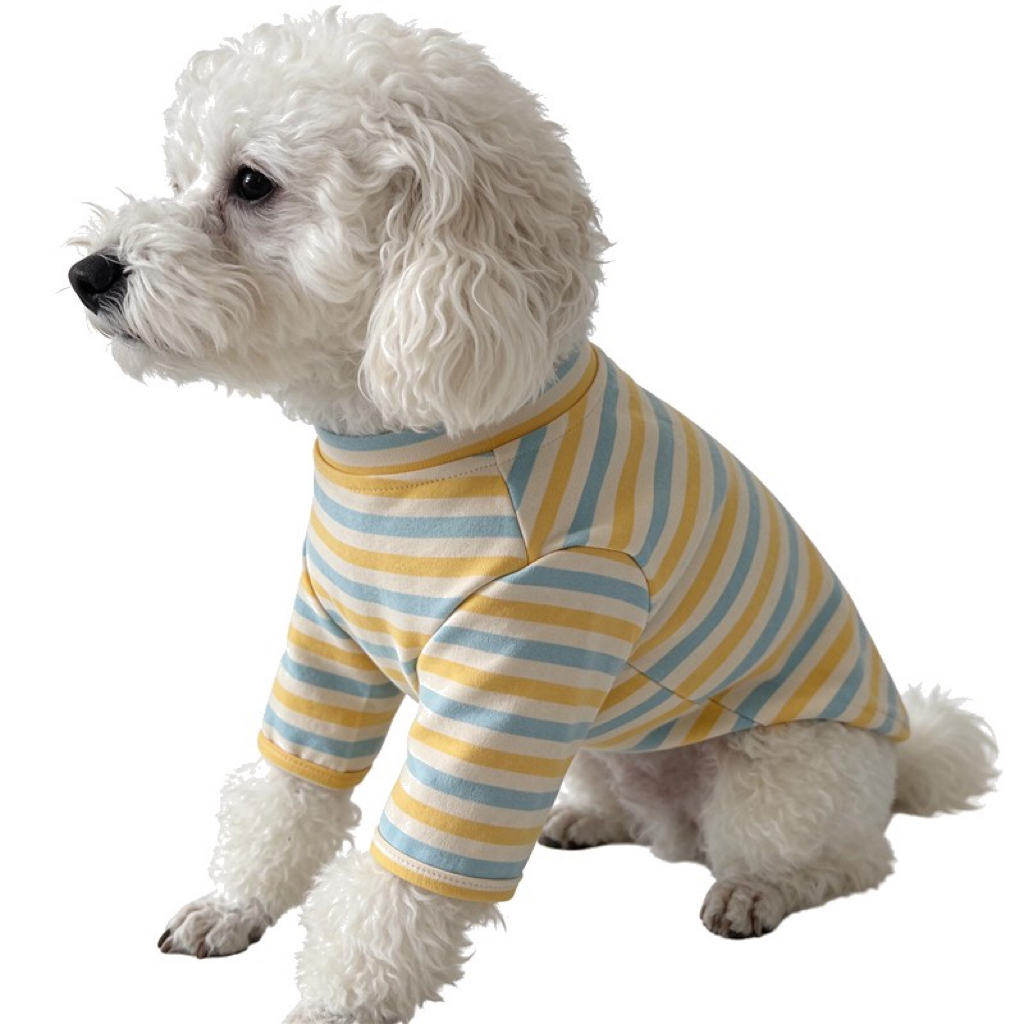
The specification discussed here is distinctive: a colorful striped vest made with a 275gsm, 95% cotton and 5% spandex body fabric, plus a fleece lining for spring and autumn. As a custom pet clothing manufacturer serving pet brands and wholesale buyers, Chengyuan treats that combination as a material, fit and production decision. Start with our custom dog vest page, then use this guide to develop a sample that can be approved and repeated in bulk.
Dog Cooling Vest or Fleece-Lined Vest? Start with the Job
The phrase “dog cooling vest” is often used loosely online, but it normally describes a product designed to reduce heat in hot weather. Standard cooling systems include water-activated evaporation, gel packs, phase-change materials or breathable sun-reflective fabrics. A 275gsm cotton-spandex vest with a fleece lining is a transitional warmth layer, not an active cooling device.
This distinction matters for product safety, customer satisfaction and SEO.
| Product type | Best use | How it works | Main limitation |
|---|---|---|---|
| Evaporative cooling vest | Hot-weather walks, training and outdoor activity | Absorbs water and cools as moisture evaporates | Performance depends on humidity, airflow and re-wetting |
| Gel or PCM cooling vest | Short, controlled heat exposure | Uses pre-cooled inserts or phase-change material | Added weight, insert care and limited duration |
| Fleece-lined cotton vest | Cool mornings, spring, autumn and indoor-outdoor transitions | Uses fabric weight and a brushed lining for light warmth | Not designed to lower body temperature in hot weather |
| Lightweight mesh vest | Mild weather and visual coverage | Uses open fabric for airflow | Limited warmth and protection |
If the product goal is heat relief, use a dedicated dog cooling vest program with tested evaporative or cooling-insert performance. If the goal is transitional warmth, this fleece-lined concept is the better fit.
What Shoppers Need from a Spring and Autumn Dog Vest
Light warmth without excess bulk
A transitional vest should take the edge off cool air without feeling like a winter coat. The 275gsm body provides a substantial fabric weight, while the fleece lining contributes softness and insulation. Together they need to be balanced against the dog’s activity level and the expected climate.
Comfort across the shoulders
Dogs move through the shoulders more than human clothing patterns assume. A neat vest can still restrict reach if the front opening is too narrow or the back panel pulls against the chest. Check the sample while the dog walks, trots, sits and sniffs.
Stable belly coverage
The underbody panel should stay closed without twisting or rubbing. It also needs enough clearance for urination and comfortable movement. Male and female fit considerations should be reviewed at the pattern stage, not corrected only by making the whole garment larger.
Easy dressing
Hook-and-loop closures, zips and buckles all have trade-offs. The closure should open widely, sit flat when fastened and avoid catching hair. For nervous dogs, fewer steps and a clear opening can matter more than a hidden fastening.
Harness and leash access
A leash opening should align with the harness the customer will use. The opening must be reinforced, positioned without chafing the shoulders and sized to prevent water, dirt or loose hair from collecting around the edge.
Color that survives real use
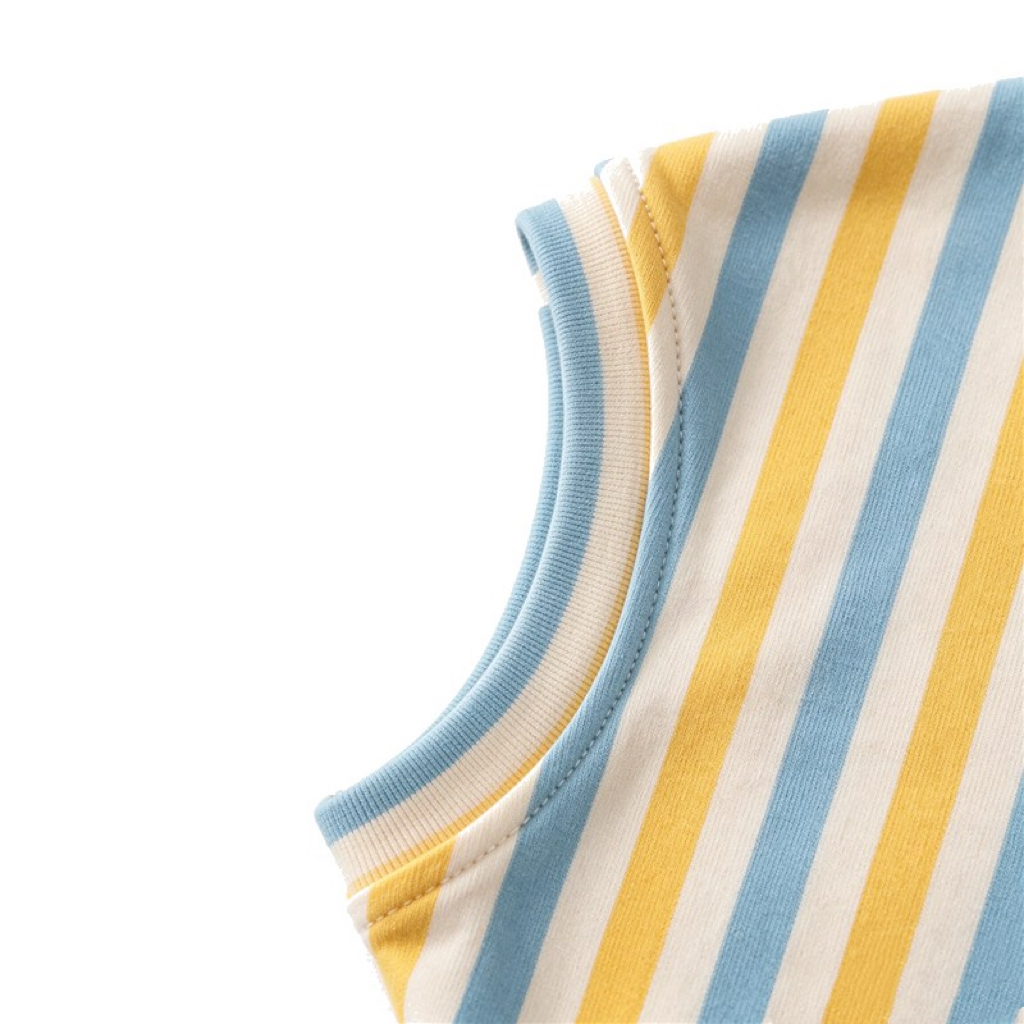
Colorful stripes create strong shelf appeal, but contrast colors can shrink differently, fade at different rates or shift at seams. Approve the full repeat and every color pair on the final fabric and fleece, not only on a flat digital mock-up.
Understand the 95% Cotton / 5% Spandex, 275gsm Fabric
The fabric specification is a useful starting point, but it does not describe every performance property.
95% cotton
Cotton usually contributes a soft handfeel, good skin contact and a natural appearance. It can be comfortable in transitional weather, but cotton also absorbs and retains moisture. Unless a different blend or finish is tested, this is not a high-performance quick-dry fabric.
5% spandex
Spandex can help the fabric stretch with the dog and recover after movement. A 5% spandex content does not automatically guarantee four-way stretch, balanced recovery or a particular compression level. Those properties depend on knit structure, yarn, finishing and test direction.
275gsm
275gsm is a substantial knit weight for a pet vest. It can support a more stable silhouette and a sense of warmth, but the measurement should be confirmed with an agreed fabric test method. Fabric weight alone is not a temperature rating.
Fleece lining
The fleece lining composition, pile height and backing method must be specified separately. Two vests can share a 95/5 cotton-spandex face fabric and feel very different because of the lining.
Colorful stripes
Stripe direction, repeat size, seam matching and color order should be recorded in the tech pack. For cut-and-sew styles, the same stripe can appear different when cut at the shoulder, side panel and belly.

A Practical Comparison of Comfort, Stretch and Care
| Material or feature | Buyer benefit | Risk to validate |
|---|---|---|
| Cotton-rich knit | Soft touch, breathability and familiar comfort | Moisture retention, shrinkage and color loss |
| 5% spandex | Flexible movement and closer fit | Insufficient recovery, growth after wear or seam puckering |
| 275gsm body | More substance and a cleaner shape | Excess warmth, heavier drape and longer drying |
| Fleece lining | Soft inner surface and light insulation | Pilling, bulk, fibre transfer and different shrinkage |
| Contrast stripes | Visual differentiation and cross-sell appeal | Colorfastness, shrinkage differences and seam alignment |
| Harness opening | Easier outdoor use | Tension, reinforcement and rubbing around the opening |
The fabric should also be reviewed as a complete system with the lining, trims and fastenings. A stable outer fabric can still produce a distorted vest if the fleece backing contracts differently after washing.
Design Around the Dog’s Body
| Body zone | Fit question | Production detail to define |
|---|---|---|
| Neck | Does the opening clear the throat and sit cleanly? | Opening shape, trim width, closure overlap and adjustment |
| Chest and shoulders | Can the forelegs extend naturally? | Armhole depth, front panel shape, stretch direction and seam position |
| Back | Does the vest sit level without pulling? | Back length, balance point, stripe alignment and hem shape |
| Belly | Is there enough relief and coverage? | Panel depth, relief opening, closure location and elastic tension |
| Forelegs | Does the edge rub or twist in motion? | Armhole binding, opening size and cover-stitch finish |
| Rear hem | Does the garment lift or drag? | Hem sweep, tail clearance and weight distribution |
Measure the Dog and Grade the Range
Four measurements should be confirmed before sample development:
- Neck circumference where the vest fastens;
- Chest girth at the widest part of the rib cage;
- Back length from the base of the neck to the tail base;
- Body depth and chest-to-belly distance.
Weight and breed are useful planning references, but not enough for pattern grading. A long-backed dachshund, a deep-chested greyhound and a broad-chested terrier can share a similar weight while requiring different proportions.
The dog clothes size chart by breed provides a starting framework. Follow the detailed guide to measuring a dog for clothes to create consistent measurement instructions for the sample and production size chart.
Review neck, chest, back and body depth by size, then test each extreme size on real dogs. Do not grade every measurement by the same percentage. Shoulder width may need to change faster than back length for some body types, while small sizes may need proportionally wider closure access.

Build a Performance Validation Matrix
The fabric is soft, but the approval process should be specific.
| Check | Why it matters | Evidence before bulk approval |
|---|---|---|
| Fabric weight | Confirms the stated 275gsm body | Test result under an agreed method |
| Stretch direction | Shows whether the vest stretches where it should | Measured stretch in width and length |
| Recovery | Prevents sagging at the neck, chest and hem | Repeated extension and post-wear recovery review |
| Shrinkage after wash | Protects fit and stripe alignment | Face, lining and assembled-garment results |
| Spirality or twisting | Keeps side seams and stripes balanced | Wash-and-dry comparison with the approved sample |
| Pilling and abrasion | Tests the fleece surface and outer knit | Abrasion/pilling results and high-contact review |
| Colorfastness | Protects contrast stripes and light trims | Washing, rubbing and perspiration testing as required |
| Stripe alignment | Prevents visual defects across seams | Front, side and belly panel comparison |
| Closure performance | Confirms that fastenings remain secure and flat | Repeated open/close and assembled-garment testing |
| Harness-opening stability | Limits distortion when the leash is used | Fit and controlled-pull review with the intended harness |
| Gait and rubbing | Confirms the pattern supports natural movement | Photo and video review during walk, trot, sit and sniff |
| Drying behavior | Sets realistic care expectations | Controlled wetting and drying record |
Acceptance values should come from the brand’s target market and product claim. Avoid describing cotton-rich fleece as quick-drying, breathable in every condition or suitable for hot-weather cooling unless the specific garment has been tested and supports the statement.

Create a Production-Ready Tech Pack
Provide or confirm the following information before quotation and sampling:
- Intended season and temperature range;
- Target breeds, weight range and body shapes;
- Neck, chest, back and body-depth measurements;
- Measurement tolerances and size-grading rules;
- 95% cotton / 5% spandex face composition and 275gsm target;
- Knit structure, handfeel, stretch and recovery requirements;
- Fleece lining composition, color and pile height;
- Stripe artwork, repeat, color sequence and matching rules;
- Closure type, placement and opening width;
- Harness or leash-opening size and reinforcement;
- Neckline, armhole and hem finishes;
- Labels, logos, hangtags and packaging;
- Wash-care and performance requirements;
- Quantity by size, color and stripe direction.
The existing product page provides a development starting point for private-label buyers. If the project includes knitted sweater techniques instead of cut-and-sew fabric, compare the relevant dog sweater construction before choosing the production route.
Six Sampling Gates for Fleece-Lined Dog Vests
Gate 1: intended use
Confirm whether the vest is for cool-weather walking, indoor comfort, travel or a larger seasonal fashion collection. Reject any product positioning that implies active cooling without the appropriate material system.
Gate 2: fabric and lining
Approve face fabric, fleece backing, color and stripe repeat together. Measure fabric weight, shrinkage and recovery before making a final fit decision.
Gate 3: first pattern
Check standing measurements, shoulder reach, belly clearance and closure access. Mark where the vest lifts, twists or pulls.
Gate 4: revised fit sample
Review the revised vest in motion with the intended harness. Confirm that the front opening, underbody panel and rear hem remain balanced.
Gate 5: washed sample
Wash the assembled sample according to the proposed care label. Recheck measurements, stripe alignment, fleece appearance, closure flatness and color.
Gate 6: pre-production sample
Approve final fabric lots, colors, measurements, trims, labels and packing. This sample becomes the reference for bulk inspection.
Build a Seasonal Pet Apparel Range
A fleece vest is most useful when its role in the collection is clear.
Layering under a shell
On wet or windy days, a lightweight outer layer can sit above the vest. A custom dog rain jacket can provide rain coverage, but the combined fit must remain loose enough for the shoulders.
Coordinated knit and fleece
A dog hooded zip-up sweater can form part of the same color story or provide an additional warmth level. Keep fabric weights and sizing consistent so customers can understand the range.
Dry, dusty or transitional outdoor use
A dog dust-proof coat can address a different outdoor need. Do not imply that every seasonal layer is waterproof or cooling.
A broader pet clothing assortment
Use the pet clothing category to compare vests, sweaters, rainwear and other sewn pet products. A coordinated collection can share color cards and branding while retaining product-specific performance claims.

Plan MOQ and Cost Around the Real Specification
There is no universal MOQ for a 275gsm cotton-spandex fleece vest. Quotation variables include:
- minimum fabric production or stock availability;
- number of stripe colorways;
- lining selection and color matching;
- size-range development and number of patterns;
- closure, trim and harness-opening construction;
- sample revisions and performance testing;
- labels, logos and retail packaging;
- total order quantity and the breakdown by size and color.
Stripe direction is especially important. A multicolor stripe may require more careful cutting, matching and remnant planning than a solid fleece vest. Ask for a variant matrix showing pieces per size, color and stripe option rather than only one total quantity.
For brands planning a larger range, this dog clothing business guide provides a practical framework for product selection, sizing, positioning and launch preparation.
Bulk Quality Control and Care
Before production approval, confirm that the inspection plan covers:
- neck, chest, back and body-depth measurements;
- face fabric and fleece-lining shade consistency;
- stripe sequence and seam alignment;
- stretch and recovery in the assembled vest;
- closure security and flatness;
- harness-opening position and reinforcement;
- armhole and hem finishing;
- loose threads, trims and hardware;
- label and care-instruction accuracy;
- wash appearance and packed condition.
Care guidance should match the tested materials. Cotton-rich fleece may require gentle washing, reshaping and flat drying; high heat can increase shrinkage or distort the fleece. The final care label should be based on the actual face fabric, lining and trims.
Learn more about our factory and production approach, or discuss the performance standard for your target market.
Create a Vest Customers Understand
The best version of this product is not marketed as a summer cooling vest. It is presented clearly as a soft, colorful, fleece-lined vest for cool mornings, spring and autumn walks, travel and indoor-outdoor transitions. That clarity helps shoppers choose the right layer and gives buyers a stronger basis for sampling.
Start with the stripe artwork, fabric specification, size chart, harness details and target order matrix. Contact our team to discuss custom fleece-lined dog vests, private-label pet apparel or a coordinated seasonal collection.
Fleece-Lined Dog Vest FAQ
Is a fleece-lined dog vest the same as a cooling vest?
No. A cooling vest is designed to reduce heat through evaporation, gel, PCM or other cooling technology. A fleece-lined vest is normally a warmth layer for cool or transitional weather.
Is 95% cotton and 5% spandex suitable for a dog vest?
It can provide a soft handfeel and some stretch, but performance depends on knit structure, fabric weight, finishing and recovery. The 275gsm weight and fleece backing should be tested as an assembled garment.
Is 275gsm warm enough for autumn?
275gsm is a substantial knit weight, but warmth also depends on the fleece lining, fit, wind exposure and the dog’s breed and activity. It is best described as a transitional layer rather than given a universal temperature rating.
Can a cotton dog vest be quick-drying?
Cotton-rich fabric may retain moisture. Do not use a quick-dry claim unless the specific fabric and finished vest have been tested under an agreed method.
How should a fleece-lined dog vest fit?
It should allow full shoulder movement, clear the elimination area and stay secure without a tight neck or chest. Check the sample while walking, trotting, sitting and sniffing.
Should the vest have a harness hole?
A harness opening can improve usability if it is positioned for the intended harness, reinforced and free from sharp or bulky edges. Test it under a controlled leash load.
Can the colorful stripes be customized?
Yes. Stripe colors, repeat, direction and trim can be developed to the brand direction. Colorfastness, shrinkage and seam alignment must be approved on the final materials.
What information is needed for a quotation?
Provide the design, face and lining specifications, sizes, colors, stripe artwork, closure details, branding, packaging and estimated quantity. Include the quantity by size and colorway.
Can the vest carry a private label?
Yes. Woven labels, printed labels, care labels, logos, hangtags and retail packaging can be planned with the garment and confirmed on the pre-production sample.
What should be checked before bulk production?
Approve fabric weight, stretch and recovery, shrinkage, pilling, colorfastness, stripe alignment, fit, closures, harness access, labels and washed-sample appearance.


Leave a Reply
Want to join the discussion?Feel free to contribute!